When it comes to pool cleaning & routine care in Miami-Dade, proper water chemistry is non-negotiable. But chemistry is only one piece of the puzzle—circulation, filtration, brushing, and good weekly habits matter just as much. Below, we cover practical maintenance tips and answer common questions we hear from homeowners across Miami, Coral Gables, Kendall, and beyond. If you want a pro to handle it, our pool cleaning team can keep your water crystal clear year-round.
Pool Cleaning in Miami-Dade
Miami-Dade’s heat, humidity, heavy rain, and tree cover are a perfect recipe for fast-rising chlorine demand and rapid debris accumulation. Staying ahead of algae and cloudiness requires a system: consistent testing, smart circulation schedules, diligent brushing, and timely filter maintenance. This article explains the “why” behind the tasks so you can do less guessing and more swimming.
If you prefer to outsource the work, we offer weekly pool service, one-time cleanups, and seasonal tune-ups. For bigger issues (leaks, broken equipment, poor circulation), our pool repair technicians and resurfacing & remodeling team can get you back to blue fast.
Water Chemistry Basics (Without the Headache)
With so many sanitizers, algaecides, enzymes, and balancers on the market, it’s easy to overcomplicate things. Focus first on the essentials—free chlorine, pH, total alkalinity, stabilizer (CYA), calcium hardness, and salt (if applicable). If you want to nerd out, we recommend the deep-dive resources at Orenda Technologies. Small mistakes in chemistry can turn into big weekend headaches—when in doubt, ask a pro.
Safety First
- Store chemicals cool, dry, and separately (never stack trichlor over liquid chlorine).
- Never mix products; add one at a time with the pump running.
- Use the right protective gear and follow label directions.
Common Pool Cleaning Questions
Do I have to use chemicals in my pool?
Short answer: Yes, if you want clear, sanitary water. Chlorine remains the gold-standard sanitizer because it is effective and measurable. The catch: it must be maintained. If that sounds like a chore, hiring a service like Alligator Pools is a smart move.
Do I need to add chlorine if I have a salt water pool?
Short answer: Sometimes. A salt system generates chlorine from salt (NaCl) via electrolysis, producing hypochlorous acid (your active sanitizer). But if the system is undersized, the output % is set too low, run time is short, the pool is heavily used, or water is very warm/sunny, you may still need supplemental liquid chlorine. Verify with testing and adjust pump runtime/output as needed.
Do I need to brush my pool if I use chlorine?
Short answer: Absolutely. Brushing disrupts biofilm and early algae growth so your sanitizer can finish the job. Think of it as “making chlorine more effective.” Skipping brushing is one of the most common reasons well-chlorinated pools still turn dull or slippery.
Do I need a professional pool cleaning service if I have a salt system?
Salt systems simplify chlorine delivery, but they aren’t set-and-forget. You still need to monitor salt levels, balance pH/alkalinity, and keep the cell free of scale. Weather swings and bather load change demand week to week. A professional service like Alligator Pools can keep your system optimized so you enjoy the benefits without the guesswork.
For consistent results and peace of mind, consider our pool cleaning service in South Florida—we’ll handle chemistry, cleaning, and preventative maintenance.
Why Does My Miami Pool Get Dirty So Quickly?
- Tropical heat & sun: Accelerates chlorine burn-off and algae growth.
- Frequent rain: Dilutes chemistry and washes contaminants into the water.
- Wind & foliage: Blows in leaves, pollen, and dust—especially near landscaping.
- High usage: Parties, pets, and kids increase organic load and filtration demand.
Weekly service is crucial in Miami not just for looks, but for hygiene. Our technicians are tuned to these local variables and adjust as seasons shift.
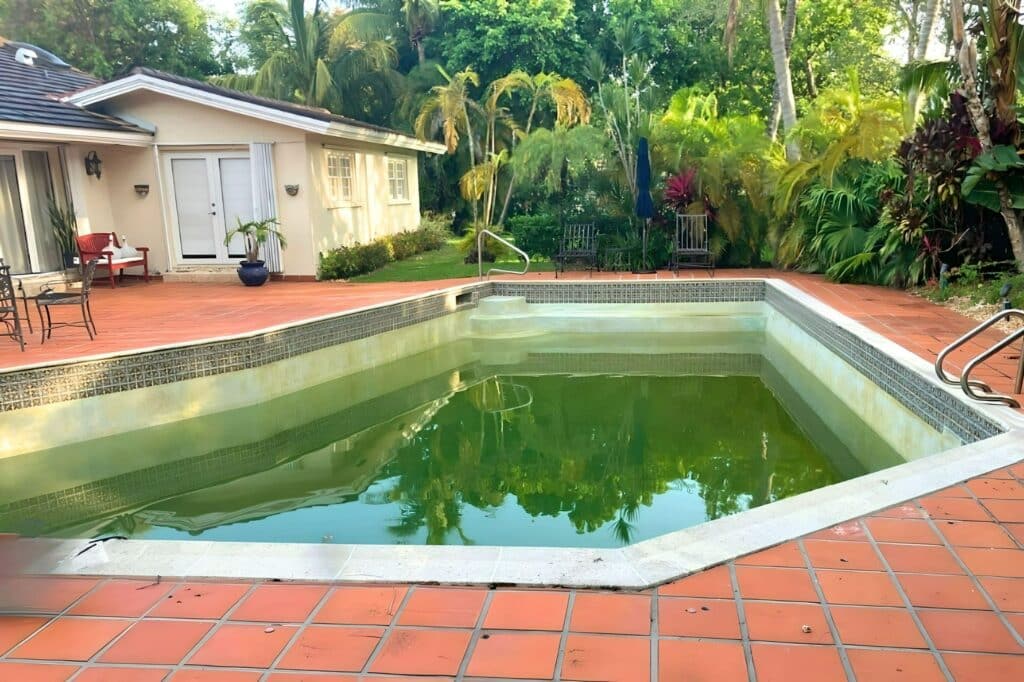
Why Is My Miami Swimming Pool Green?
A green pool usually means algae has outrun your sanitizer. Common triggers:
Top Causes
- Heavy rainfall: Dilutes chlorine and CYA; introduces organics that feed algae.
- Hot, humid weather: Increases chlorine demand; low FC leads to blooms.
- Poor circulation/filtration: Dead spots let algae take hold; check filter pressure and run time.
- Inconsistent maintenance: Skipped brushing/testing allows small problems to escalate.
- Metals (copper): High copper can tint water green; differentiate with proper testing.
Quick Recovery Plan
- Empty baskets, set valves for strong flow, and run the pump continuously.
- Test and balance pH/alkalinity; bring FC up quickly with liquid chlorine.
- Brush walls/steps thoroughly; vacuum to waste if debris is heavy.
- Clean/backwash the filter; consider a clarifier only if needed.
- Re-test daily until FC holds overnight; resume normal schedule once clear.
Prefer hands-off? Book a green-to-clean visit with our service team.
Why Is There a Strong “Chlorine” Smell?
That sharp pool odor usually isn’t chlorine—it’s chloramines, formed when chlorine reacts with sweat, oils, and other organics. High chloramines can irritate eyes, skin, and lungs.
How to Reduce Chloramines
- Encourage quick pre-swim rinses to cut body oils/sweat.
- Maintain adequate free chlorine and good circulation.
- Shock as needed after heavy use or storms.
- Keep filters clean and brush regularly to remove biofilm.
Weekly Maintenance Checklist (Miami-Dade)
Circulation & Filtration
- Run time: summer 10–14 hrs/day, spring/fall 8–10, winter 6–8 (adjust for sun and usage).
- Empty skimmer/pump baskets; verify strong flow and correct valve positions.
- Backwash/clean filter as needed; note pressure before/after.
Chemistry
- Test and balance: free chlorine, pH, alkalinity, CYA, calcium hardness.
- Salt pools: verify salt ppm is in the manufacturer’s window and inspect cell for scale.
- Record readings—trendlines reveal issues before they’re visible.
Cleaning
- Brush walls, steps, and waterline tile (biofilm prevention).
- Vacuum or use a cleaner; net out leaves promptly.
- Skim daily during heavy pollen/leaf drop.
No time for weekly care? We can handle it. See our pool cleaning plans.
After-Storm & Hurricane Cleanup Tips
- Power back on? Start the pump, set valves for maximum circulation, and run continuously until clear.
- Debris first: Leaf net, vacuum to waste if necessary to avoid clogging the filter.
- Shock appropriately: Bring FC to the high end of the recommended range; re-test in 24 hours.
- Filter service: Backwash/clean; extremely dirty cartridges may need a chemical soak.
- Rebalance: Rain dilutes chemistry—retest pH/TA/CYA and adjust.
For severe contamination, book a professional cleanup with Alligator Pools.
Final Thoughts on Pool Maintenance in Miami-Dade
Miami’s climate makes pools high-demand systems: heat, sun, rain, and foliage push chemistry and filtration hard. Consistent routines prevent most problems; quick action after storms prevents the rest. If you’d rather enjoy the water and skip the work, reach out—our pool cleaning pros can manage weekly service, repairs, and even resurfacing & remodeling when it’s time for an upgrade. We’ll keep your pool clear, safe, and ready when you are.