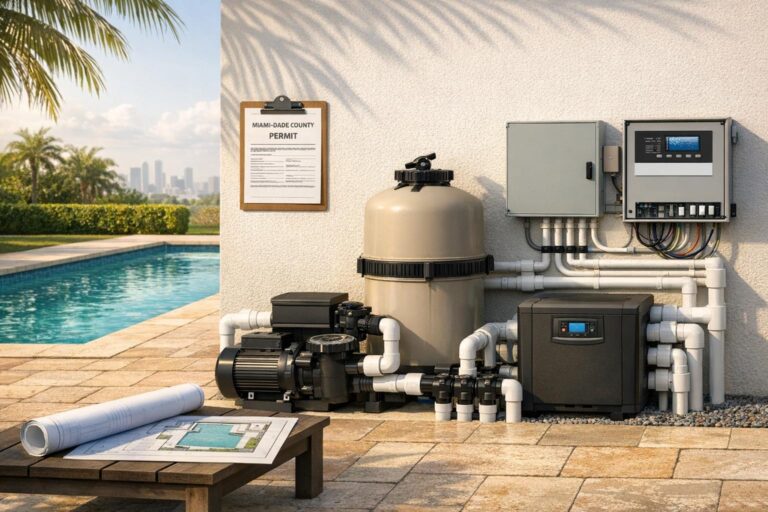
Leaving your Miami pool unprepared while you’re away can lead to costly repairs, algae infestations, and equipment damage. Miami’s heat, humidity, and storms create challenges that demand careful planning. Here’s a quick summary of what you need to do before heading out:
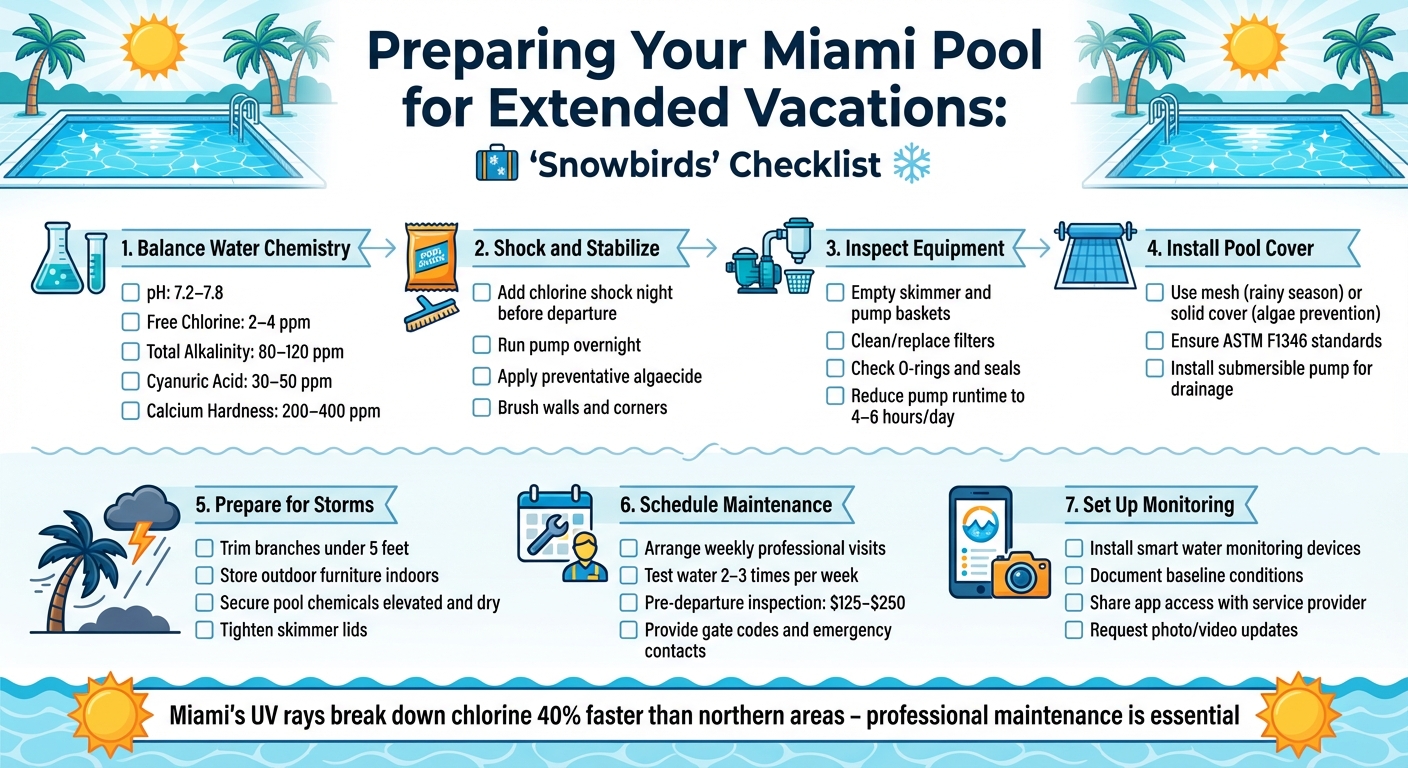
- Balance Water Chemistry: Adjust pH (7.2–7.8), chlorine (2–4 ppm), and cyanuric acid (30–50 ppm) to prevent algae and scaling.
- Shock and Stabilize: Add chlorine shock and algaecide for long-lasting protection.
- Inspect Equipment: Clean filters, check pumps, and secure seals to avoid breakdowns.
- Install a Pool Cover: Use a mesh or solid cover to reduce debris and evaporation.
- Prepare for Storms: Trim trees, secure outdoor items, and store chemicals safely.
- Schedule Maintenance: Arrange weekly service to monitor water and equipment while you’re away.
- Set Up Monitoring: Use smart devices for real-time updates on water chemistry and equipment.
Taking these steps ensures your pool stays clean, safe, and ready for use when you return.
Miami Pool Preparation Checklist for Extended Vacations
How to Prepare Your POOL Before VACATION
sbb-itb-a36f8f1
Balance Your Pool’s Water Chemistry
Getting your pool’s water chemistry right before you leave is crucial to avoid problems like algae growth, corrosion, or scaling. Miami’s high temperatures speed up chlorine loss, and UV rays can break down unstabilized sanitizers quickly [6].
Start by testing your water with a reliable kit. Focus on these key parameters:
- pH: Aim for 7.2–7.8
- Total Alkalinity: 80–120 ppm
- Free Chlorine: 2–4 ppm
- Cyanuric Acid: 30–50 ppm
- Calcium Hardness: 200–400 ppm
When adjusting, always follow this order: pH first, then total alkalinity, and finally chlorine.
"Florida’s rain and heat can swing pH quickly. Keep it between 7.2–7.8 so chlorine remains effective and surfaces stay protected." – Alligator Pools [6]
Test and Adjust Chemical Levels
Test all five parameters thoroughly, especially during the rainy season, as heavy rain can dilute chemicals and shift pH levels. If adjustments are needed, here’s how:
- Lower pH with muriatic acid or dry acid; raise it with soda ash.
- Boost total alkalinity using baking soda (sodium bicarbonate).
- Keep calcium hardness between 200 and 400 ppm to protect pool surfaces.
| Chemical Parameter | Ideal Range for Miami Pools | Purpose |
|---|---|---|
| pH | 7.2–7.8 | Protects equipment and ensures chlorine effectiveness |
| Free Chlorine | 2.0–4.0 ppm | Kills bacteria and algae |
| Total Alkalinity | 80–120 ppm | Buffers pH to prevent drastic swings |
| Cyanuric Acid | 30–50 ppm | Shields chlorine from UV breakdown |
| Calcium Hardness | 200–400 ppm | Prevents surface damage and scale formation |
Once balanced, take additional steps like stabilizing and shocking the pool to keep it in top condition.
Shock and Stabilize the Water
Shock your pool the night before you leave by adding chlorine or cal-hypo. Run the pump overnight to ensure the shock circulates thoroughly. In South Florida’s intense sun, maintaining cyanuric acid levels between 30 and 50 ppm is key to preventing chlorine loss. Adding chemicals in the evening also helps minimize UV degradation [6].
"Florida sun burns off unstabilized chlorine fast. Keep CYA around 30–50 ppm for liquid or cal-hypo programs." – Alligator Pools [6]
Add Algaecide for Long-Term Protection
Even with proper chlorine levels, algae can still develop if circulation stops or sanitizer levels drop. For long-term protection, use a preventative algaecide, ideally a polyquat formula. Before applying, brush the pool walls, steps, and corners to break up biofilm and help the sanitizer work more effectively [6][8].
"Brushing disrupts biofilm and early algae growth so your sanitizer can finish the job. Think of it as ‘making chlorine more effective.’" – Alligator Pools [7]
Inspect and Prepare Pool Equipment
Keeping your pool equipment in top shape is essential to avoid costly repairs, especially if you’re planning to be away for an extended period. Start by giving your pool equipment a thorough inspection. Empty the skimmer and pump baskets to ensure water flows freely. If you have a sand filter, backwash it to clear out any debris. For cartridge filters, clean or replace them to avoid mold buildup – Miami’s humidity can be relentless[9].
Pay close attention to the filter pressure gauge. A noticeable increase in pressure could mean the filter needs cleaning. If the gauge is foggy or broken, replace it to ensure accurate readings for remote monitoring. Listen carefully for any unusual sounds coming from the pump – these might indicate issues like bearing failure or overheating. Check all O-rings, unions, and suction lines for air leaks. Tighten loose connections and replace worn O-rings, applying a silicone-based lubricant to keep them in good condition. Even minor suction leaks can overwork your pump, potentially burning out the motor – a repair that could set you back anywhere from $150 to $700[9]. Once these steps are complete, move on to cleaning the filters and assessing pump performance.
Clean and Check Filters and Pumps
Before you leave, slightly overfill your pool so that the water level sits just above the midpoint of the skimmer. This helps to offset evaporation and ensures the pump doesn’t run dry, which could damage the motor[10]. Double-check that the pump is priming correctly by inspecting the pump lid and all connections for any signs of leakage.
Set Equipment to Maintenance Mode
After cleaning and inspecting your equipment, adjust the system settings to conserve energy while you’re away. Reduce the pump’s runtime to 4–6 hours a day instead of the usual 8–12 hours required during peak summer months. Maintain chlorine levels between 1–3 ppm to keep the water balanced during your absence[3]. Update your timer or automation system to reflect these changes.
Protect Valves, Seals, and Electrical Parts
Miami’s heavy rains and high humidity can wreak havoc on your pool’s electrical components. Use waterproof covers to shield these parts and secure equipment pads with sandbags for added protection. In preparation for hurricane season, turn off all electrical connections to pool motors, heaters, and salt systems, and shut off the gas supply to pool heaters to prevent leaks. When you return, remove the waterproof covers to allow proper airflow and reduce the risk of rust buildup[1].
Install and Secure a Pool Cover
A good pool cover does more than keep your pool clean – it shields it from debris, cuts down evaporation by up to 98%, and helps control algae growth[11]. In Miami’s intense sunshine, picking the right cover is a game-changer[4]. Think of it as the final piece of the puzzle for protecting your pool, alongside maintaining water quality and equipment.
Select the Right Pool Cover
Different covers work better for different conditions, especially in Miami’s unique climate. Mesh safety covers are ideal for the rainy season because they let water drain through while keeping out larger debris like palm fronds and seed pods[11]. On the other hand, solid safety covers block up to 97% of sunlight, which can help prevent algae from thriving in the heat. However, these require a pump to remove any standing water[11].
When shopping for a cover, make sure it meets ASTM F1346 standards and is made from UV-stabilized materials to handle the relentless Miami sun[11]. For coastal areas like Key Biscayne or Miami Beach, opt for hardware made from heavy-gauge stainless steel to resist corrosion caused by salt air[11]. Prices for pool covers vary widely, generally ranging from $400 to $1,750[11]. Once you’ve chosen the right one, proper installation is key to ensuring it does its job.
Install and Anchor the Cover Properly
After picking the right cover, installation is where it all comes together. For mesh covers, compress the springs to about 50%, while for solid covers, aim for 65%–75% tension[13]. Also, keep the pool’s water level between 15 and 18 inches below the cover. If the water level is too low, the cover might sag under heavy rain; if it’s too high, the cover could float and lift at the edges[13][14].
As Mike Corkery from Pool Guard USA puts it:
"Most pool covers don’t blow off because the wind is unusually strong – they blow off because something in the setup is wrong"[14].
And if a hurricane is on the horizon, remove solar blankets or lightweight covers to avoid them becoming dangerous projectiles[1].
Stop Water from Pooling on the Cover
Even a securely anchored cover needs to deal with rainwater. Standing water on a solid cover can add hundreds of pounds of stress to the anchors, which isn’t just bad for the cover – it’s risky[12][15]. Installing an automatic submersible pump with a float switch is a smart move. It’ll take care of rainwater buildup, especially if you’re planning to be away for a while[15].
Before you leave, make sure the cover is flat and centered. If you’re using a mesh cover, check its tension regularly to ensure proper drainage[11]. For solid covers, clear off leaves and debris beforehand – extra weight can damage the material[12]. Taking these steps ensures your pool cover stays in good shape and does its job effectively.
Prepare for Miami’s Storms and Humidity
Once you’ve tackled water chemistry and equipment, it’s time to safeguard your pool’s surroundings from Miami’s unpredictable weather. South Florida is no stranger to sudden storms, high humidity, and hurricane season, which runs from June 1 to November 30. On average, 12 tropical storms form each season, with six intensifying into hurricanes[19]. Protecting your pool from wind, flooding, and heavy rain is crucial, as storms can dilute chemicals and lower pH levels[18].
Trim Trees and Secure Outdoor Items
Start by trimming any weak or dying branches to under 5 feet and removing loose items like patio furniture, pool toys, telescopic poles, and potted plants. These should be stored indoors to avoid them becoming projectiles during high winds. If branches are near utility lines, hire a professional to handle the trimming safely[19]. Keep in mind, leaves and branches can stain your pool’s surface, potentially leading to costly resurfacing repairs[16].
For heavy objects that are too bulky to move, secure them with ropes, chains, or bungee cords to something sturdy[17]. Avoid the common mistake of tossing furniture into the pool for safekeeping. As Yvonne Florian from IFAS, University of Florida, explains:
"The water and chemicals will cause corrosion of the furniture and chemical reactions will leave permanent staining in the pool’s finish"[16].
Inspect for Cracks or Damage
Once outdoor hazards are under control, take a close look at your pool’s structure. Walk around the area and check for surface cracks, missing tiles, or weak spots in the finish. Pay extra attention to skimmer lids – secure them tightly to prevent them from flying off during a storm[19]. For minor cracks, use waterproof caulk to seal them, but for more severe damage, consult a professional. Addressing these issues early is essential, as even small cracks can lead to leaks under the pressure of heavy rainfall[16].
Store Pool Chemicals Properly
Miami’s humid climate can wreak havoc on pool chemicals, causing them to clump or lose their effectiveness – especially if they’re stored on the ground where flooding can reach them[18]. Keep chemicals in a cool, dry, enclosed space that’s elevated off the floor. Ensure all containers are tightly sealed to keep moisture out. Before a major storm hits, it’s a good idea to shock the pool with extra chlorine and add algaecide. This helps prevent algae blooms in case the power goes out and your pump stops circulating water[16].
Schedule Professional Pool Maintenance
Once you’ve secured your pool’s chemistry and hardware, professional maintenance is key to keeping everything in top shape while you’re away. Even with balanced water chemistry and storm precautions, an unattended pool can still face problems like equipment failures or algae blooms.
Arrange Weekly Maintenance Visits
Alligator Pools provides weekly maintenance services throughout Miami-Dade County, covering areas like Coral Gables, Kendall, Pinecrest, Palmetto Bay, and South Miami [20]. Whether your pool needs comprehensive care or just limited upkeep, they offer options to fit your needs. If you’re planning to be away for an extended period, their Seasonal Service plan includes weekly visits designed for long-term maintenance. These visits cover everything from balancing chemicals and cleaning filters to brushing surfaces, removing debris, and vacuuming.
In South Florida’s warm climate, it’s crucial to test your pool water 2–3 times a week to keep chlorine levels between 2 and 4 ppm and pH levels between 7.2 and 7.8 [2]. Alligator Pools’ technicians are CPO®-trained and licensed, ensuring they can handle chemical systems and respond to emergencies effectively. To avoid surprises, consider scheduling a pre-departure inspection before leaving.
Get Pre-Departure Inspections and Repairs
A pre-departure inspection is a smart move to catch potential issues before they turn into costly emergencies. These inspections typically cost $125–$250, and repairs range from $240–$1,160 [21][22]. During the inspection, technicians will check your pool’s equipment, look for calcification, verify proper electrical grounding and GFCI protection, and assess any structural damage [22][23].
"Hiring a pro once a year to ensure your pool is safe, functional, and up to code… can save money in the long term by identifying issues before they get out of hand" [22].
Additionally, adjust your pool timer for the season – 6–8 hours daily in winter and 10–14 hours in summer [7]. If you’re leaving during hurricane season (June 1 to November 30), it’s wise to arrange for post-storm evaluations and debris removal [1].
Confirm Service Coverage in Your Area
Before finalizing your plans, ensure that Alligator Pools services your neighborhood. They cover a wide range of Miami-Dade locations, including Coconut Grove, Cutler Bay, Doral, Kendale Lakes, and West Perrine [1][20]. To make things easier for the technicians, provide access details like gate codes, lockbox locations, or emergency contact information. You can call 305.255.7946 or use their text support line to coordinate [20]. This ensures uninterrupted care for your pool while you’re away.
Document and Set Up Remote Monitoring
Once your pool’s water is balanced and equipment secured, take the time to document its condition. This step is crucial for smooth remote monitoring. Record key water chemistry details like pH levels (7.2–7.8), free chlorine (1–3 ppm), total alkalinity (80–120 ppm), and cyanuric acid (30–50 ppm). Don’t forget to note the filter’s baseline pressure and pump timer settings as well[3][28]. To create a visual reference, take photos or videos of the pool, equipment pad, tiles, and lighting. These serve as a baseline for your service provider[5].
Record Pre-Departure Pool Conditions
Smart monitoring devices make it easier to keep tabs on your pool, offering real-time data to reduce uncertainty. For instance, the WaterGuru SENSE S2 ($314.10) tracks five critical parameters, while the Pentair ChemCheck provides hourly updates via Wi‑Fi. If temperature monitoring is a priority, the Ambient Weather WS-50-F007PF smart thermometer ($102.84) offers custom alerts. Users of these devices report benefits like 34% lower chemical usage and 99% fewer incidents of green pools[24][25][26].
Use Smart Monitoring Devices
Before relying on smart devices, ensure your Wi‑Fi signal extends to the pool deck. Most of these devices, including ChemCheck, require a strong 2.4GHz connection for optimal performance outdoors[26]. Test the corresponding mobile app to confirm it’s receiving data from all sensors. If you’re setting up a new device, like ChemCheck, let it adjust to the pool water for at least 24 hours before final calibration. This ensures accurate remote readings[26].
Share Access and Emergency Contacts
Provide your service provider with essential details like gate codes, lockbox locations, and emergency contacts. Use apps such as Pentair Pool to enable remote monitoring, allowing technicians to check equipment status and send photo or video updates for comparison[26].
"Ask your pool service for photo updates or video check-ins while you’re away. It’s a simple way to stay connected to your Florida home from miles away."
– Florida Detail[5]
To further streamline oversight, consider installing an automated water level control system. These systems can automatically fill or drain the pool during heavy rainfall or high evaporation, preventing pump damage from running dry. Variable speed pumps, such as the Pentair IntelliFlo3 VSF, are another great addition. They adjust operations automatically and send performance alerts, aligning with a proactive maintenance plan[24][26][27].
Conclusion
Preparing your Miami pool doesn’t have to be overwhelming when you follow a clear plan. Start by balancing the water chemistry (aim for a pH of 7.2–7.6), inspecting all equipment, securely installing your pool cover, and trimming nearby trees. These steps help keep your pool clean, clear, and ready for use[4].
Regular professional maintenance is a smart investment. Miami’s intense UV rays break down chlorine about 40% faster than in northern areas[4], so weekly service is key to maintaining chemical balance. Plus, a licensed technician can detect early issues – like pump cavitation or small leaks – that might go unnoticed with DIY care.
Skipping these precautions can lead to expensive problems. Algae outbreaks, equipment breakdowns, or damage caused by chemical imbalances can quickly rack up costs in the thousands[5]. And in South Florida, the high water table poses a unique risk: fully draining your pool can cause it to pop out of the ground due to hydrostatic pressure[1].
Before leaving, document your pool’s condition, set up smart monitoring systems for real-time updates, and share essential information – like gate codes and emergency contacts – with your service provider. If your trip overlaps with hurricane season (June 1st to November 30th)[29], confirm that your pool care team is prepared to handle storm-related needs. This planning not only protects your pool but also safeguards your property and neighborhood.
When you return, your pool will be ready for immediate enjoyment. A little effort now ensures peace of mind and a sparkling pool waiting to welcome you back.
FAQs
How far in advance should I prep my pool before leaving Miami?
Preparing your pool well in advance is crucial if you want it to stay in good shape while you’re away. Aim to start the process 2 to 4 weeks before your departure. During this time, focus on essential tasks like balancing the water chemistry, thoroughly cleaning the pool, and properly securing all equipment. This extra preparation ensures your pool will remain in great condition while you’re gone.
Should I keep my pool pump running while I’m away, and for how long each day?
Running your pool pump for 4–6 hours daily while you’re away is a smart move. This keeps the water circulating, prevents it from becoming stagnant, and helps conserve energy. Sticking to this schedule ensures your pool remains in great shape, even in your absence.
What should I do if a storm or hurricane hits while I’m away?
If a storm rolls in while you’re away, avoid draining your pool entirely – keeping water in the pool helps stabilize its structure and prevents damage. Bring loose items like furniture and toys indoors, or make sure they’re securely anchored. Shut off all electrical pool equipment at the breaker, and either remove or tightly secure pool covers. Once the storm has passed, clear out debris, test the water chemistry, and super-chlorinate the pool to ensure it’s safe to use.