Owning a pool in Miami is a year-round commitment that comes with ongoing costs. Here’s what you need to know to budget effectively:
- Monthly Costs: Expect to spend $150–$300 per month on cleaning, chemicals, and electricity. Chemical costs can rise 40% in summer due to Miami’s heat and humidity.
- Seasonal Adjustments: Rainy season (June–November) requires extra chemical balancing and storm cleanups, costing $100–$300 per incident. Winter heating can add $100–$300 monthly unless you use a solar cover.
- Unexpected Repairs: Repairs, like pump replacements or structural fixes, range from $300 to $5,000. Setting aside 10–20% of your annual maintenance budget for emergencies can help.
Proper maintenance reduces long-term expenses, while professional services, like those offered by Alligator Pools, can streamline upkeep and prevent costly surprises.
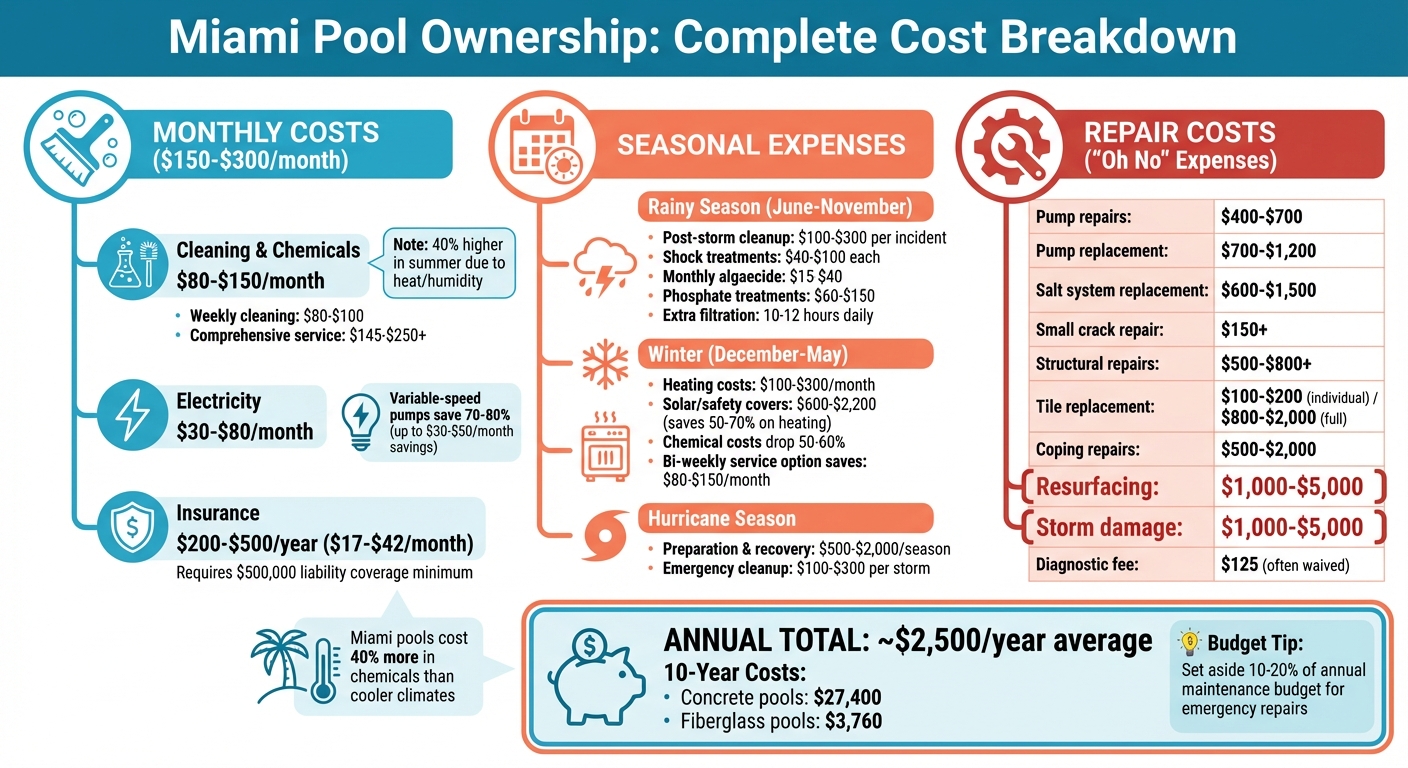
Miami Pool Ownership Annual Cost Breakdown: Monthly, Seasonal & Repair Expenses
Swimming Pools 💦Maintenance, Costs + Buying a House With a Pool | MELANIE ❤️ TAMPA BAY
sbb-itb-a36f8f1
Monthly Pool Maintenance Costs in Miami
Owning a pool in Miami comes with predictable upkeep costs. On average, you’ll spend between $150 and $300 per month to keep your pool running smoothly[4]. This amount typically covers weekly cleaning, chemical treatments, and electricity for pool equipment. Repair costs are tackled in detail in the "Oh No" section.
Weekly Cleaning and Chemical Balancing
Basic cleaning services, which include skimming, brushing, vacuuming, emptying baskets, and balancing pool chemicals, usually cost $80–balancing chemicals, usually cost $80–$100 per month00 per month[6]. Opting for a more comprehensive service – like debris removal and deeper cleaning – can raise the cost to $145–$250+ per month[6].
Miami’s hot, humid climate makes pool maintenance more challenging than in cooler regions. The intense UV rays and high humidity cause chlorine to break down faster, leading to higher chemical expenses. Homeowners in Miami often spend up to 40% more on chemicals compared to those in cooler areas[1]. During summer, chemical costs alone can range from $100 to $150 per month[1].
"Living in Florida? You might spend up to 40% more on chemicals than someone in Michigan. Why? Because heat and humidity make algae grow like crazy."[1]
The rainy season, which runs from June through November, adds another layer of complexity. Frequent rain dilutes pool chemicals, so testing water chemistry two to three times per week becomes essential[6]. Neglecting this can lead to algae growth and mosquito infestations, creating what some call a "frog pond." Fixing such issues often requires expensive restorative treatments[9]. Professional maintenance helps prevent these problems, potentially saving thousands in emergency repairs[8].
Maintaining clean water and proper chemical balance also reduces strain on pool equipment, keeping energy costs in check.
Electricity Costs for Pool Equipment
Energy use is another major factor in monthly pool expenses. Running your pool pump and filtration system typically adds $30 to $80 per month to your electric bill[10]. During Miami’s summer heat, pool pumps should run about six hours daily, while four hours may suffice in cooler months[11].
Investing in a variable-speed pump can significantly cut energy consumption – by up to 70–80% – saving you approximately $30–$50 per month[10]. Using a timer to run the pump during off-peak hours can further reduce costs while maintaining clear, clean water.
These energy expenses are part of the broader monthly maintenance budget, alongside insurance-related considerations.
Insurance and Liability Considerations
Owning a pool in Miami typically raises homeowner’s insurance premiums by $200 to $500 per year[1]. Pools are often seen as liability risks, and most insurers require at least $500,000 in liability coverage[1]. Adding safety features like four-sided fences with self-closing gates or pool alarms can help lower insurance costs while improving safety overall[1].
Regular maintenance doesn’t just keep your pool looking good – it also helps avoid risks that could lead to higher insurance premiums.
Seasonal Expenses for South Florida Pools
Owning a pool in Miami comes with its fair share of seasonal challenges. Beyond the usual monthly costs, changes in weather can significantly affect pool maintenance and expenses. Knowing what to expect during different times of the year can help you stay prepared and manage your budget effectively.
Rainy Season Adjustments
The rainy season in Miami, lasting from June to November, brings unique challenges for pool owners. Heavy rainfall dilutes essential pool chemicals, making it necessary to rebalance them quickly to avoid algae growth [12][7]. Storms also introduce contaminants like pollen, mud, and debris, which can lead to cloudy water and algae issues [12].
"High humidity creates ideal conditions for rapid algae growth, as warm, moist air supports faster reproduction." – Gold Standard Pools [12]
To combat these issues, filtration systems often need to run longer – up to 10–12 hours daily – to handle the increased debris [12]. Post-storm shock treatments can cost between $40 and $100, while monthly algaecide applications during humid periods add another $15–$40 [12]. For severe storms, emergency cleanups and chemical rebalancing can range from $100 to $300 per incident [10][7]. Additionally, keeping phosphate levels below 100 parts per billion (ppb) is crucial to controlling algae, but phosphate stabilizer treatments cost $60–$150 per application [12]. Testing your pool water after heavy rain can help address imbalances early, saving you from more expensive problems later [12].
As the rainy season fades, winter brings a different set of considerations.
Winter Heating and Pool Covers
Miami winters may be mild, but many pool owners still rely on heaters to keep their pools comfortable. Running a heater can cost anywhere from $100 to $300 per month, depending on the type and usage. However, using a solar or safety pool cover can cut heating costs by 50–70% and reduce evaporation by up to 95% [1]. Safety covers range from $600 to $2,200, while installing a solar heater involves a higher upfront investment of $3,000–$7,000, with a typical payback period of two to three years [1].
"Winter (Off-Season): Chemical costs drop by 50-60% – Cleaning needs decrease – Lower utility bills." – South West Pools [1]
During winter, cooler temperatures and fewer swimmers slow algae growth, allowing some pool owners to switch from weekly to bi-weekly professional service. This adjustment can save $80–$150 per month while still maintaining proper pool conditions [10][1].
Hurricane Preparation and Post-Storm Recovery
Hurricane season is another period that requires careful planning for Miami pool owners. Preparing for hurricanes and dealing with their aftermath typically costs $500–$2,000 per season, depending on the severity of the storms. Before a hurricane, it’s recommended to lower your pool’s water level by 6–12 inches to prevent overflow. However, avoid fully covering the pool, as debris can damage the cover. It’s also essential to turn off power to the pump and heater to protect them from electrical damage [12].
After a hurricane, you may need to invest in professional cleanup, chemical rebalancing, and equipment inspections. Cleanup services for major storms usually cost $100–$300 per incident [10]. If your pool is surrounded by dense trees or palm foliage, you might face extra costs of $20–$40 for additional debris removal [7]. Regularly checking your pump and filtration systems before hurricane season can also help prevent costly repairs down the line [2][7].
Unexpected ‘Oh No’ Repair Costs
Even the most diligently maintained pools are likely to need repairs within five years [13]. Miami’s unique conditions – marked by high humidity, saltwater exposure, shifting soil, and heavy rainfall – can speed up wear and tear on pool equipment and structures. Being aware of these potential costs can help you prepare for the inevitable surprises of pool ownership. Here are some common repair issues you might face.
Equipment Failures and Repairs
Pool equipment has a limited lifespan, and Miami’s climate often shortens it even further. Repairs for equipment overhauls typically cost between $400 and $700, while replacing a full pump can run $700 to $1,200. Minor fixes like seals or impellers are usually in the $200–$300 range [3]. Saltwater systems, which are quite popular in South Florida, are particularly vulnerable to corrosion and may need replacing every few years, with costs ranging from $600 to $1,500 [3].
If you notice unusual noises from your equipment or a sudden drop in water levels, it’s a good idea to schedule a diagnostic visit. These typically cost around $125, though the fee is often waived if you go ahead with the repair [2]. Staying on top of regular maintenance can prevent minor leaks from becoming major problems and help protect against corrosion [3].
Structural Repairs and Resurfacing
Structural damage is another common issue that requires prompt attention. Cracks in the pool shell can lead to water loss and even compromise the pool’s overall stability. Small surface cracks might start at $150 to fix, but ignoring them can result in more serious structural problems that cost $500 to $800 or more to repair [3]. Miami-Dade‘s shifting soils and high water tables make these types of repairs a frequent necessity.
"Not addressing cracks early can lead to larger issues and higher costs later." – M&M Pool & Spa Services [3]
Tile and coping damage is also a frequent concern. Replacing individual tiles usually costs $100 to $200, but a full retiling project can range from $800 to $2,000 [3]. Coping repairs, often caused by soil movement or heat expansion, can cost between $500 and $2,000. If your pool’s surface finish – whether plaster or pebble – starts to deteriorate due to UV exposure or chemical wear, resurfacing may be necessary, with costs ranging from $1,000 to $5,000 [3]. Regular monthly inspections of your pool’s surfaces can catch minor issues before they spiral into expensive repairs.
Weather-Related Damage
South Florida’s weather poses its own set of challenges. Hurricanes and tropical storms can wreak havoc, with flying debris damaging pool structures and flooding ruining pump motors and electrical components [5]. Repairs from storm damage – such as fixing coping, LED lights, or structural issues – can range from $1,000 to $5,000 [3].
Heavy rainfall also creates problems by diluting pool chemicals and encouraging algae blooms. Treatments like ‘Green to Clean’ typically cost around $180, while minor plaster repairs may run about $220 [5]. Setting aside 10–20% of your annual maintenance budget as a "pool reserve fund" can help offset these unexpected costs [5]. Testing your pool’s water chemistry immediately after heavy rains is a simple and cost-effective way to prevent algae growth and avoid more expensive treatments.
| Repair Type | Estimated Cost (South Florida) | Primary Cause |
|---|---|---|
| Structural Crack | $500–$800+ | Soil shifting / Storms |
| Pump Motor | $400–$700 | Corrosion / Electrical surge |
| Salt System | $600–$1,500 | Saltwater corrosion |
| Resurfacing | $1,000–$5,000 | UV damage / Aging |
| Coping/Joints | $500–$2,000 | Soil movement / Heat |
Factoring these repair costs into your annual pool budget can help you avoid unwelcome financial surprises down the road.
Budgeting Tips with Alligator Pools Services
Managing your Miami pool budget effectively means combining consistent maintenance with smart service choices.
Planning for Annual Maintenance Costs
On average, Miami pool owners spend about $2,500 per year on maintenance, which includes chemical balancing, equipment checks, and routine upkeep [15]. Over a decade, concrete pools can accumulate maintenance costs of around $27,400, while fiberglass pools average closer to $3,760 [14]. Knowing these numbers helps you prepare for long-term pool care.
Alligator Pools makes budgeting easier with their tiered service plans. Their LIMITED plan starts at $90 per month, covering essentials like water chemistry, basket clearing, and equipment monitoring – ideal for screened pools. The COMPLETE plan, starting at $145 per month, adds extras like surface debris removal, wall and tile brushing, and vacuuming [2]. New residential customers can take advantage of a "4th month free" offer, making it even more affordable to get started. With no long-term contracts, you can adjust or cancel services as your budget requires [2].
This structured pricing helps you avoid unexpected costs while keeping your pool in top condition.
Using Alligator Pools’ Plans and Services
Alligator Pools’ service plans go beyond basic maintenance, offering solutions for repairs, resurfacing, and remodeling [2]. Their licensed technicians conduct thorough equipment checks during every visit, ensuring proper pH, chlorine, and alkalinity levels to prevent surface damage and corrosion [16].
For repairs, they offer a $125 diagnosis fee, which comes with a guarantee: if no issue is found or a competitor disputes the diagnosis, you’re not charged. Plus, all repairs include a 3-year workmanship guarantee [2].
"You take no risk – our aim is to help, not to exploit!" – Alligator Pools [2]
If you’re switching from another pool service, Alligator Pools often waives the start-up fee typically required to rebalance water chemistry. Final pricing is determined after an on-site inspection, which evaluates pool size, equipment condition, and water quality, ensuring no hidden fees [2].
Preventing Costly Repairs Through Regular Maintenance
Staying on top of pool maintenance is key to avoiding expensive repairs [16]. Weekly chemical testing, included in Alligator Pools’ plans, ensures balanced water and helps catch potential problems early.
During each visit, technicians monitor equipment like pumps, filters, and heaters to detect issues before they escalate. For example, pump repairs can range from $250 to $750, while replacing a salt system can cost between $600 and $1,500 [3]. By optimizing equipment schedules and efficiency, technicians reduce strain on your system, lowering operational costs [16]. With typical pool repairs in Florida costing anywhere from $300 to $1,200, and major structural fixes ranging from $1,000 to $5,000, early intervention can save you thousands [3].
"Regular professional maintenance actually helps reduce long-term costs by preventing expensive repairs and equipment damage." – Alligator Pools [16]
For screened pools, the LIMITED plan is a great fit, while the COMPLETE plan is better for pools exposed to heavy vegetation, which can cause clogs and increase repair costs [2]. If you notice issues like discolored water or unusual equipment noises, contact your service provider immediately to prevent minor problems from becoming major expenses.
Conclusion
Owning a pool in Miami comes with its share of responsibilities, including monthly upkeep, seasonal adjustments for weather challenges like rainy summers and hurricanes, and occasional repairs that can cost anywhere from $300 to $5,000[3][17]. Taking a proactive approach to maintenance can help prevent minor issues from turning into expensive emergencies.
Understanding these factors can help you select a service plan that aligns with your budget. Alligator Pools simplifies this process with flat-rate plans that bundle essential maintenance services. Their plans include 2–3 weekly chemistry tests and equipment monitoring, helping you avoid costly DIY errors. Plus, new residential customers enjoy their fourth month free, making it easier to manage initial costs[2].
For repairs, Alligator Pools offers a $125 diagnosis fee with a no-risk guarantee: if no issue is found or the findings are disputed, you won’t be charged[2]. Additionally, their repairs come with a 3-year workmanship guarantee, providing peace of mind against unexpected expenses[2].
"Regular professional maintenance actually helps reduce long-term costs by preventing expensive repairs and equipment damage." – Alligator Pools[16]
FAQs
How much should I budget per year for a Miami pool?
To keep a pool in Miami, you should expect to spend roughly $3,000 to $6,000 per year. This estimate covers regular expenses like chemical treatments, equipment maintenance, and routine servicing. However, it’s a good idea to set aside extra funds for unexpected repairs or weather-related damages, as these can add to your overall costs.
What’s the best way to lower my pool’s electric bill?
To cut down on your pool’s electric bill in Miami, consider switching to an energy-efficient pool pump, such as a variable-speed model. These pumps consume far less electricity compared to single-speed options. You can also save energy by limiting the pump’s runtime to about 4–6 hours a day, tweaking the schedule based on the season. Cooler months call for shorter runtimes, as lower temperatures naturally reduce algae growth and the need for chemicals, allowing you to maintain water quality while conserving energy.
What pool problems should I fix right away to avoid big repairs?
Addressing pool problems right away can save you from expensive repairs down the line. If your pool water looks cloudy or discolored, take action immediately – this could help you avoid issues like clogged filters, imbalanced chemicals, or algae buildup. Strange noises from equipment, such as grinding or screeching, often hint at mechanical trouble that needs fixing. Visible cracks or leaks shouldn’t be ignored either, as they can lead to serious structural damage.
In Miami, specific challenges like algae blooms, equipment malfunctions, and damage from weather are common. Handling these issues quickly helps you keep repair costs under control and ensures your pool stays in great shape.