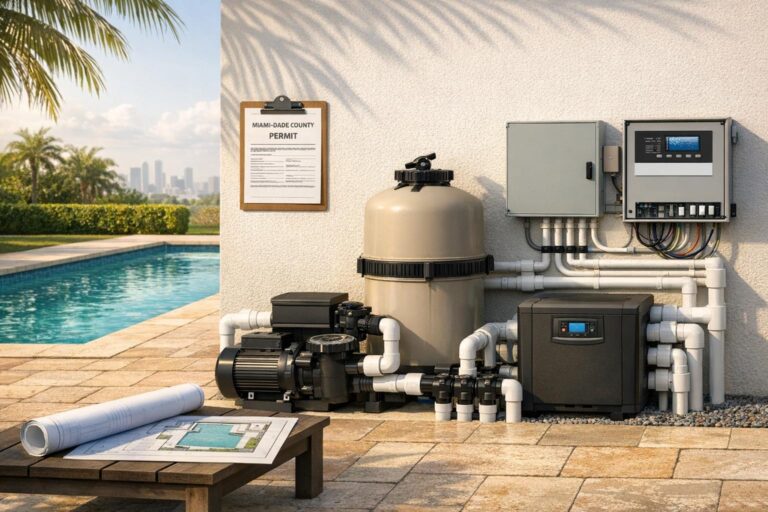

Poor pool pump placement can lead to skyrocketing energy bills, costly repairs, and shortened equipment lifespan. Here’s what every Miami homeowner should know:
- Flooding Risks: Pumps installed in low-lying areas are prone to water damage, causing electrical issues and motor failures. Relocating pumps can cost $3,000–$6,000.
- Energy Inefficiency: Incorrect placement increases hydraulic resistance, forcing pumps to work harder. This can raise electricity use by up to 40%.
- Overheating Issues: Tight, unventilated spaces trap heat, accelerating wear and tear, especially in Miami’s hot climate.
- Corrosion from Salt and Humidity: South Florida’s salty air and high humidity speed up rust on metal parts and damage electrical components.
- Debris Problems: Pumps placed near trees or plants often clog, leading to higher energy use and frequent maintenance.
Key Solutions:
- Install pumps in ventilated, shaded areas.
- Elevate equipment pads to avoid flood damage.
- Keep pumps close to the pool with minimal pipe bends to reduce strain.
- Regularly clean filters and remove debris.
Fixing these issues can save thousands in repairs, cut energy costs by up to 80% with upgrades like single vs. variable-speed pool pumps, and extend your equipment’s life. Address placement problems early to avoid expensive headaches later.
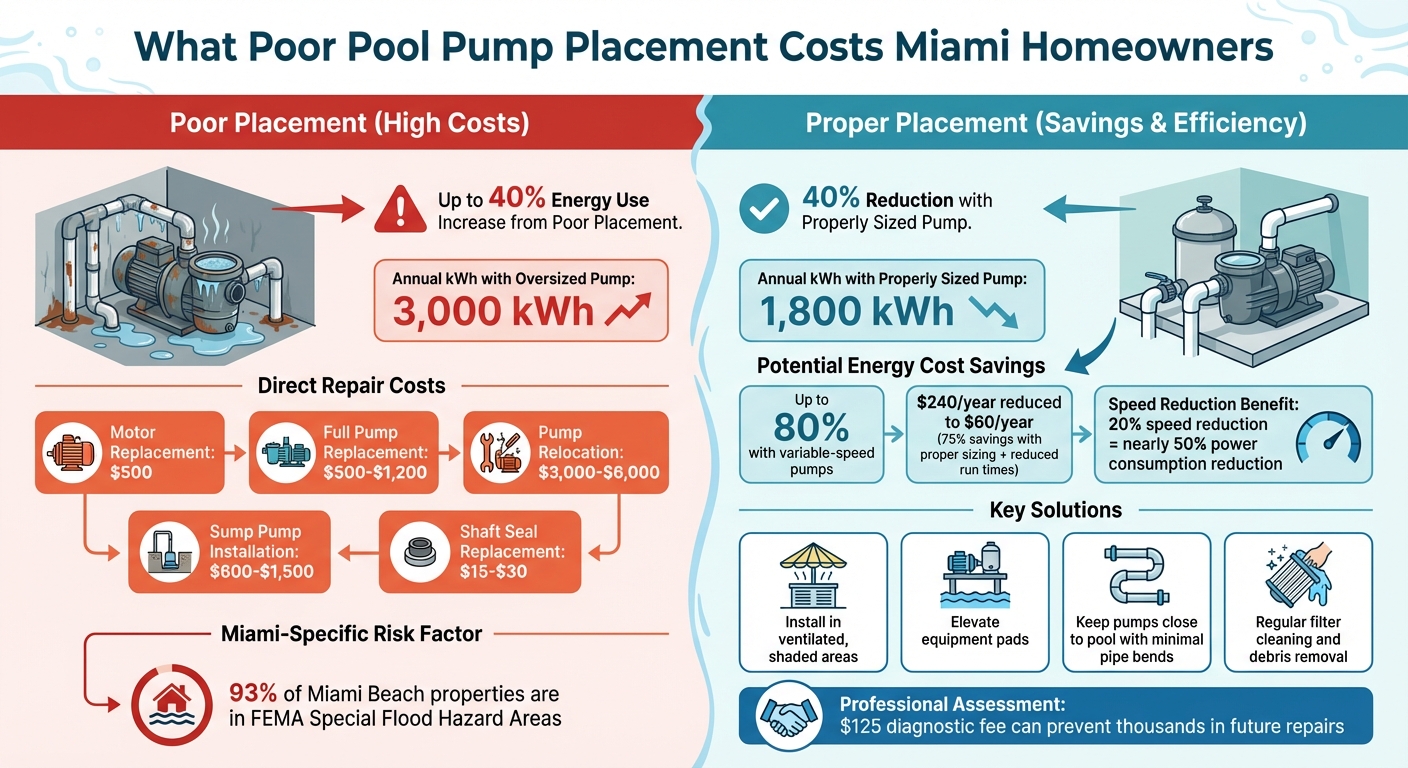
Cost Impact of Poor Pool Pump Placement in Miami
What Poor Pump Placement Costs Miami Homeowners
Increased Energy Costs and Shorter Pump Life
When a pool pump is installed too far from the pool or in a poorly thought-out location, it forces water to travel longer, more complex paths. This extra distance and added bends increase hydraulic resistance, making the motor work overtime. The outcome? Higher electricity bills and a pump that wears out much faster than it should.
A study of 120 Florida pools showed that switching from oversized pumps to properly sized ones cut electricity use by 40% – dropping from 3,000 kWh to 1,800 kWh annually [2]. Even more savings were achieved when homeowners paired correct pump sizing with reduced run times, slashing pumping costs by as much as 75% – a yearly expense of $240 plummeted to just $60.
In Miami’s relentless heat, poor pump placement in tight, unventilated spaces can lead to overheating and early failure. Beyond energy inefficiency, bad placement also leaves pumps vulnerable to environmental threats.
Flood Damage and Electrical Problems
Miami’s low elevation and porous limestone foundation make flooding a constant concern for pool equipment. In fact, 93% of properties in Miami Beach fall within a FEMA Special Flood Hazard Area [7]. The city’s flat terrain means water often lingers after storms or king tides, and pumps installed at ground level in these areas are frequently exposed to floodwaters.
When floodwater reaches a pump, the damage can be extensive. Motors can burn out, wiring may fail, and internal components often corrode. A common mistake – running a pump after water levels fall below the skimmer – is especially damaging, as it can completely destroy the motor [8]. Repairs are far from cheap: replacing a motor costs about $500, while a full pump replacement runs between $500 and $1,200 [9].
Flooding doesn’t just ruin pumps – it also drives up water bills and cleanup costs [3]. To avoid these expenses, elevating pool equipment above flood levels is crucial. Unfortunately, many Miami homeowners only realize this after suffering costly repairs.
Rust and Weather Damage
On top of energy inefficiencies and flood risks, Miami’s weather brings another challenge: corrosion. South Florida’s salty air and high humidity speed up rusting on pump housings, motor shafts, and electrical components. Pumps placed in unprotected, low-lying areas deteriorate much faster than those in covered, elevated spots.
The combination of salt spray and constant moisture creates a perfect storm for rust. Metal parts that should last for years can start corroding in just a few months. Electrical connections are also at risk, often corroding and leading to shorts or other malfunctions. Meanwhile, motor windings can absorb moisture, causing hidden damage that only becomes apparent when the pump fails.
This weather-induced wear piles onto other costs – higher energy bills from struggling motors, frequent repairs for rusted parts, and ultimately, the need to replace the entire pump sooner than expected.
Pool Pump Placement Mistakes and How to Fix Them
Lack of Airflow and Heat Problems
Miami’s hot and humid climate can be tough on pool equipment, especially when it comes to pool pump placement. One of the most common mistakes is installing the pump in areas with poor airflow, like tight corners, storage rooms, or enclosed pump houses. These spaces trap heat, causing the motor to overheat and wear out faster. Add Miami’s intense sunlight, and the problem only gets worse, as the constant exposure raises the equipment’s temperature throughout the day.
You might notice signs like odd noises, sluggish water flow, or a drop in performance when your pump is struggling with heat issues[1]. Clogged intake grates or baskets can also restrict water flow, making the motor work harder and generate even more heat.
To fix this, start by ensuring proper ventilation. Place your pump in an open or well-ventilated spot. If it’s exposed to direct sunlight, consider using a louvered cover or moving it to a shaded location[1]. For new installations, upgrading to a variable-speed pump is a smart move – they run cooler and more efficiently than older single-speed models[2][4].
Another factor to watch is hydraulic resistance. Narrow pipes or sharp elbows force the pump to work harder, generating extra heat. Switching to 45-degree fittings or flexible piping can ease the strain. Upsizing your filter to one that’s rated at least 50% higher than your pool’s design flow rate can also help reduce resistance and heat buildup[2].
Lastly, avoid placing pumps in areas prone to flooding or where debris can add to ventilation problems.
Pumps Installed in Flood-Prone Areas
Flooding is another big concern when it comes to pool pump placement in Miami. Pumps installed at ground level in flood-prone areas are at risk of water damage during heavy rains or seasonal flooding. Floodwater can ruin electrical components and motors, and running the pump after water recedes below the skimmer can cause serious damage.
To prevent this, elevate your equipment pad. Before installation, have a technician evaluate your property’s water table and drainage to determine the safest height for your pump[9]. If your current pump is in a flood-prone spot, relocating it to higher ground is a good solution. Also, make sure discharge pipes are directed away from your home’s foundation and meet Miami-Dade stormwater management codes[9]. For properties especially vulnerable to flooding, installing a sump pump – typically costing $600 to $1,500 – adds an extra layer of protection by actively removing water before it can reach your pool equipment[9].
Pumps Too Close to Debris and Plants
South Florida’s lush vegetation can cause its own set of problems for pool pumps. When pumps are placed near dense plants, leaves, mulch, and sand can clog intake grates and skimmer baskets. This restricts water flow, forcing the motor to work harder, which increases energy use and wear[2][4]. Plus, moisture trapped around the pump by dense foliage can speed up rust and corrosion.
The risk of debris is even greater during hurricane season. After a storm, avoid pressure washing the pool area, as small particles like sand, paint chips, or concrete can bypass filters and damage the pump’s internal components[3].
To minimize these issues, maintain a clear zone around your pump. Keep landscaping several feet away, trim overhanging branches, and regularly clean skimmer baskets, especially during times when debris is more likely to accumulate[4]. When preparing for a hurricane, remove loose debris around the pump area. If the power stays on during the storm, keep the pump running and frequently empty the baskets to prevent clogs[3].
How to Place Pool Pumps Correctly in Miami
Where to Place Your Pool Pump
Getting the placement of your pool pump right can save you money on repairs and help it run more efficiently. Ideally, your pump should be as close to the pool as possible and positioned below the water level. This setup reduces the length of pipes, cuts down hydraulic resistance, and makes priming easier[2][6]. Miami’s intense heat adds another layer of importance – if a pump runs dry, the plastic parts can melt quickly[5].
Miami’s low-lying terrain also means elevation matters. A technician can evaluate your property’s water table and drainage patterns to determine the best height for your pump’s equipment pad[9]. This step is especially important to protect your pump from flooding during heavy rains or hurricanes. Make sure the pump sits on a level surface to avoid vibration damage and stress on the plumbing[6].
Airflow is another key factor in South Florida’s hot and humid climate. Avoid placing the pump in tight or enclosed spaces where heat can build up. Instead, choose a ventilated spot, and if the pump is exposed to direct sunlight, add some shade to prevent overheating[1]. Leave enough space around the pump for easy access during cleaning or repairs. Lastly, ensure that discharge pipes direct water away from your home’s foundation to comply with Miami-Dade stormwater regulations[9].
If your pump isn’t currently in an ideal location, the next section explains how to address that.
Moving or Upgrading Existing Pump Locations
If your pool pump is in a less-than-ideal spot, relocating or upgrading it can improve efficiency and prevent potential damage. In Miami, replacing or installing a pool pump generally costs between $500 and $1,200[9]. For a more budget-friendly option, you can replace just the motor while keeping the existing housing and impeller intact[5].
Whenever you upgrade or move a pump, it’s crucial to install a new shaft seal. These seals cost between $15 and $30 but play a vital role in preventing leaks[5]. As Matthew Simmons, Pool Product Expert at InyoPools, advises:
If you install the old seal on a new motor, there is a good chance it will not mate properly, leading to leakage which voids the warranty on the new motor[5].
Because moving a pump involves high-voltage wiring near water, it’s always best to hire a certified professional for the job[6]. After relocation, check for air leaks by using a smoke stick or incense near the pump’s joints while it’s running. If smoke gets pulled in, you likely have a suction-side leak that needs to be sealed[5].
Regular Maintenance and Inspections
Routine maintenance is crucial to catching location-related problems before they escalate. For pumps that have been moved or repositioned, double-check that the drainage systems are working and that the elevated pad remains stable and level. As Matthew Simmons points out:
The pump strainer basket exists to catch debris but it can’t clean itself… If you don’t, the pool will have decreased water flow which means reduced filtration and ultimately, the dreaded algae bloom[5].
Make it a habit to clean your filters every few months and test drainage systems ahead of hurricane season[9]. A little upkeep goes a long way in keeping your pool pump running smoothly.
sbb-itb-a36f8f1
How Alligator Pools Helps Miami Homeowners Avoid These Mistakes

Expert Pump Location Assessments
Alligator Pools takes the guesswork out of pump placement with thorough expert assessments. For a $125 diagnostic fee, they conduct a complete equipment inspection and provide a repair estimate [10]. During this process, technicians evaluate pump performance, filter efficiency, and the condition of plumbing and electrical connections. They also identify placement issues, such as poor ventilation that can cause overheating or areas prone to flooding, helping homeowners address potential problems before they lead to expensive repairs. After the inspection, you’ll receive same-day findings, complete with detailed reports and photos of any concerns. If a minor repair is needed and costs less than $125, technicians can often handle it immediately, applying the diagnostic fee toward the repair if you decide to move forward. This approach ensures tailored solutions that account for Miami’s unique environmental challenges.
Miami‑Specific Pump Solutions
Once assessments are complete, Alligator Pools provides solutions designed specifically for Miami’s conditions. This includes relocating pumps to safer locations, building sturdy equipment pads, and installing energy-efficient variable-speed models that can cut energy bills by up to 80% [11]. All work is carried out by licensed pool and spa service contractors, ensuring compliance with Miami‑Dade County safety and building regulations. For urgent situations, emergency repairs are prioritized and scheduled within 24 hours.
40+ Years Serving Miami‑Dade County
Local knowledge makes all the difference when it comes to managing pool pumps. Since 1985, Alligator Pools has been serving Miami‑Dade County, bringing decades of experience in hurricane preparedness, high humidity, and flood prevention. Their team understands the specific needs of neighborhoods like Coral Gables, Kendall, Pinecrest, Palmetto Bay, and Coconut Grove, ensuring your pool stays safe and functional year-round [10]. With their expertise, your pool pump is in the right hands, no matter the challenge Florida’s climate throws your way.
How To Install a Swimming Pool Pump (Better)
Conclusion
Poor pump placement isn’t just a hassle – it can cost you thousands in repairs, replacements, and inflated energy bills. To keep your pump running smoothly, focus on a straight pipe layout, limit elbow bends, and ensure proper ventilation to handle Miami’s intense heat and humidity [12]. These small adjustments can mean the difference between a pump that lasts for years and one that breaks down prematurely.
Beyond extending the life of your equipment, smart pump placement can also slash operational costs. For instance, switching to a variable-speed pump could cut energy costs by as much as 80%. Even a modest 20% reduction in speed nearly halves power consumption [11][12]. Over time, these savings offset the upfront investment, while also reducing the likelihood of costly emergency repairs.
If your pump starts overheating, making strange noises, or losing flow, don’t wait – get a professional assessment right away. Catching placement issues early can save you from expensive replacements down the line. With the right placement, regular upkeep, and equipment designed for South Florida’s demanding climate, your pool system can run efficiently for years to come.
FAQs
What’s the best way to position my pool pump to prevent flooding issues?
To keep your pool pump safe from flooding, set it on a raised, stable platform in a well-drained spot, away from areas where water tends to collect. Make sure the area is well-ventilated and use a weather-resistant cover to guard against rain and debris. Elevating and protecting your pump helps prevent water damage and ensures it runs efficiently for the long haul.
What are the advantages of upgrading to a variable-speed pool pump?
Upgrading to a variable-speed pool pump can bring a host of benefits to your pool setup. For starters, it slashes electricity usage by an impressive 75–80%, which means you’ll see a noticeable drop in your energy bills. Plus, these pumps are much quieter than traditional models, last longer by reducing strain on the motor, and let you adjust speeds for specific tasks like skimming, vacuuming, or heating.
What’s more, variable-speed pumps are an excellent fit for South Florida’s climate, keeping your pool running efficiently throughout the year. The ability to fine-tune the pump’s performance not only ensures your pool operates at its best but also reduces wear and tear, making it a worthwhile upgrade for Miami homeowners.
How can poor pool pump placement increase energy costs and lead to expensive repairs?
Improper placement of your pool pump can take a toll on both its performance and durability. For instance, if the pump lacks proper ventilation, it can overheat. Similarly, poorly designed pipe layouts might introduce air into the system, disrupting water flow. These complications make the pump work harder than necessary, leading to higher electricity usage and inflated utility bills.
Over time, this extra workload can result in expensive repairs or even cause the pump to fail prematurely. To prevent these headaches, make sure your pump is installed in a well-ventilated spot, free from debris, and paired with correctly arranged piping. This simple attention to detail can help your pool operate smoothly while saving you money in the long run.