
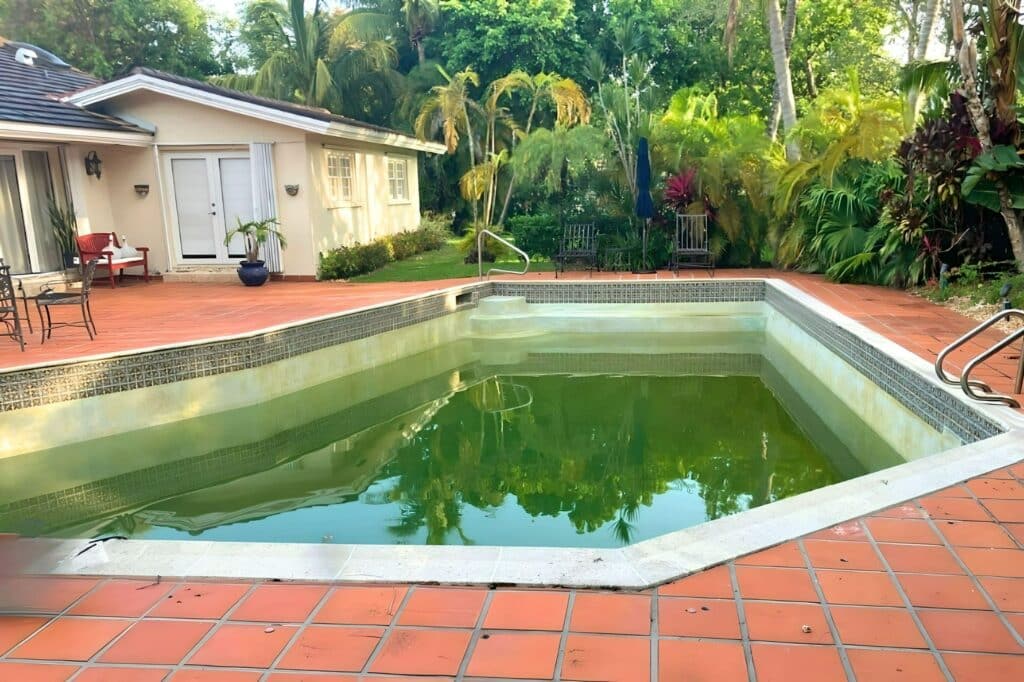
Expert Hurricane Recovery for Miami Pools
Hurricanes leave a trail of destruction across South Florida, and your pool often bears the brunt of the damage. At Alligator Pools, we’ve helped countless Miami-Dade homeowners recover from devastating storms. This guide covers what to expect after a hurricane and how to safely restore your pool to pristine condition.
Understanding Hurricane Pool Damage
Hurricanes cause multiple types of pool damage that require professional assessment and recovery. Understanding these hazards helps you take appropriate action once it’s safe to do so.
Equipment Damage and Electrical Hazards
High-speed winds and flying debris can destroy pool pumps, filters, and other critical equipment. Severe damage is common but can often be repaired. Electrical hazards pose the greatest immediate risk—severed wires, submerged connections, and damaged panels create serious safety concerns. Never touch electrical equipment or attempt repairs yourself. Always involve a licensed electrician for any electrical work to maintain safety standards.
Water Contamination and Biological Hazards
Floodwaters carry bacteria, toxins, and contaminants directly into your pool. Dead animals, septic overflow, sewer line breaks, and wildlife introduce serious health risks. Hurricane rains dilute pool chemicals, destroying the balance needed to maintain sanitation. The resulting environment becomes ideal for algae blooms and bacterial growth.
Structural Damage and Surface Issues
High-impact debris can crack pool walls, dislodge tiles, and damage the pool deck. Flooding creates hydrostatic pressure buildup, which can cause severe foundation stress and even lead to the pool “popping” or lifting out of the ground—a total loss scenario.
Debris Accumulation
Branches, leaves, dirt, sediment, and larger debris clog filters and pumps while contaminating water quality. In coastal areas, storm surge deposits sand and saltwater debris that causes additional complications.
Post-Hurricane Pool Recovery Steps
Once it’s safe to assess your pool, follow these professional recovery protocols.
Step 1: Safety Assessment
Before any work begins, turn off the pool pump and verify electrical safety. Inspect all electrical equipment for water damage or submersion. Do not restore power to pumps, heaters, or other electrical systems until a qualified electrician confirms they are safe to operate. Check for visible structural damage, missing tiles, and cracks.
Step 2: Clear Accessible Debris
Remove large floating debris like branches and leaves using a skimmer net. Drain debris from skimmer baskets, filter grates, and pump areas. Clean the filter thoroughly before running equipment. For submerged or settled debris, professional removal equipment may be necessary to avoid further damage.
Step 3: Water Testing and Assessment
Test your pool water for pH, alkalinity, chlorine, and bacterial contamination. Unknown elements almost certainly entered your pool. If the water is murky or black (indicating heavy sediment and organic contamination), professional testing is essential to determine whether chemical treatment or complete drainage is needed.
Step 4: Professional Equipment Inspection
Once electrical safety is confirmed, inspect pumps, heaters, filters, and saltwater systems for damage. Saltwater infiltration from storm surge requires equipment replacement—saltwater damage is often irreparable. Have any submerged electrical equipment professionally cleaned and dried before restarting.
Step 5: Chemical Treatment and Water Restoration
After debris removal, shock the pool with extra chlorine to eliminate contaminants and bacteria. Circulate water continuously for at least 24 hours, backwashing the filter as needed. Monitor and rebalance pH, alkalinity, and chlorine levels. In extreme contamination cases, professional flocculants or treatment methods may speed recovery and clarity.
Step 6: Professional Draining (If Necessary)
If contamination is severe—particularly from saltwater intrusion or hazardous floodwater—complete drainage and refilling may be necessary. However, draining must only be done by professionals like Alligator Pools. Improper drainage can cause the pool to float out of the ground due to hydrostatic pressure, resulting in catastrophic damage and total loss.
Why Don’t You Drain Your Pool Immediately?
Never drain your pool before or after a hurricane without professional guidance. Here’s why:
When a pool is emptied, the saturated ground beneath creates hydrostatic pressure that can push the entire pool up and out of the ground—known as “popping.” This happens especially in Miami-Dade’s high water table areas and results in complete pool loss. Even partially draining can create this risk. Instead, lower the water level slightly to account for rainfall, maintain chemicals, and allow professionals to determine if complete drainage is necessary.
Coastal Hurricane Damage: Saltwater Intrusion
Saltwater storm surge poses unique challenges in Miami’s coastal communities. Saltwater contamination causes rapid corrosion to equipment and pool surfaces. Pools affected by saltwater infiltration typically require complete water replacement, thorough acid washing, equipment replacement, and re-plumbing work.
Miami-Dade Hurricane Statistics and Flood Risk
South Florida has experienced extreme hurricane activity throughout recorded history. According to the National Oceanic and Atmospheric Administration (NOAA), Miami-Dade County has been hit by a hurricane 27 times from 1851 to 2018, making it one of the most hurricane-prone areas in the United States. Major hurricanes (Category 3 and above) have become increasingly frequent due to climate patterns.
The 2020 Atlantic hurricane season set records with 30 named storms and 13 hurricanes. Miami’s flat topography, high water table, and rising sea levels compound flooding risks during storms, making proper pool recovery essential for both property protection and public health.
Professional Post-Hurricane Pool Recovery
Attempting DIY recovery after hurricane damage often leads to costly mistakes and safety risks. Professional pool companies have the equipment, expertise, and knowledge to assess damage accurately and restore your pool safely.
At Alligator Pools, we specialize in post-hurricane recovery throughout Miami-Dade County, including debris removal, equipment repair and replacement, structural repairs, complete water testing and treatment, and full pool restoration. Our licensed, CPO-certified technicians handle everything from electrical safety assessment to chemical rebalancing.
When to Call Professionals
Contact Alligator Pools immediately if your pool shows signs of damage, water contamination, equipment damage, or if you’re uncertain about safety. For pool emergencies, call 305-255-7946 or text for faster response. We service all of Miami-Dade County, including Coconut Grove, Coral Gables, Cutler Bay, Kendall, Palmetto Bay, Pinecrest, South Miami, and surrounding communities.
Hurricanes are a fact of South Florida life, but with professional guidance and prompt recovery action, your pool can return to safe, enjoyable condition faster than you might expect.