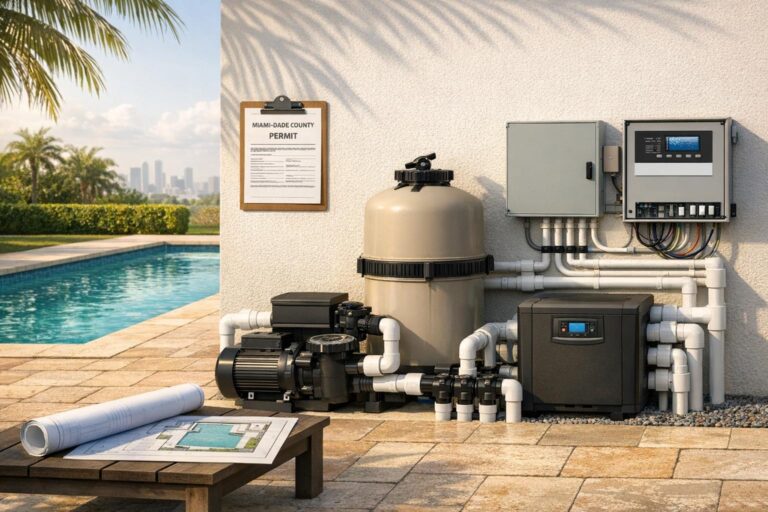

A sunny day in your backyard is one of life’s little joys—but if you own a pool in Miami-Dade, safety has to be part of the routine. Between year-round swimming, intense UV exposure, sudden summer storms, and heavy pool use across South Florida, small issues can turn into real hazards fast. This guide from Alligator Pools covers simple, proven swimming pool safety guidelines—both behavior and maintenance— so your pool stays a place for fun, not accidents.
Pool Safety Tips
Especially for families with young children or visiting guests, sticking to the basics dramatically reduces risk. Use these pool safety tips every time your pool is in use:
- Walk—never run—around the pool deck to avoid slips and falls on wet surfaces.
- Keep kids away from drains and covers; suction hazards are rare but serious.
- Never treat floats or pool toys as supervision. They’re for fun, not safety.
- Know CPR, and keep a charged phone nearby in case you need emergency help.
- Always have an adult actively supervising when children are in or near the water—no “checking in occasionally.”
- No solo swimming for kids. Buddy up every time.
- Avoid horseplay near pool edges. Splashes, running starts, and pushing cause most backyard injuries.
- Scan the deck before anyone gets in: sharp tile edges, broken glass, toys, food, or loose pavers can spark accidents.
- Use proper lighting for night swims. If your pool lights are out, treat the pool as closed until repaired.
When Is a Pool Unsafe to Swim?
Knowing when not to swim is just as important as knowing safe behaviors. A pool can look fine and still be unsafe. Avoid swimming in these conditions:
- Stormy or changing weather — Miami-Dade storms can form quickly. If you hear thunder or see lightning, get out immediately and stay out until the storm clears.
- Cloudy, dark, or dirty water — If you can’t clearly see the main drain, visibility isn’t safe. Cloudiness often signals circulation or sanitation problems.
- Algae or slimy residue — Green, yellow, or black algae means sanitizer has failed. It can also make surfaces slippery and increase infection risk.
- Broken or missing entry/exit points — No safe ladder, steps, or handrail = no swimming. Easy exits are a core safety requirement.
- Recent heavy rain or flooding — South Florida downpours can wash contaminants into the pool and throw water chemistry off fast. Test first, swim second.
How to Make Your Pool Safe
A safer pool comes from three things working together: smart behavior, the right equipment, and consistent maintenance. Here’s what we recommend for Miami-Dade pool owners:
- Keep safety gear poolside — Store a lifebuoy, reach pole, and first-aid kit within arm’s reach. If something happens, seconds matter.
- Install a fence or barrier — A secure, code-compliant pool fence is one of the most effective drowning-prevention tools, especially for toddlers and pets.
- Use self-closing, self-latching gates — Gates should close automatically and latch high enough that children can’t reach them.
- Post clear pool rules — A simple sign near the pool helps guests follow your standards without awkward reminders.
- Maintain water chemistry weekly — Balanced chlorine, pH, and alkalinity protect swimmers from irritation and illness, and prevent algae blooms common in South Florida heat.
- Inspect drains, skimmers, and pump systems — Broken drain covers, air leaks, or failing pumps can create both safety and sanitation risks. If you notice cloudiness, odd smells, or equipment noise, address it immediately.
- Schedule professional maintenance — If you want peace of mind year-round, Alligator Pools’ weekly pool service keeps your system clean, balanced, and safe through every season.
Closing Thoughts
A backyard pool should be the centerpiece of fun, relaxation, and family bonding—especially in Miami where pool season never really ends. When you combine vigilant supervision, safe habits, proper equipment, and consistent maintenance, you turn your pool into a true safe haven. If you ever want a second opinion on water safety, equipment, or pool conditions, the team at Alligator Pools is happy to help Miami-Dade homeowners stay swim-ready year-round.
FAQs
How often should I inspect pool safety equipment?
Do a quick weekly scan for obvious issues (broken ladder, torn floats, deck hazards), and a deeper monthly check for drains, barriers, gates, lighting, and chemical safety.
What height should a pool fence be in Miami-Dade?
Most safety standards recommend at least 4 feet (48 inches) with a self-closing, self-latching gate. Because codes can vary by city and HOA, confirm your exact local requirement before installing or modifying a barrier.
When should children start swimming lessons?
There’s no single perfect age, but early lessons build confidence and lifelong water-safety habits. Many families start once a child is developmentally ready to follow directions and feel comfortable in the water.
What should I do right after a big South Florida rainstorm?
Test chlorine and pH before swimming. Heavy rains can dilute sanitizer and wash debris into the pool. If water is cloudy or chemistry is off, run circulation, clean baskets/filters, and rebalance before use.
How can I tell if my pool water is safe for guests?
Safe water should be clear enough to see the main drain, free of slimy walls or algae, and testing should show balanced chlorine and pH. If anything looks or smells “off,” pause swimming and fix the cause first.