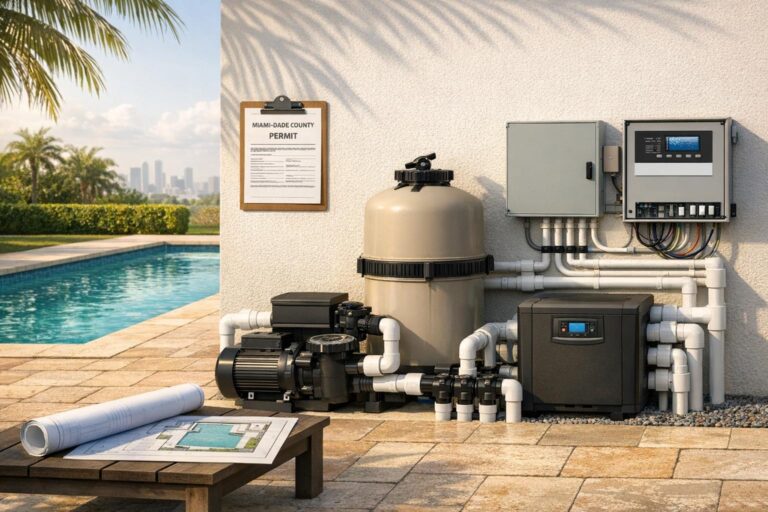

Pool automation simplifies pool management while cutting energy costs by up to 70–90% in the first year. By automating key components like pumps, heaters, and lights, you can optimize energy use, reduce waste, and save hundreds annually – especially in regions like Miami-Dade County, where pools are used year-round. Here’s what you need to know:
- Energy Savings: Variable-speed pumps and smart scheduling reduce electricity bills by operating during off-peak hours and adjusting to actual pool usage.
- Cost Efficiency: Automated systems often pay for themselves within a few years through lower energy bills and reduced maintenance needs.
- Remote Control: Manage your pool via smartphone apps, adjust settings, and get alerts to prevent inefficiencies.
- Long-Term Value: Energy-efficient upgrades can increase home value by up to 8%.
Professional installation ensures proper setup and maximizes savings, while regular maintenance keeps systems efficient. Pool automation is a smart way to save money, reduce effort, and extend equipment lifespan.
Should I Get An Automation System For My Pool?
Key Energy-Saving Features of Pool Automation
Today’s pool automation systems are packed with smart features that work together to cut down energy use and save on utility bills. Each feature focuses on improving a specific part of pool management, ensuring everything runs as efficiently as possible. Here’s a closer look at how these features make a difference.
Programmable Filtration Cycles and Smart Scheduling
With programmable scheduling, your pool equipment can operate during off-peak hours, helping reduce energy costs. These systems can also adjust filtration cycles based on how often the pool is used and the weather. For instance, during cooler weather or when the pool isn’t being used as much, the system can shorten filtration times to save energy. Some even integrate weather data, so on cloudy or rainy days, filtration adjusts to avoid unnecessary energy use while still keeping the pool clean.
Variable Speed Pump Integration
Variable speed pumps are game-changers for pool automation. Unlike traditional pumps, they can adjust their speed to match the pool’s needs. For everyday filtration, they run at lower speeds, using much less energy. When tasks like vacuuming or heating require more power, the pump increases speed temporarily. For example, switching to a Pentair variable-speed pump with automated controls can cut annual energy use by up to 70%, translating to around $600 in savings on electricity each year. While these pumps typically cost between $800 and $1,500, the energy savings often recover the investment within a few years [7].
Smart Heating and Cooling Controls
Automated temperature controls ensure your pool heater or chiller only operates when necessary. Instead of keeping the pool at a constant temperature all day, these systems heat the water just before use and scale back when it’s not needed. If integrated with solar heating, they can take advantage of natural sunlight to warm the pool, reducing reliance on gas or electric heaters and further cutting energy use.
Automated Chemical Dosing and Monitoring
These systems continuously monitor water chemistry and dispense precise amounts of chemicals to maintain balance. By preventing issues like algae growth or chemical imbalances, they eliminate the need for energy-intensive corrective measures. This not only keeps the water quality high but also indirectly reduces energy consumption.
Remote Management and Alerts
With smartphone apps, you can control your pool systems from anywhere. Remote access lets you adjust settings on the go, ensuring equipment doesn’t run unnecessarily. Real-time alerts notify you about inefficiencies, like a pump running too long or unexpected energy spikes, so you can address problems quickly and avoid wasting energy.
The table below highlights the energy, water, and cost savings offered by these features:
| Feature | Energy Savings | Water Savings | Cost Savings |
|---|---|---|---|
| Programmable Filtration Cycles | Optimized runtime | Prevents overflows | Lower electricity bills |
| Variable Speed Pump Integration | Reduced energy consumption | N/A | About $600 per year |
| Smart Heating and Cooling Controls | Efficient temperature management | N/A | Lower heating costs |
| Automated Chemical Dosing | Prevents chemical waste | N/A | Lower chemical expenses |
| Remote Management and Alerts | Avoids unnecessary operation | N/A | Reduced repair costs |
Together, these features streamline pool operations, delivering noticeable energy savings even in the first year [5][6].
How Pool Automation Reduces Utility Costs
Pool automation systems tackle some of the biggest energy drains associated with pool maintenance, offering noticeable savings on utility bills. By focusing on pump efficiency, smart scheduling, and preventing waste, these systems help pool owners cut down on monthly expenses.
Optimizing Pump Speeds and Runtime
The pool pump is often the largest energy consumer in pool operations, making it a key area for potential savings. With variable-speed pumps, energy use for filtration can drop by up to 80%, reducing annual pump costs from about $1,000 to just $200–$300[1][5]. For tasks like vacuuming or running water features that require higher power, the system temporarily increases the pump speed but quickly returns to energy-efficient settings.
Automation also ensures pumps operate only as needed, adjusting run times based on factors like pool usage, weather conditions, and water quality. This prevents unnecessary energy consumption while keeping your pool in top condition.
Avoiding Energy Waste Through Smart Scheduling
Smart scheduling is another way automation reduces energy waste. These systems ensure equipment runs only when necessary, adapting to variables like weather, pool activity, and even electricity rates. For example, during rainy or overcast days, they optimize run times to avoid wasting energy.
Many utility companies offer lower rates during off-peak hours, typically late at night or early morning. Automated systems take advantage of these reduced rates by scheduling energy-intensive tasks – like heating or extended filtration – during these times. This approach lowers costs without compromising pool readiness.
The results speak for themselves. Homeowners who upgraded to automated systems with variable-speed pumps and smart scheduling reported monthly pool electricity costs dropping from around $80–$100 to as low as $20–$30, depending on the size and usage of their pool[5][6].
Preventing Water and Heat Loss
In addition to optimizing pump operation, automation addresses hidden costs related to water and heat loss. These systems monitor water levels and detect leaks, stopping water loss before it becomes expensive. Alerts notify homeowners immediately, allowing for quick action to prevent waste and avoid the costs of reheating replacement water[2][8].
Automated pool covers add another layer of savings. When integrated with automation systems, these covers can be programmed to close during non-use periods or at night, significantly cutting down on heat loss and evaporation[2][8]. This not only conserves water but also reduces the energy required to maintain the pool’s temperature. Proper water levels also protect equipment, preventing issues like pump burnout from running dry, which can lead to costly repairs or replacements.
For residents in Miami-Dade County, working with experienced providers like Alligator Pools ensures professional installation and ongoing support. This helps keep automation systems running smoothly, maximizing savings and reliability over the long term.
sbb-itb-a36f8f1
Installation and Maintenance of Pool Automation Systems
Getting your pool automation system installed correctly and keeping it well-maintained are key to ensuring it runs efficiently and reliably. These steps directly impact the energy savings and benefits discussed earlier.
Professional Installation vs. DIY Setup
Installing a pool automation system involves several intricate steps: checking if your current pool equipment is compatible, selecting the right system, connecting control panels, integrating sensors with pumps and heaters, and setting up the software. These tasks require technical know-how to achieve the best results.
Opting for professional installation has clear advantages over doing it yourself. Experienced contractors, like Alligator Pools, can assess your pool’s unique setup, ensure compatibility with existing equipment, and configure the system properly. Professional services typically cost between $1,500 and $3,500, depending on the complexity of the system and its features. This price often includes warranties, ongoing support, and the expertise needed for seamless integration, which can significantly boost energy efficiency[4].
On the other hand, DIY installation kits cost less, ranging from $800 to $2,000, but come with risks. Mistakes like incorrect wiring or poor system integration can lead to safety hazards, equipment damage, voided warranties, and reduced efficiency – especially when dealing with electrical components near water.
| Installation Type | Upfront Cost | Risk of Errors | Warranty Impact | Long-Term Savings | Professional Support |
|---|---|---|---|---|---|
| Professional | Higher | Low | Protected | High | Yes |
| DIY | Lower | High | May Void | Variable | No |
A proper installation ensures that the energy-saving benefits of your system are fully realized.
Routine Maintenance for Long-Term Efficiency
Once installed, regular maintenance is crucial to keep your system running efficiently and extend the life of your equipment[5].
- Monthly upkeep: Clean sensors and probes to maintain accurate readings. Dirty or corroded sensors can cause improper chemical dosing, leading to wasted energy. Additionally, inspect electrical connections for debris or corrosion to avoid malfunctions.
- Quarterly tasks: Update the system software to access new features that improve energy efficiency, calibrate chemical dosing equipment to maintain water balance, and check mechanical components for leaks or wear. Reviewing system logs and alerts can help catch potential issues early.
- Annual inspections: Having a professional inspect your system yearly can uncover problems that might go unnoticed during routine maintenance. This ensures optimal performance and reduces the risk of costly repairs.
Troubleshooting Common Issues
Addressing minor problems quickly helps maintain your system’s efficiency and prevents energy waste. Common issues include Wi-Fi connectivity problems, malfunctioning sensors, and programming errors that disrupt schedules.
For minor fixes, try rebooting the system, checking Wi-Fi connections, cleaning sensors, or resetting schedules. However, persistent issues – like electrical faults, water leaks, or repeated errors – should be handled by a professional.
For residents in Miami-Dade County, local providers like Alligator Pools offer tailored support. They understand the challenges posed by South Florida’s climate and can provide year-round maintenance to keep your system running smoothly.
Choosing the Right Pool Automation System
Selecting the right automation system for your pool means aligning your pool’s equipment with your budget and energy efficiency goals. A well-matched system can simplify pool management while reducing utility costs. Researching options and seeking professional advice can help you find the best fit for your needs.
Comparing Features and Compatibility
When it comes to pool automation, evaluating features and ensuring compatibility with your existing equipment are crucial steps. Three major brands – Pentair, Hayward, and Jandy – offer automation systems with standout energy-saving capabilities.
Pentair’s IntelliTouch and EasyTouch systems excel in controlling variable-speed pumps and offer smart scheduling options. These systems integrate seamlessly with Pentair equipment and provide comprehensive control through a smartphone app. When used with Pentair’s variable-speed pumps, they can significantly reduce energy consumption.
Hayward’s OmniLogic system is known for its smart home integration. It connects with Amazon Alexa and Google Assistant, allowing you to control pool equipment with voice commands[1]. Smart pump and heater controls adjust operations based on usage patterns, optimizing energy efficiency.
Jandy’s iAquaLink system offers wide compatibility with various pool equipment and features an intuitive smartphone interface. It supports automation for multiple components and includes scheduling tools to enhance operational efficiency.
| Brand | Key Strengths | Smart Home Integration | Energy Focus | Typical Cost Range |
|---|---|---|---|---|
| Pentair | Variable-speed control | iOS/Android app control | Smart pump optimization | $1,500–$3,500 |
| Hayward | Voice activation | Alexa, Google Assistant | Smart pump/heater optimization | $1,500–$3,500 |
| Jandy | User-friendly interface | iOS/Android app control | Efficient scheduling with variable-speed pumps | $1,500–$3,500 |
Before purchasing, confirm equipment compatibility using manufacturer charts or consult an expert. While these systems are designed to work best with their respective brands, many offer adapters to connect with third-party components.
Energy-saving features are only part of the equation. Reliable local support is equally important for ensuring your system operates smoothly over time.
Local Support and Service Options
Strong local support can make a big difference in the long-term performance of your pool automation system. Partnering with experienced professionals ensures quicker service, adherence to local regulations, and better handling of regional factors like climate.
In Miami-Dade County, Alligator Pools stands out as a trusted local provider. With over 40 years of experience and a Florida pool contractor license (CPC1459915), they specialize in equipment installation and maintenance tailored to South Florida’s unique conditions. Their certified pool operators understand the challenges of high humidity and year-round swimming, offering expert recommendations for optimal system performance.
Choosing professional installation over a DIY approach comes with several advantages. Licensed contractors can evaluate your pool’s specific needs, ensure proper integration of automation systems, and provide warranty protection. Their knowledge of local electrical codes and safety standards is critical, especially when working near water.
When assessing local support options, look for companies with a proven track record in automation systems, a broad service area, and expertise with various equipment. Many manufacturers require professional installation to maintain warranty coverage, making it even more important to work with qualified experts. This ensures your system is set up correctly and delivers consistent energy savings over time.
Pool Automation Makes Pool Ownership Easier
Imagine enjoying your pool without the hassle of constant upkeep. Pool automation takes the stress out of ownership by handling everyday maintenance tasks for you. It builds on the advantages of automation, making pool management even simpler.
Today’s systems let you control everything with a smartphone app. Whether it’s adjusting the temperature or monitoring equipment, you can do it all remotely. Automated scheduling ensures your filtration system runs during off-peak hours, cutting down on energy costs and maintenance. Plus, automated chemical dosing keeps your water perfectly balanced without the guesswork. Variable-speed pumps further enhance efficiency by adjusting their operation based on what your pool actually needs.
The energy savings? They can be massive. Fully automated systems can reduce energy use by up to 90% in the first year alone [5][6], which means noticeable savings on your monthly bills.
But it’s not just about saving energy and time. Automation also protects your investment. By optimizing pump speeds and runtime, these systems prevent overuse, extend the life of your equipment, and lower replacement costs in the long run.
Of course, professional installation is key to unlocking these benefits. In Miami-Dade County, Alligator Pools brings over 40 years of experience to the table. Their certified technicians understand the unique climate challenges of South Florida, ensuring your system runs efficiently year-round. With their expertise, you can enjoy stress-free pool ownership with reliable support.
And here’s another perk: energy-efficient upgrades like pool automation can boost your home’s value by as much as 8% [3]. So, not only does automation make life easier, but it’s also a smart investment in your property’s future.