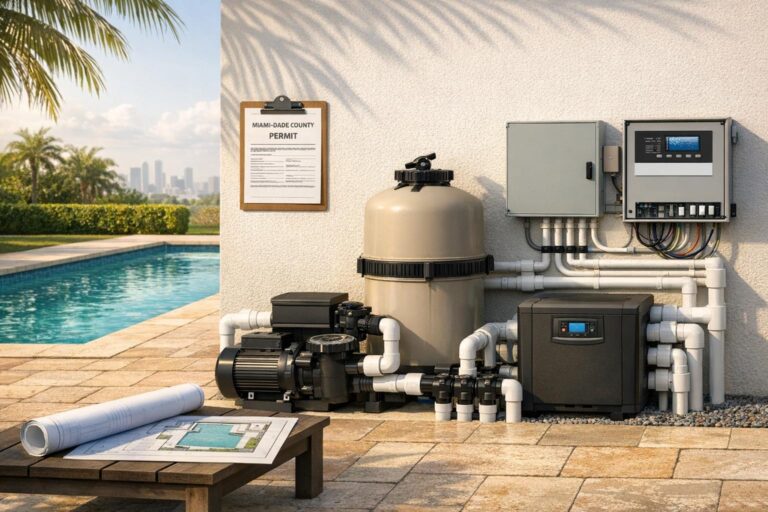

Swimming pools are more than just water – they’re intricate systems that work round the clock to stay clean, safe, and enjoyable. Here’s what you need to know about owning a pool in Miami or South Florida:
- Circulation is Key: Water moves constantly through skimmers, drains, filters, heaters, and sanitizers to stay clean and balanced. Without proper circulation, algae and bacteria can thrive.
- Essential Equipment: The pump drives water flow, the filter removes debris, the heater maintains temperature, and sanitizers like chlorine kill bacteria and algae.
- Miami-Specific Challenges: High heat, humidity, and tropical storms speed up chemical breakdown, encourage algae, and increase debris, requiring frequent maintenance.
- Safety First: Proper drain covers and compliance with laws like the Virginia Graeme Baker Act prevent accidents.
- Control Options: Choose manual controls for simplicity or automation for convenience, especially in unpredictable weather.
For year-round pool use in Miami, understanding how these systems work helps you avoid costly repairs and ensures a safe swimming experience.
Pool Circulation and Plumbing Basics
What Pool Circulation Does
Pool circulation is the lifeblood of your pool, ensuring water constantly moves through its treatment systems. This process involves drawing water out, cleaning it, and returning it sanitized. Think of it as your pool’s way of staying clean and healthy.
This movement plays a crucial role in removing contaminants, evenly distributing chemicals, preventing stagnation, and maintaining overall water quality. In Miami’s tropical climate, where heat and humidity can speed up chemical breakdown and promote algae growth, keeping the water moving is even more critical. Without consistent circulation, maintaining proper sanitizer levels becomes a challenge.
The Pool & Hot Tub Alliance (PHTA) underscores the importance of effective water management in keeping pools "safe, clean, and running efficiently." Their Certified Pool & Spa Operator® certification program provides valuable guidance on achieving this goal [3].
At the heart of this process is a well-designed plumbing system, which ensures the water flows smoothly and efficiently.
How Pool Plumbing Works
In Miami, pool plumbing systems face specific challenges, from heavy debris during tropical storms to intense UV exposure. These systems operate on two interconnected sides: the suction side and the pressure side.
On the suction side, water is pulled from the pool through skimmers and the main drain. Skimmers, located at the water’s surface, capture floating debris like leaves, while the main drain, positioned at the pool’s deepest point, draws water from the bottom. This ensures thorough circulation throughout the pool. Once the water is drawn in, it’s pressurized by the pump and treated before being pushed back into the pool through the pressure side. Return jets are strategically placed to optimize circulation, preventing dead spots where debris can settle or algae might thrive.
This constant cycle – water moving from skimmers and drains, through treatment, and back via jets – keeps the pool clean and balanced. However, Miami’s climate, with its tropical storms and intense sunlight, demands frequent maintenance to keep this system running efficiently.
The Florida Swimming Pool Association (FSPA) highlights the importance of professional expertise in maintaining pools under such demanding conditions. Their educational programs provide essential tools for pool professionals to ensure safety, efficiency, and proper water care throughout Florida [2].
Pool Circulation – Understanding How Water Moves Through Pool Equipment
Main Pool Equipment and What Each Does
Now that we’ve covered pool circulation, let’s dive into the essential equipment that keeps your pool running smoothly. These components work together to ensure your water stays clean, safe, and inviting. Knowing what each part does can make maintenance a whole lot easier.
Pool Pump: The Heart of the System
The pool pump is the driving force behind your pool’s circulation. Its job? To keep water moving through the filter, heater, and sanitizer before sending it back into the pool. This constant motion not only helps distribute chemicals evenly but also removes contaminants and prevents water from becoming stagnant.
Pool Filter: Clearing Out Dirt and Debris
The pool filter plays a critical role by trapping dirt, leaves, and other debris from your water. Whether you have a sand, cartridge, or DE (diatomaceous earth) filter, keeping it clean – either by rinsing or backwashing – is crucial for maintaining crystal-clear water.
Pool Heater: Keeping the Water Comfortable
Want to enjoy your pool even when the weather cools down? That’s where the pool heater comes in. It allows you to maintain a comfortable water temperature, making it possible to extend your swimming season. Different heaters use various energy sources, but all require regular care to perform efficiently.
Pool Sanitizer: Fighting Bacteria and Algae
Sanitizers are the final piece of the puzzle, working to kill bacteria and stop algae from taking over. Whether you rely on chlorine, a saltwater system, or another method, testing your water regularly and maintaining proper chemical balance is essential for keeping your pool safe and inviting.
How Water Moves Through Your Pool System
Getting familiar with how water flows through your pool system can make it easier to catch problems before they become major headaches. Picture it as a constant loop: water is pulled from the pool, cleaned and treated, then sent back in, ready for use.
Complete Water Flow Process
Here’s how the water circulates through a typical pool system:
- Skimmers and Main Drain: Water leaves the pool through skimmers, which collect floating debris, and the main drain, which handles particles from the bottom.
- Pump and Strainer Basket: The pump pulls in the water, passing it through a strainer basket to trap larger debris before pressurizing it for the next stages.
- Filter System: Once strained, the water flows through the filter, which removes smaller particles and contaminants that could cloud the water or pose health risks.
- Heater (Optional): If you’re heating the pool, the filtered water moves through the heater to reach your desired temperature. Otherwise, this step is skipped.
- Sanitization: Disinfectants like chlorine are added to kill bacteria and prevent algae growth.
- Return Jets: Finally, the treated water is pumped back into the pool through jets, ensuring even distribution.
Following this sequence – pump, filter, heater (if needed), sanitizer, and return – keeps your equipment running smoothly and ensures the water stays clean and safe. However, Miami’s climate can throw a few curveballs into this process.
Miami Climate Effects on Pool Operation
Miami’s tropical weather can make pool maintenance a bit more demanding. Warm temperatures and high humidity create the perfect environment for algae, which means you’ll need to stay on top of chemical levels and cleaning.
The heat also causes chemicals to break down faster, so you’ll likely need to add them more frequently. Plus, summer storms and heavy rain can dilute your pool’s chemical balance, making it crucial to test and adjust the water often. Regular cleaning of skimmers and filters becomes even more important in these conditions to keep everything running smoothly.
sbb-itb-a36f8f1
Pool Control Options
Once you’re familiar with how your pool equipment works, the next step is figuring out how to manage it effectively. You can go with straightforward manual controls or opt for the convenience of modern automation.
Basic Manual Controls
If you’re looking for something simple and budget-friendly, manual controls are the way to go. These systems use time clocks, manual valves, and individual switches to operate your pool equipment. For example, you might have separate switches for the pump, heater, and lights. Time clocks ensure key equipment runs at specific times, while manual valves let you control water flow between different parts of the system. The main perks here? Simplicity and a lower upfront cost. But keep in mind – you’ll need to make adjustments yourself whenever conditions change.
Automated Pool Systems
For a more advanced approach, automated systems bring all your pool equipment together under one central control panel. You can manage everything – pump schedules, water temperature, lighting, and more – through your smartphone, tablet, or a wall-mounted display. This setup is perfect for making quick changes without leaving your chair. While automation requires a higher initial investment, it’s incredibly convenient, especially if you live in an area with unpredictable weather.
Choosing between manual and automated controls comes down to your needs and budget. The right system will help your pool run smoothly and save you time, which is especially handy in Miami’s demanding climate.
Pool Safety Standards and Organizations
Ensuring pool safety isn’t just about keeping the water clean – it’s also about safeguarding your loved ones and maintaining consistent performance. Several key organizations establish and uphold safety and equipment standards, providing guidelines, certifications, and resources to help pool owners make informed decisions.
National Pool Organizations
The Pool & Hot Tub Alliance (PHTA) plays a significant role in setting safety and quality benchmarks. They develop ANSI/PHTA/ICC standards for pool construction and water quality. As of November 2025, their Certified Pool & Spa Operator® (CPO®) certification remains a trusted credential in water management and safety. Additionally, their GENESIS® education program focuses on advancing skills in pool and spa design, engineering, and construction. These certifications are recognized worldwide and cater to builders, service technicians, and operators alike [3].
NSF International ensures the safety of pool equipment by creating public health standards and conducting rigorous testing. Their certification mark on pool products guarantees they meet or exceed safety and quality requirements. This certification is a reliable indicator of product safety through November 2025 [4].
The U.S. Consumer Product Safety Commission (CPSC) leads the Pool Safely campaign, which enforces the Virginia Graeme Baker Pool and Spa Safety Act. This legislation requires public pools and spas to use drain covers that prevent suction entrapment accidents – a critical safety measure for residential pools as well [1].
Florida Pool Organizations
The Florida Swimming Pool Association (FSPA) is a go-to resource for pool owners in Florida. It provides access to licensed professionals, including builders, service technicians, and retailers, ensuring that pools are maintained to the highest standards. In November 2025, FSPA continues to advocate for safety and industry standards while offering educational programs tailored to Florida’s unique pool environment [4].
One standout initiative is FSPA’s "License Plate" program, which funds a child’s swim lesson with every license plate purchase in 2025. This program underscores the importance of drowning prevention through education [2].
Pool Safety Resources
The Pool Safely initiative, managed by the CPSC, offers essential safety tips for pool owners. Their resources emphasize the importance of multiple layers of protection, such as barriers, covers, and alarms to secure pool areas.
When hiring professionals, certifications like CPO® and GENESIS® serve as reliable indicators of expertise. For equipment, look for the NSF certification mark to ensure consistent safety and quality.
In Miami, where swimming is a year-round activity, paying attention to safety standards is especially important. The tropical climate and frequent pool usage demand certified, high-quality systems to ensure families stay safe. These safety measures are the backbone of effective pool operation in Miami’s unique environment, tying directly into practical maintenance and care strategies.
Pool Operation in Miami and South Florida
Miami’s tropical climate brings unique challenges and opportunities for pool owners. With its year-round warmth, high humidity, and unpredictable weather, maintaining a pool in this region requires a tailored approach and a good understanding of local conditions.
Year-Round Pool Use and Maintenance
Unlike areas where pools are closed during colder months, pools in Miami run continuously throughout the year. This nonstop use puts extra pressure on key systems like circulation, filtration, and chemical balance, which never get a break. To keep everything running smoothly, a proactive maintenance plan is essential.
Heat, Humidity, and Debris: The Triple Threat
Miami’s high temperatures and humidity speed up chemical reactions in pool water, making it easier for algae to thrive. Adding to the challenge, tropical debris – such as palm fronds, seed pods, and flowers – constantly finds its way into pools, clogging skimmer baskets and creating ideal conditions for algae growth.
Summer storms bring another layer of complexity. Heavy rains dilute the pool’s chemicals and introduce contaminants from runoff. At the same time, high humidity slows evaporation, causing dissolved solids to build up faster. This often means pool owners need to replace some water more frequently to maintain balance.
Alligator Pools: Your Local Pool Experts
Since 1985, Alligator Pools has been serving Miami-Dade County with over 40 years of expertise in tackling South Florida’s specific pool maintenance challenges. Their certified technicians bring a wealth of knowledge, offering services like climate-adjusted maintenance schedules, recommendations for equipment suited to tropical conditions, storm preparation, expert water chemistry management, and efficient debris removal solutions to handle Miami’s constant organic input.
For additional support, the Florida Swimming Pool Association (FSPA) is a great resource for homeowners. They connect pool owners with licensed professionals who truly understand the demands of Miami’s tropical environment [2]. With local know-how and specialized care, Alligator Pools ensures your pool stays in top shape, no matter the season.
Conclusion
Understanding your pool system is essential for safe and efficient maintenance. A well-maintained pool depends on knowing how its key components work together. These components include the pump, which circulates water; the filter, which removes contaminants; the heater, which keeps the water at the right temperature; and the sanitizer, which eliminates bacteria and algae. This interconnected system is especially important in Miami, where the environment poses unique challenges.
Proper water circulation is crucial. It prevents stagnant areas where algae can grow and ensures that chemicals are evenly distributed throughout the pool.
"Keep pools, spas, and hot tubs safe, clean, and running efficiently with expert maintenance, repair, and water care services."
- Pool & Hot Tub Alliance
Miami’s tropical climate adds extra layers of complexity. High humidity, frequent storms, and organic debris create conditions that demand more from your pool system compared to those in seasonal climates. Pools in Miami are used year-round, meaning they face constant exposure to heat, storms, and debris, which can strain their efficiency.
Organizations like the Pool & Hot Tub Alliance (PHTA) and Florida Swimming Pool Association (FSPA) stress that proper pool education is directly linked to safety and system performance.
To keep your pool running smoothly, partnering with skilled professionals is key. It can save you from the headaches of constant maintenance and allow you to enjoy a worry-free pool experience. Alligator Pools has over 40 years of expertise in South Florida, making them uniquely equipped to handle the challenges of Miami’s climate. Their certified technicians understand exactly how local conditions impact pool systems and can provide the specialized care needed to keep your pool operating efficiently all year long.
Protect your pool – and your family – with expert care. Contact Alligator Pools today and enjoy the peace of mind that comes with Miami’s most trusted pool professionals.