
If your South Florida pool has white buildup along the tile lines, it’s caused by hard water, heat, and evaporation. This buildup, mostly calcium carbonate or calcium silicate, forms when minerals left behind by evaporating water harden on the tiles. The region’s mineral-rich water and year-round pool use make this a common issue.
Key Points:
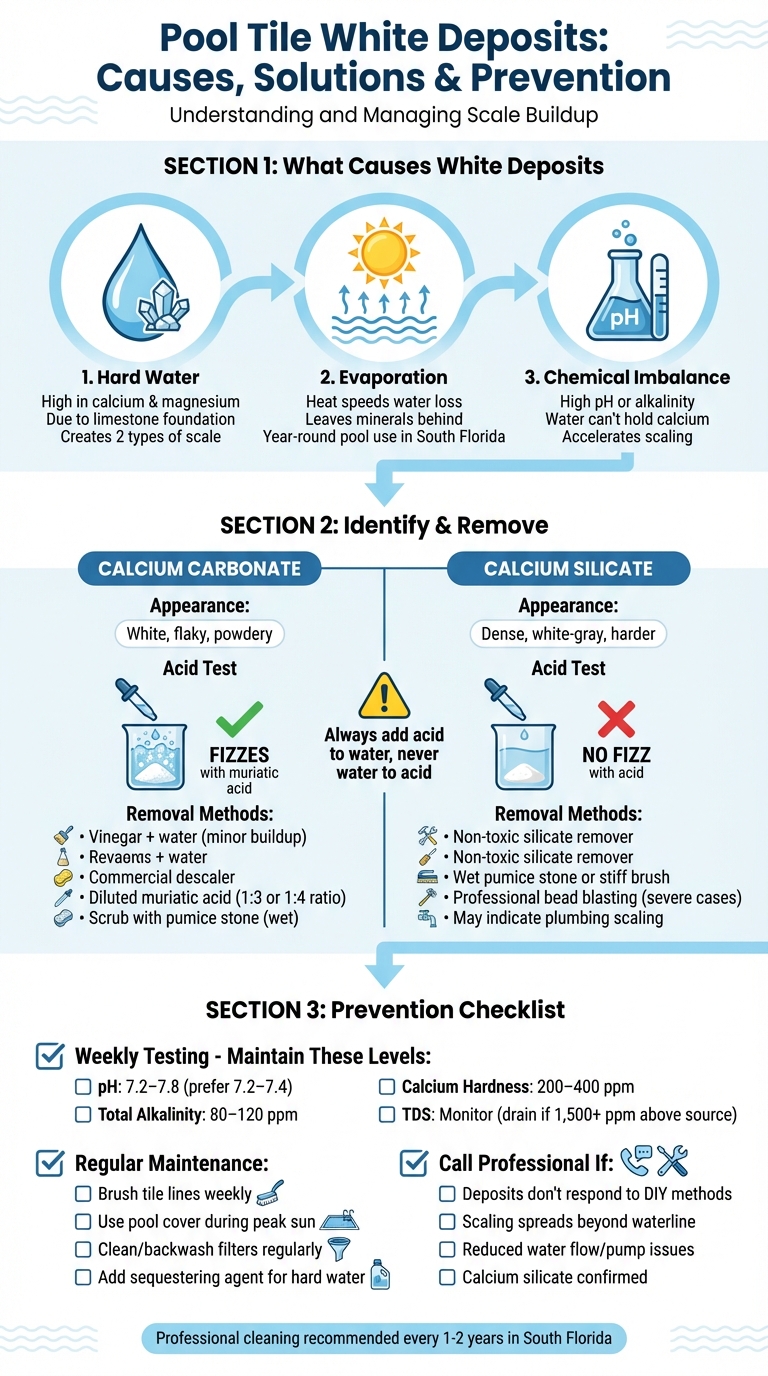
- Hard Water: South Florida’s water is naturally high in calcium and magnesium due to its limestone foundation.
- Evaporation: Heat speeds up water loss, leaving concentrated minerals behind.
- Chemical Imbalances: High pH or alkalinity levels promote scaling.
Solutions:
- For Calcium Carbonate: Use vinegar, diluted muriatic acid, or commercial descalers.
- For Calcium Silicate: Use specialized silicate removers or hire professionals for bead blasting.
- Prevention: Test water weekly, maintain pH (7.2–7.8), alkalinity (80–120 ppm), and calcium hardness (200–400 ppm). Use a pool cover to limit evaporation and clean filters regularly.
If deposits are too stubborn or widespread, professional cleaning services can safely restore your pool tiles and address underlying issues.
How to Remove and Prevent White Pool Tile Deposits: Complete Guide
What Causes White Deposits on Pool Tile Lines?
Hard Water and Calcium Scaling
In South Florida, hard water – rich in minerals like calcium and magnesium – is a common issue due to the region’s natural limestone foundation. When this mineral-heavy water fills your pool, the calcium stays dissolved until changes in water chemistry or evaporation trigger its precipitation.
"In Florida, scale is very prevalent in swimming pools, bathrooms, and other features where water is present… That’s because Florida rests on a bed of limerock which is made up, in large part, of calcium." – Advanced Pool & Spa [6]
Two main types of calcium scale can form. Calcium carbonate looks white, flaky, or powdery and will fizz when exposed to a drop of muriatic acid [1]. On the other hand, calcium silicate is a denser, white-gray deposit that forms more slowly, doesn’t react to acid, and can signal scaling within your pool’s plumbing as well [1].
South Florida’s Climate Effects
South Florida’s hot, sunny weather plays a major role in scale buildup. The intense heat speeds up water evaporation, leaving minerals like calcium, magnesium, and silica behind to concentrate along the waterline. Since pools in this region are used year-round without a break, this process continues nonstop [2]. The combination of high humidity and warm temperatures also helps these deposits harden more quickly on pool surfaces.
Chemical Imbalances and Evaporation
The balance of your pool’s water chemistry is critical in preventing scale. If the pH or alkalinity levels rise too high, the water loses its ability to keep calcium dissolved, leading to deposits on your tiles [1]. To avoid this, aim to maintain a pH level between 7.2 and 7.8 and keep calcium hardness in the ideal range of 200 to 400 ppm.
"When pH or alkalinity is too high, water loses its ability to hold calcium in solution. That imbalance speeds up the formation of scaling." – Bullfrog Pool Tile Cleaning [1]
Evaporation adds to the problem. Each time water evaporates, it leaves the minerals behind, which can quickly push calcium hardness above 400 ppm and accelerate scale buildup [2]. In South Florida’s climate, the combination of evaporation and chemical imbalances makes keeping your pool’s waterline clean an ongoing challenge.
sbb-itb-a36f8f1
💦Pool Help 1 ● Remove Calcium Scale and Mineral Deposits From Water Features and Tile Line ✅
How to Remove White Deposits from Pool Tile Lines
In South Florida, mineral buildup can happen quickly, making it crucial to keep these deposits under control to maintain a clean and inviting pool.
Cleaning Calcium Carbonate Deposits
Start by testing the deposit with diluted muriatic acid. If it fizzes, you’re dealing with calcium carbonate [1]. For minor buildup, mix vinegar and water, apply it to the tiles, let it sit for a few minutes, and gently scrub using a soft sponge or nylon brush.
For more stubborn deposits, a commercial descaler like BioGuard Scale Inhibitor can be effective – just follow the instructions on the label. If the buildup is particularly heavy, use a diluted muriatic acid solution (mix one part acid with three or four parts water). Apply the solution, let it sit for about 15 minutes, and then rinse thoroughly. Always wear rubber gloves and safety goggles when handling acid, and remember the golden rule: always add acid to water, never the other way around, to avoid dangerous splashing.
When scrubbing, a pumice stone works well on ceramic tiles or concrete surfaces, but make sure to keep both the stone and the tile wet. For more delicate materials like glass tiles or fiberglass, stick to a soft sponge or nylon brush. SPS PoolCare offers this important advice:
"Stiff brushes or a pumice stone might be okay on plaster but will scratch fiberglass and delicate tiles, which should be cleaned with a soft textured sponge" [7].
Once the calcium carbonate is handled, it’s time to tackle tougher calcium silicate deposits.
Cleaning Calcium Silicate Deposits
If the acid test doesn’t fizz, you’re likely dealing with calcium silicate – a harder, grayish-white scale that’s more challenging to remove [1][5]. Since it doesn’t react to muriatic acid like calcium carbonate, you’ll need a different method. Use a non-toxic silicate remover, following the product’s directions carefully. Lower the water level to expose the tiles, apply the remover, let it sit as instructed, and scrub with a wet pumice stone or a stiff nylon brush.
For thick or widespread silicate buildup, professional help might be your best option. Pool experts often use a process called “bead blasting,” which involves using magnesium sulfate or glass beads to safely strip away the scale without damaging the tiles [1][7]. This method is faster and more efficient for large-scale issues than manual scrubbing. If silicate buildup extends to plumbing or becomes too extensive, it’s time to call in the pros.
Preventing Future White Deposits
To keep calcium scaling at bay, it’s essential to monitor your pool’s water chemistry and adapt maintenance routines to South Florida’s unique challenges, like hard water and high evaporation rates. Regular testing is key to catching imbalances early and addressing them before they lead to stubborn deposits.
Regular Water Testing and Balancing
Make it a habit to test your pool water every week, focusing on these key parameters:
- pH levels: Aim for a range of 7.2–7.8, with a preference for the lower end (around 7.2–7.4) to minimize calcium buildup.
- Total alkalinity: Maintain levels between 80–120 ppm.
- Calcium hardness: Keep this within 200–400 ppm [1].
Staying on top of these metrics ensures your pool’s water chemistry aligns with the cleaning methods we’ve discussed. Additionally, keep an eye on Total Dissolved Solids (TDS). If they exceed 1,500 ppm above your source water, it’s time to partially drain and replace the water – or consider using reverse osmosis to restore balance [8][3].
Maintenance Practices for South Florida Pools
South Florida’s climate can make pool maintenance a bit more demanding, but a few proactive steps can make a big difference:
- Limit evaporation: Use a pool cover during peak sunlight hours to reduce water loss and the concentration of minerals [3].
- Brush regularly: Scrub the tile lines weekly to disrupt early mineral deposits before they harden [1].
- Clean filters: Backwash or clean your filters frequently to remove accumulated minerals.
- Handle hard water: Since local tap water tends to be high in calcium [6], add a sequestering agent or scale inhibitor to keep those minerals dissolved and prevent scaling [4].
When to Call a Professional
There are times when calcium deposits in your pool go beyond what DIY methods can handle. Recognizing when to call in a professional can save you a lot of effort, protect your pool surfaces, and prevent damage to your equipment.
Signs of Severe Calcium Scaling
If scrubbing or using commercial descalers isn’t making a dent, it’s a sign that the deposits may have hardened too much for at-home solutions. A quick test? Drop some diluted muriatic acid on the buildup – if it doesn’t fizz, you’re likely dealing with calcium silicate, which needs professional attention [1].
Here are some red flags that mean it’s time to call in the experts:
- Deposits that feel rough like sandpaper or have sharp edges
- Scaling that spreads beyond the waterline
- Brown or green stains trapped within the mineral layers
- Reduced water flow or pumps struggling to keep up – this could indicate scaling inside the system [1].
In areas like South Florida, where hard water is common, professional pool tile cleaning is often recommended every year or two to avoid permanent damage [2].
"Because calcium silicate takes longer to form, pools that have calcium silicate buildup on their walls often also have scaling in their pipes. If your pool’s scaling proves to be calcium silicate, you may need to hire a professional to remove the deposits in your pool and its filtration system." – Latham Editorial Team [3]
When these issues arise, it’s clear that professional help is no longer optional – it’s necessary.
Benefits of Professional Pool Services
Once severe scaling is identified, professional services offer a safer, more efficient solution. Experts use advanced techniques that go beyond what you can achieve at home. One standout method is bead blasting, which uses compressed air to apply soft media like magnesium sulfate to the tile. This approach quickly clears stubborn calcium deposits without damaging the tile’s protective glaze or grout [7]. Unlike manual scraping – which risks cracking tiles or harming surfaces – professionals carefully calibrate their methods to suit your pool’s materials, whether ceramic tile, fiberglass, or vinyl.
But it doesn’t stop at surface cleaning. Professionals tackle the root cause of scaling by testing and balancing your water chemistry. They often use reverse osmosis treatments to lower calcium hardness levels more effectively than simply adding chemicals. Additionally, they inspect and clean internal components like the filtration system, pumps, and heaters to remove scaling that could reduce your system’s efficiency. For pool owners in areas with persistent hard water, like South Florida, this thorough approach not only prevents future buildup but also keeps your pool in top shape all year long.
Conclusion
White deposits on your pool tiles are more than just a cosmetic nuisance – they point to water chemistry issues that, if ignored, can lead to damaged tile glaze, clogged filters, and reduced filtration efficiency. In South Florida’s warm climate, high evaporation rates concentrate minerals like calcium at the waterline, causing chalky deposits to form more quickly. Tackling these issues early is essential to keeping your pool both functional and visually appealing.
The upside? You can take control of the situation. Simple steps like weekly brushing can break up mineral films before they harden, and maintaining balanced water chemistry helps stop new deposits from forming. A quick test with diluted muriatic acid can help you identify the type of scale – calcium carbonate will fizz, while the more stubborn calcium silicate will not [1][3]. With a combination of regular upkeep and targeted treatments, you can keep scale buildup in check.
For tougher or widespread deposits, professional help might be necessary. If the scaling extends beyond the waterline or proves too stubborn for DIY methods, services like bead blasting and expert water-balancing can restore your pool safely and thoroughly [2].
FAQs
How can I tell if the white buildup on my pool tiles is calcium carbonate or calcium silicate?
The simplest way to figure out what type of buildup you’re dealing with is to look at its appearance and see how it responds to cleaning.
- Calcium carbonate has a flaky, powdery white look. It feels chalky to the touch and can usually be brushed away easily with a soft brush or a mild cleaner.
- Calcium silicate, on the other hand, shows up as a hard, grayish-white deposit. It feels gritty and clings stubbornly to surfaces, often requiring stronger descaling products or professional tools to remove.
Here’s a quick test: scrub a small area with a soft brush. If the deposit crumbles into powder, it’s likely calcium carbonate. But if it remains solid, you’re probably dealing with calcium silicate. This type of buildup often forms when the pool’s pH levels have been consistently high. Knowing the type of deposit is key to picking the right cleaning method – acid-based cleaners are effective for carbonate, while silicate may call for more specialized treatments.
How can I prevent white calcium buildup on my pool tiles in South Florida?
To keep your pool tiles free from white calcium buildup, stick to these straightforward maintenance tips:
- Test and balance your water every week: Keep the pH between 7.2 and 7.6, alkalinity between 80 and 120 ppm, and calcium hardness within 200 to 400 ppm. These levels help prevent minerals from forming deposits.
- Maintain a consistent water level: Regularly refill your pool to offset evaporation, which can leave behind mineral residue.
- Brush the tile line weekly: Use a soft-bristle brush or a non-abrasive pumice stone to scrub away deposits before they harden.
- Clean with a vinegar solution: Mix white vinegar and water (1 part vinegar to 4 parts water), spray it on the tiles, let it sit for a moment, and rinse. This works well for light calcium buildup.
- Apply a scale inhibitor: Use a commercial calcium reducer weekly to stop new deposits from forming.
For tougher buildup or a deeper clean, consider hiring a professional once a year. They can tackle stubborn deposits and check for any tile damage. With regular upkeep, your pool tiles will stay clean and beautiful all year long.
When should I call a professional to clean white buildup on my pool tiles?
If you’re spotting white, chalky deposits along your pool’s waterline that won’t budge with regular scrubbing or household cleaners, it might be time to bring in the experts. These deposits, typically caused by calcium buildup, can harden over time, making them nearly impossible to tackle with DIY efforts.
Here’s when you know it’s time for professional help:
- Stubborn white or gray stains clinging to tiles, spillways, or water features that refuse to come off.
- Thick, hardened scale that traps dirt or algae, leaving tile surfaces looking dull and grimy.
- Lingering stains that persist despite maintaining proper water chemistry and regular upkeep.
Trying to scrape off these hardened deposits yourself can lead to unintended damage to your tiles or grout. Professional services use specialized tools and techniques to safely remove the buildup, restoring your pool’s look while protecting its surfaces.