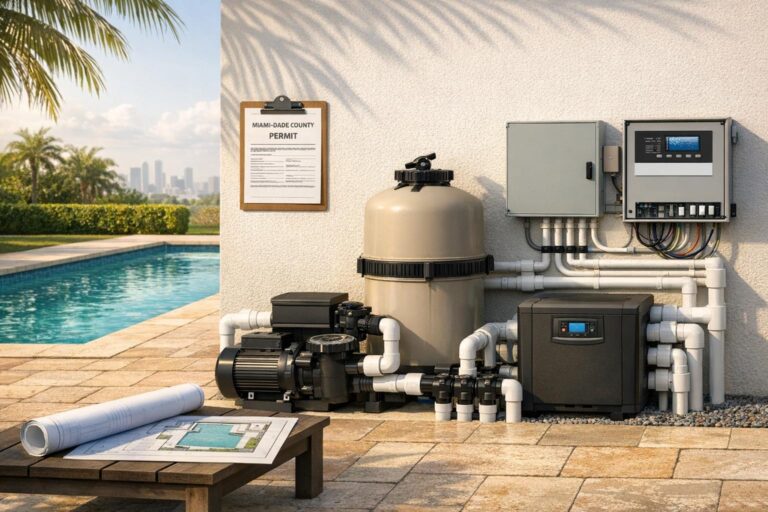

Your pool filter is key to keeping your water clean and safe. Neglecting maintenance can lead to cloudy water, bacteria buildup, and costly repairs. Here’s what you need to know:
- Top Issues: Clogged filters, leaks, pressure problems, water flow issues, and cloudy water are common.
- Signs of Trouble: Reduced water flow, rapid pressure increases, or visible leaks often signal problems.
- Fixes: Regular cleaning, replacing filter media, fixing leaks, addressing pressure imbalances, and maintaining water chemistry can resolve most issues.
- When to Call a Pro: Persistent leaks, recurring pressure problems, or internal damage may require professional help.
Routine cleaning and timely repairs save money and prolong the life of your system. For Miami-Dade County residents, Alligator Pools offers trusted repair services tailored to the area’s unique climate challenges.
Swimming Pool Common Filter Issues and Solutions
Common Pool Filter Problems
Pool filters often encounter recurring issues that can affect their performance and the clarity of your pool water. Spotting these problems early can save you from expensive repairs and ensure your pool remains ready for use. Let’s break down some of the most common issues and their warning signs.
Clogged or Dirty Filter Media
Over time, debris builds up in the filter media, reducing water flow and filtration efficiency. Each type of filter has its own challenges:
- Sand filters can develop compacted sand or mineral deposits, requiring more frequent backwashing.
- Cartridge filters may accumulate oils and debris in their pleats.
- DE filters can experience similar buildups on their grids.
Signs of trouble include reduced water flow, shorter intervals between cleanings, and rapid pressure increases after maintenance. These are clear indicators that the filter media is nearing its limit. [1][2][3]
Filter Housing and Connection Leaks
Leaks in the filter system are often caused by worn gaskets, damaged o‑rings, or loose fittings. Look for water pooling around seams, connection points, or the valve assembly. Leaks can cause unfiltered water to bypass the system, leading to persistent cloudiness even when the filter is running. Sometimes, small leaks only appear when the pump is active, so it’s a good idea to regularly inspect multiport valves, filter lids, and threaded connections for any signs of trouble. [2][3]
Pressure Problems
A pool filter’s pressure gauge can reveal a lot about its condition. High pressure readings often signal clogged filter media, blockages in the return lines, or an overfilled pool. These spikes usually occur when the filter media becomes coated with oils or minerals. On the other hand, low pressure readings suggest reduced water flow, which could be caused by obstructions like clogged pump baskets, skimmer baskets, or impellers, or even air leaks in the pump. Ignoring these pressure issues can harm your filtration system and other equipment. [1][3]
Water Flow Issues
Poor water flow – whether weak suction or low return flow – often points to blockages in the circulation system. Common culprits include clogged pump baskets, skimmer baskets, or impellers that restrict water before it even reaches the filter. Obstructions in pipes, valves, or plumbing lines can further disrupt circulation. Identifying the exact location of the blockage is key to resolving the problem. [3]
Cloudy or Unfiltered Water
If your pool water remains cloudy, it could be due to filtration problems or a chemical imbalance. Filtration issues might involve dirty or damaged cartridges, tears in the filter media, or an overly powerful pump that forces water through the system without proper filtration. To determine whether the problem lies with the filter or water chemistry, check the pressure gauge. Normal pressure suggests a chemical imbalance, while abnormal readings point to a filter issue. [1][3][4]
How to Fix Pool Filter Problems
Dealing with pool filter issues? Here’s how to tackle common problems like cleaning, leaks, pressure imbalances, blockages, and chemical troubles.
Cleaning or Replacing Filter Media
The cleaning process depends on the type of filter you’re using.
Sand filters need regular backwashing to flush out debris. Turn off the pump, set the valve to "backwash", and run it until the water in the sight glass turns clear – this usually takes about 2–3 minutes. Follow up by switching to "rinse" for 30 seconds before returning to "filter" mode. If you notice persistent cloudiness or water channeling (paths forming in the sand), it might be time to replace the sand, typically every 5–7 years.
Cartridge filters require manual cleaning. Remove the cartridge, rinse it thoroughly with a garden hose, and soak it in a cleaning solution if oils or debris build up. Replace the cartridge every 1–2 years or sooner if you notice tears or deformation, as damaged cartridges let unfiltered water bypass the system.
DE filters involve backwashing to remove old diatomaceous earth, followed by recharging with fresh DE powder. Open the housing, rinse the grids, and add new DE powder as per the manufacturer’s instructions. Replace the grids every 5–10 years or if you find tears in the fabric.
Dispose of used filter media responsibly. Never dump sand or DE powder into storm drains – this can harm the environment and may violate local regulations.
Fixing Leaks
Leaks are often caused by worn seals or loose connections, and fixing them is usually straightforward.
Start by turning off the pump and releasing pressure using the air relief valve. Inspect all o-rings around the filter housing, pump lid, and connections for cracks, hardening, or misalignment. Clean the grooves and apply a thin layer of silicone lubricant before installing new o-rings.
Check and tighten unions, clamps, and threaded connections. Hand-tighten unions, and use tools carefully for other fittings to avoid cracking plastic parts. If the filter housing itself has cracks, professional replacement is usually required, as temporary fixes rarely hold up under pressure.
For leaks in a multiport valve, the spider gasket inside is often the culprit. This repair requires disassembly and is best handled by someone familiar with valve mechanics.
Fixing Pressure Levels
Your pressure gauge provides valuable insight into your filter’s condition. Addressing abnormal pressure usually resolves underlying problems.
- Normal pressure ranges: Sand filters operate at 10–20 psi, cartridge filters at 10–15 psi, and DE filters at 8–12 psi. When pressure rises 8–10 psi above the clean baseline, it’s time to clean or backwash.
- High pressure: Start by cleaning or backwashing. If the pressure remains high, check for closed or partially closed valves. Persistent high pressure may mean the filter media needs replacing.
- Low pressure: This often points to restricted water flow. Check for proper pump priming, air leaks at the pump lid and fittings, and ensure all valves are fully open. Low pressure could also signal blockages in the system.
If pressure issues persist, inspect the entire circulation system for problems.
Removing Blockages
Blockages can disrupt water flow and mimic filter problems, so a thorough inspection is key.
Turn off the pump before starting. Empty skimmer and pump baskets, removing any debris like leaves or small objects that might block flow. Even minor items like hair ties can cause significant issues.
If flow is still weak, the pump impeller might be clogged. You’ll need to remove the pump housing to access and clean the impeller. For blockages in plumbing lines, use a plumbing snake or high-pressure hose. Weak flow from return jets may indicate obstructions in specific lines. In some cases, simply opening all valves fully can resolve the problem.
If mechanical fixes don’t work, the issue might be chemical, not physical.
Balancing Water Chemistry
Proper water chemistry prevents many filter issues and can resolve problems that seem mechanical but are actually chemical.
Test your water weekly and maintain these key levels:
- pH: 7.2–7.8
- Total alkalinity: 80–120 ppm
- Chlorine: 1–3 ppm
- Calcium hardness: 200–400 ppm
Use reliable test strips or a digital kit for accuracy. Imbalanced water chemistry can overwork your filter. For example, high pH causes scaling that clogs filter media, while low chlorine levels promote algae growth that overwhelms the system. If your pressure is normal but water remains cloudy, the problem is likely chemical.
After making chemical adjustments, run the filter continuously for 24–48 hours. For severe cloudiness, shock the pool with chlorine and consider using a clarifier to help capture fine particles.
sbb-itb-a36f8f1
Pool Filter Types and Maintenance
Understanding the different types of pool filters is essential for tackling any issues that arise. Each type has its own quirks, which influence how problems develop and how they should be handled.
Sand Filters
Sand filters work by using a bed of specially graded sand to trap debris as water flows through, filtering particles down to 20–40 microns. Regular maintenance is crucial to keep them running smoothly and avoid common problems.
One common issue with sand filters is channeling, where water creates pathways through the sand instead of being evenly filtered. This can lead to cloudy water even if the pressure gauge shows normal readings. Channeling often happens when the sand becomes compacted, which can occur if backwashing is neglected or if the sand is too fine.
If you find sand in your pool, it’s a sign of broken laterals or a cracked standpipe inside the filter. Fixing this requires draining the filter, removing the sand, and replacing the damaged parts. This is a job that may be better left to a professional.
Sand filters should be backwashed when the pressure increases by 8–10 psi above the clean baseline. Additionally, the sand itself needs replacing every 5–7 years – or sooner if issues like persistent channeling arise.
For improved filtration and water efficiency, you might want to look at cartridge filters.
Cartridge Filters
Cartridge filters use pleated polyester fabric to capture smaller particles, filtering down to 10–20 microns. Unlike sand filters, they don’t require backwashing, making them a more water-efficient option.
A common issue with cartridge filters is torn or collapsed pleats, which can allow unfiltered water to pass through. Pay close attention to the end caps during inspections, as these areas are prone to stress and damage. Even small tears can reduce the filter’s effectiveness.
If you notice shorter filter cycles, it could mean the cartridges are clogging quickly. This might require more frequent cleaning or could indicate water chemistry issues. If cleaning doesn’t restore performance, it’s time to replace the cartridges.
Cartridge filters should be cleaned every 2–6 weeks and replaced every 1–2 years – or sooner if they show signs of damage. To clean, simply rinse them thoroughly with a garden hose. If you have a spare set, rotate between them to extend their lifespan.
One major advantage of cartridge filters is water conservation. Since they don’t require backwashing, you save hundreds of gallons of water. However, regular replacements and proper storage for spare cartridges are necessary to maintain performance.
For those seeking the finest filtration, DE filters might be the way to go.
DE Filters
Diatomaceous earth (DE) filters deliver the best filtration, capturing particles as small as 2–5 microns for exceptionally clear water. They rely on fabric-covered grids coated with DE powder, and they require specific care to keep them functioning properly.
One of the main concerns with DE filters is torn grids. When the fabric tears, DE powder can leak into the pool, creating a mess and reducing filtration efficiency. During routine cleaning, carefully inspect the grids for any holes or worn areas.
If you notice DE powder in your pool but the grids are intact, the problem could be with the manifold, missing o-rings, or improper assembly. Check all sealing surfaces and connections within the filter housing to pinpoint the issue.
After each backwash or cleaning, DE filters need to be recharged with fresh DE powder. The amount required depends on your filter size. Grids should be replaced every 7–10 years, and they should be thoroughly cleaned at least once a season to remove residual DE and check for damage.
| Filter Type | Filtration Level | Maintenance Frequency | Water Usage | Replacement Interval |
|---|---|---|---|---|
| Sand | 20–40 microns | Backwash every 1–2 weeks | High | Sand: 5–7 years |
| Cartridge | 10–20 microns | Clean every 2–6 weeks | Low | Cartridge: 1–2 years |
| DE | 2–5 microns | Backwash and recharge as needed | High | Grids: 7–10 years |
Choosing the right filter depends on your priorities. DE filters provide the clearest water but require the most upkeep. Cartridge filters strike a balance between performance and convenience, while sand filters are low-maintenance but may not deliver the same level of clarity.
No matter which filter you use, maintaining proper water chemistry is critical. Balanced water reduces the workload on your filter, extends its lifespan, and prevents chemical damage to the filter media.
When to Call a Professional
While many pool filter problems can be resolved with routine maintenance, some issues demand the expertise of a licensed pool contractor. If you’ve tried the standard cleaning, troubleshooting, and pressure management techniques outlined earlier without success, it may be time to bring in a professional. Below are some specific scenarios where expert intervention is necessary.
Problems That Need Professional Repair
Persistent leaks are often a sign of structural problems that go beyond simple DIY fixes. Water pooling around the filter base, visible cracks in the tank, or leaks at the multiport valve often require disassembly and replacement of components – tasks best left to a professional.
Recurring pressure issues that persist despite regular cleaning could point to pump malfunctions or internal component failures. Industry data suggests that over 60% of pool filter breakdowns stem from neglected maintenance or delayed repairs. Addressing these problems promptly can prevent reduced filtration efficiency, higher energy bills, and even total system failure.
Internal damage is another red flag. For sand filters, finding sand in your pool could indicate broken laterals or a cracked standpipe. Similarly, if your DE filter consistently loses DE powder into the pool despite intact grids, the problem might involve the manifold, missing O-rings, or improper assembly.
Cloudy water that persists even after balancing chemicals and cleaning suggests unfiltered water is bypassing the filtration media. This could be due to torn cartridges, channeling in sand filters, or damaged internal seals – issues that require professional assessment.
Electrical and mechanical problems should always be handled by licensed professionals to ensure safety and compliance.
| Problem Type | DIY Possible? | Professional Cost Range | Risk of Delay |
|---|---|---|---|
| Basic cleaning/backwash | Yes | $0–$50 | Low |
| Persistent leaks | No | $150–$500 | High (risk of equipment damage) |
| Internal part replacement | No | $200–$600 | Risk of system failure |
| Electrical issues | No | $200–$700 | Safety hazards |
For these more complex issues, an experienced contractor can provide accurate diagnostics and lasting repairs.
Why Choose Alligator Pools
Alligator Pools has been a trusted name in Miami-Dade County for over 40 years. As a licensed Florida pool contractor (CPC1459915), they specialize in handling complex filter repairs and diagnostics. Their team of certified pool technicians, holding Certified Pool Operator (CPO) credentials from the National Pool & Spa Association, follows the latest standards in pool care to ensure top-notch service.
"We are a licensed pool and spa service contractor in Florida, holding license CPC1459915. This ensures that all of our work meets the highest standards of safety and compliance, giving you peace of mind when we service, renovate, or maintain your pool."
What sets Alligator Pools apart is their comprehensive approach. They don’t just fix surface-level issues – they identify and address root causes, whether it’s pump incompatibility, hidden leaks, or worn-out internal components. This thorough method helps prevent recurring problems and extends the lifespan of your equipment.
Miami-Dade County has its own set of challenges when it comes to pool maintenance, from unique water chemistry to climate-related wear and tear. Alligator Pools’ deep understanding of these local factors allows them to deliver faster diagnoses and solutions tailored to South Florida’s specific needs.
Transparent pricing is another hallmark of their service. Diagnostic visits typically range from $75 to $150 in the Miami area, with repair costs varying depending on parts and labor. They prioritize clear communication, realistic timelines, and upfront pricing, so there are no hidden fees to complicate matters.
"At Alligator Pools, our expert pool technicians deliver top-rated pool care, guaranteeing your satisfaction."
For urgent filter problems, Alligator Pools is equipped to act quickly, preventing further damage and restoring your pool’s functionality. Their reputation as one of Miami-Dade County’s most trusted pool companies since 1985 speaks to their dedication to quality and customer satisfaction. Serving areas like Coral Gables, Cutler Bay, Doral, Kendall, Miami, Palmetto Bay, Pinecrest, and South Miami, they make professional filter repair accessible throughout the region. Whether you’re dealing with leaks, pressure issues, or internal damage, their certified technicians have the expertise to provide durable solutions.
Conclusion
Keeping your pool filter in good condition is essential for clear water, protecting your investment, and ensuring a safe swimming environment. According to the CDC, proper pool filtration and disinfection can lower the risk of recreational water illnesses by more than 80% [2]. Staying consistent with cleaning, monitoring pressure, and making timely repairs not only prevents expensive breakdowns but also helps control energy costs. While routine maintenance is something most homeowners can handle, persistent issues often signal the need for professional help.
Knowing when to call in the experts is crucial. Tasks like cleaning the filter or backwashing are manageable DIY jobs, but ongoing water quality problems might point to deeper system issues that, if ignored, could lead to costly equipment damage.
For pool owners in Miami-Dade County, the year-round swimming season adds extra wear and tear on filtration systems. In these cases, professional maintenance can be a smart choice to ensure your pool stays in top condition.
When regular upkeep isn’t enough, turning to a trusted service provider can make all the difference. Alligator Pools offers a full range of filter maintenance services, handled by CPO-certified technicians. From routine cleanings to intricate diagnostic work, they ensure your system runs at its best. With over 40 years of experience, clear pricing, and a stellar reputation, they simplify pool care for homeowners in Coral Gables, Cutler Bay, Doral, Kendall, Miami, Palmetto Bay, Pinecrest, and South Miami.
To keep your pool running smoothly, make a habit of checking the pressure gauge, cleaning skimmer baskets, and testing water chemistry. Stick to a simple maintenance routine, and don’t hesitate to call in professionals when problems persist. With regular care, you can enjoy sparkling water and a worry-free pool for years to come.