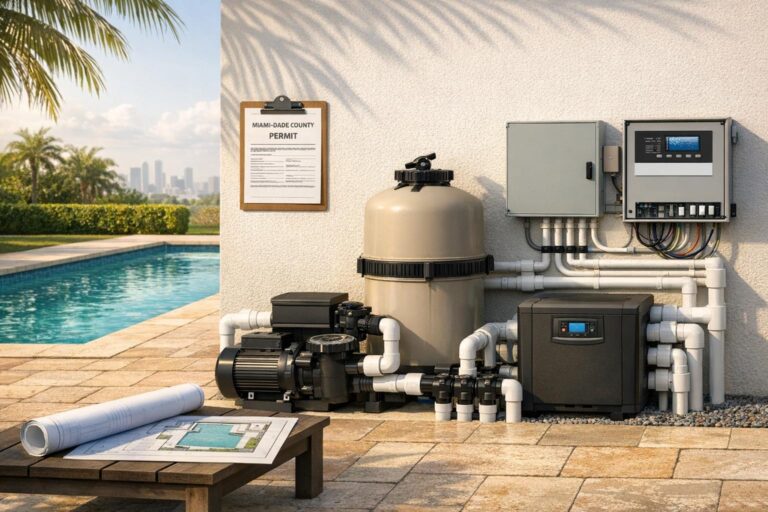

Miami’s weather can destroy your pool equipment faster than you think. The city’s tropical climate – with intense sun, high humidity, salty air, and frequent storms – creates the perfect conditions for wear and tear. Pool pumps overheat, metal parts rust, and UV rays crack plastic components. Hurricanes and heavy rains add even more risks, like flooding and electrical damage.
Key Takeaways:
- Sun: UV rays fade and crack pool liners, weaken plastic parts, and break down chemicals.
- Humidity & Salt Air: Corrosion attacks metal parts like ladders, rails, and pump housings.
- Storms: Flooding and debris clog filters, strain pumps, and damage electrical systems.
- Hurricanes: High winds and saltwater flooding cause severe destruction to equipment.
To protect your pool, inspect equipment monthly, use UV covers, apply anti-corrosion coatings, and secure items before storms. Simple steps can save you from costly repairs.
Weather Conditions That Damage Pool Equipment
Humidity and Salt Air Cause Rust
Miami’s humid climate and salty Atlantic breeze create the perfect storm for metal corrosion. The high moisture levels and salt content in the air accelerate the oxidation process, especially on exposed metal parts of pool equipment. Items like pool ladders, handrails, and pump housings are particularly at risk. Even materials like stainless steel, which are made to resist rust, can eventually develop surface damage, such as pitting and discoloration, when exposed to these harsh conditions over time.
Sun Damage Causes Fading and Cracks
The intense UV radiation in Miami can wreak havoc on pool equipment that isn’t designed for long-term sun exposure. Vinyl pool liners are especially vulnerable, with UV rays causing them to fade, crack, and wear out faster than expected [1].
Plastic components, such as those on automatic pool cleaners, are also affected. Prolonged exposure to the sun can lead to cracks, reducing their performance and lifespan [1]. On top of that, the strong sunlight speeds up the breakdown of pool chemicals, making it necessary to monitor and adjust chemical levels more frequently – often on a weekly basis. Storm conditions only add to these challenges, increasing the strain on pool maintenance.
Rain and Storms Cause Flooding and Debris Problems
From May through October, Miami experiences heavy storms that bring excessive rainfall and create additional maintenance headaches. Torrential rain dilutes pool sanitizers and chlorine levels, throwing off the chemical balance and forcing filtration systems to work overtime [3][5].
Storms also bring debris – leaves, twigs, and mud – that can clog skimmer baskets and filters. Over time, this debris buildup may cause erosion or even cracks in pool decks and surrounding walls [3][5][6]. These issues highlight the importance of consistent maintenance, especially during storm season. And while regular storms are challenging, hurricanes present an entirely different level of risk.
Hurricanes Cause Severe Damage
Hurricanes, which typically hit Miami between June and November, are a major threat to pool equipment. These powerful storms combine high winds, storm surges, and heavy rainfall, causing widespread destruction. High winds can turn loose items into dangerous projectiles, damaging pump housings, electrical panels, and filtration systems.
Storm surges and flooding make matters worse, as saltwater mixing with pool water creates a corrosive environment that’s tough on metal components. Additionally, electrical systems that are submerged often suffer irreversible damage, with wiring and circuit boards needing full replacement.
After a hurricane, pool owners face a daunting cleanup process. Equipment must be carefully inspected to determine what can be saved and what needs replacing. Power outages during storms, followed by sudden power restoration, can also strain and damage equipment if proper precautions aren’t taken.
Most Common Pool Equipment Damage in Miami
Miami’s weather, while beautiful, can be tough on pool equipment. The combination of salty air, humidity, and frequent storms creates the perfect environment for wear and tear. Below are some of the most common issues pool owners face, along with insights into how these challenges arise.
Metal Parts Rust and Corrode
The salty, humid air in Miami speeds up the corrosion process for metal components. For instance, reinforced steel used in pool equipment can begin to deteriorate quickly, even with protective coatings in place [7]. Hurricane straps on equipment like pool heaters are also vulnerable, often losing their strength over time due to rust [8]. Even the fasteners in screen enclosures and other hardware aren’t immune – constant exposure to high humidity makes them prone to rusting [9].
Pumps and Filters Wear Out Faster
Miami’s weather doesn’t go easy on pumps and filters either. Heavy rains and storms bring in debris like leaves, dirt, and mud, which can clog filters and put extra strain on pumps [10][6]. When filters are clogged, pumps have to work harder to keep the water circulating, generating more heat and wearing out faster [1][5]. Blockages in skimmers and main drains can also disrupt water flow, overloading the pump motor [4]. Additionally, rainwater dilutes pool chemicals, encouraging algae growth. This forces filters to work overtime to keep the water clean, leading to even more wear and tear [5][6]. These combined factors often result in a domino effect of equipment failures [10].
Storms Damage Electrical Systems
Electrical components face some of the harshest challenges in Miami. With Florida experiencing around 3,500 lightning strikes daily and hurricanes hitting the east coast twice a year, pool equipment is constantly under threat [11]. Lightning strikes and power surges can severely damage the sensitive electronics in pumps, motors, timers, heaters, and lighting systems. Flooding during storms adds another layer of risk – when water reaches electrical panels or control systems, the damage is often permanent. Saltwater flooding is especially destructive, as it leaves behind a corrosive residue that continues to harm components long after the water has receded. The financial impact can be staggering; for example, Hurricane Michael in 2018 caused $13 billion in reconstruction costs across Florida [11].
sbb-itb-a36f8f1
How to Protect Pool Equipment from Miami Weather
Taking care of your pool equipment in Miami’s challenging climate can save you from costly repairs and ensure everything runs smoothly year-round. Here’s how to stay ahead of the elements.
Regular Equipment Checks and Cleaning
Monthly inspections are essential for catching problems early. Check your pool area for rust, odd noises from the pump, and debris buildup. After heavy storms, inspect fasteners and connections for damage. Promptly clearing away leaves, dirt, and other organic material can help prevent moisture from speeding up corrosion.
Twice a month, rinse pump housings, filter tanks, and heater units to clear out salt and debris, especially from hard-to-reach crevices.
Pay close attention to electrical connections during these inspections. Look for water intrusion, corroded terminals, or damaged wire insulation. If you notice any issues, turn off the equipment’s power immediately and call a professional.
By keeping up with these checks, you set the stage for upgrades that can better protect your equipment.
How to Prevent Rust and Corrosion
Switching to marine-grade stainless steel components is a smart move for fighting salt damage. When replacing fasteners, bolts, or other hardware, opt for 316-grade stainless steel, which holds up better against chloride corrosion.
Applying protective coatings to metal surfaces annually is another effective step. Use a marine-grade wax or a specialized coating to shield against salt air and humidity. Just make sure to clean the surfaces thoroughly before applying any coating.
In Florida, Commercial Residential Aluminum (CRA) uses ChannelLock SMB patented technology in their custom-built screen enclosures, which are designed to handle harsh weather, including hurricanes. This highlights the importance of using durable, corrosion-resistant materials in humid environments. (Source: craluminum.com, 2025)
It’s also worth upgrading all fasteners in your pool area to corrosion-resistant versions, as standard screws and bolts can deteriorate quickly in Miami’s humid conditions.
Once you’ve tackled moisture and corrosion, it’s time to think about protecting your equipment from the sun.
How to Protect Equipment from Sun Damage
Shielding your equipment from the sun is critical. Use UV-resistant covers for pump motors, control panels, and plastic components to reduce exposure. Look for materials with UV stabilizers that won’t degrade over time.
Maintaining proper water chemistry can also help. For instance, keeping cyanuric acid levels between 30–50 ppm helps chlorine last longer in direct sunlight, which reduces stress on your equipment.
When setting up new equipment, try to place it in naturally shaded areas, like under overhangs or behind walls. If any plastic components show wear, replace them with UV-resistant alternatives. Modern polymers are far better at resisting fading and cracking compared to older materials.
How to Prepare for Storms
Storm season requires extra precautions to protect your pool equipment. Secure loose items like tools, hoses, and portable equipment using hurricane straps or bolts, and store them in a safe spot.
When a storm is approaching, shut off your pool equipment at the main breaker. This step can protect against power surges and prevent damage caused by fluctuating water levels.
Maintain proper water levels to protect your plumbing. Aim to keep the water level near the middle of your skimmer opening. Avoid draining your pool completely – keeping water in the pool helps stabilize it against shifting groundwater pressure.
Finally, install surge protectors on all electrical equipment. For the best protection, combine whole-house surge protectors with individual protectors for each piece of equipment. Surge protectors lose effectiveness over time, so remember to replace them every few years to keep your defenses strong.
Protect Your Pool Equipment All Year Long
With the right care and expert support, Miami’s intense weather doesn’t have to mean constant repairs for your pool equipment.
Key Points to Keep in Mind
Miami’s climate can be tough on pool equipment. Intense UV rays, salty air, high humidity, and frequent storms all speed up wear and tear on pumps, filters, heaters, and electrical systems [1]. If your pool’s Saturation Index drops below -0.3, the water can become corrosive to metal parts, causing even more damage to your equipment [13].
To keep your equipment in top shape, pair regular maintenance with weather-specific strategies. Routine inspections help catch small problems before they grow, while using marine-grade materials, UV-resistant covers, and preparing for storms can add years to your equipment’s life.
Miami’s sun also breaks down pool chemicals faster than in other places, putting extra pressure on filtration systems. This means your equipment has to work harder to keep the water clean, which can lead to quicker wear if left unchecked [1].
By recognizing these challenges, you can take smart steps – like those offered by Alligator Pools – to protect your pool equipment.
How Alligator Pools Can Help
Since 1985, Alligator Pools has been helping Miami-Dade County residents protect their pool equipment from the area’s challenging weather. Our certified technicians know exactly how South Florida’s climate impacts different types of equipment and how to keep everything running smoothly. We follow the proactive maintenance techniques mentioned above.
Our weekly maintenance service includes detailed equipment checks and precise chemical balancing, customized for Miami’s intense sun. These services help find and fix issues early, saving you from bigger problems later.
When storms are on the horizon, we provide specialized preparation and cleanup services. From powering down your electrical equipment to securing loose items and restoring water chemistry after the storm, we’ve got you covered [12]. These steps can help you avoid costly damage.
For repairs and installations, we use corrosion-resistant and UV-tolerant components designed to handle Miami-Dade’s tough climate [2]. Plus, our 3-year workmanship guarantee ensures your repairs are built to last, no matter the weather.
With decades of local experience, we understand the unique challenges each Miami neighborhood faces – whether it’s the salty air near the coast or heavy inland rain. This deep knowledge allows us to recommend solutions tailored to your specific equipment and location.