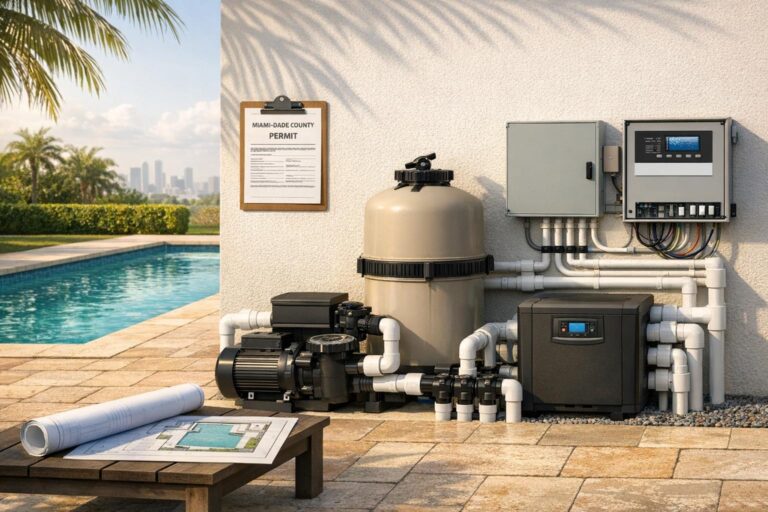

Protecting your pool equipment in Miami is a must. The city’s intense sun, salty air, and frequent flooding can wreak havoc on pumps, filters, and heaters, leading to costly repairs or replacements. Pool equipment pads provide a durable, stable base that shields your investment from UV damage, rust, and water exposure.
Key Takeaways:
- UV Protection: Prevents plastic components from cracking and extends the life of pool chemicals.
- Flood Resilience: Keeps equipment elevated above flood levels, reducing damage during storms.
- Rust Prevention: Protects metal parts from Miami’s salty, humid air.
- Material Options: Concrete pads offer durability, while polyethylene and plastic pads provide lightweight alternatives.
Why it matters: Without proper protection, Miami’s harsh conditions can significantly shorten the lifespan of your pool equipment. Installing the right pad and following a pool maintenance guide ensures your pool remains functional year-round.
Pool Equipment Pads 101 | From A Certified Pool Operator | Alligator Pools
How Miami’s Climate Damages Pool Equipment
Miami’s climate poses a unique set of challenges for pool equipment. The unrelenting sun, frequent flooding, and salty coastal air all contribute to faster wear and tear, driving up maintenance costs for pool owners. These factors make it clear why protective measures, such as equipment pads, are a must-have for anyone with a pool in Miami. Let’s break down how each of these environmental factors impacts pool equipment.
UV Exposure and Heat Damage
Miami’s intense sunlight is a constant strain on pool equipment. Year-round UV exposure can cause plastic components to become brittle and crack, while also degrading chlorine at an accelerated rate – up to 40% faster than in less sunny areas [5][6]. This means pool owners not only face higher repair costs but also need to replenish chemicals more frequently.
The heat doesn’t help, either. High ambient temperatures force pool pumps to work harder, leading to more frequent overheating and premature motor failure [5]. Other equipment, like heaters and filters, also struggles under this stress. Even traditional pool plaster surfaces take a hit, often requiring pool resurfacing in Miami after only five years due to these harsh conditions [2].
Flooding Risks in Miami-Dade County
Miami’s heavy rains and hurricanes bring another major challenge: flooding. When pool equipment is submerged, it can suffer electrical failures, clogged filters, and contamination from storm debris [4][5][3]. Floodwaters often carry bacteria and other pollutants, requiring professional cleaning and super-chlorination to restore pool safety [4].
"Unless safety precautions are taken, the most significant storm damage to your pool can occur with the pump and its motor." – Pool Builders Inc. [4]
If flooding occurs, it’s crucial to let submerged motors dry for at least 24 hours before attempting to restart them [4]. However, flooding isn’t the only culprit. Miami’s salty air and constant humidity create additional challenges for pool equipment.
Rust and Corrosion from Salt Air and Humidity
Living near the coast comes with its own set of issues for pool owners. Miami’s salty air speeds up oxidation, causing pump motors, heaters, and metal fittings to rust at an alarming rate [3]. The high humidity keeps metal surfaces damp, making corrosion even more likely.
On top of that, warm water temperatures – often staying above 80°F year-round – cause chlorine to break down faster, leading to chemical imbalances that can further corrode internal components [6]. The combination of salt, moisture, and heat creates a perfect storm for damage, making regular maintenance and preventive measures absolutely essential.
Pool Equipment Pad Materials for Miami Conditions
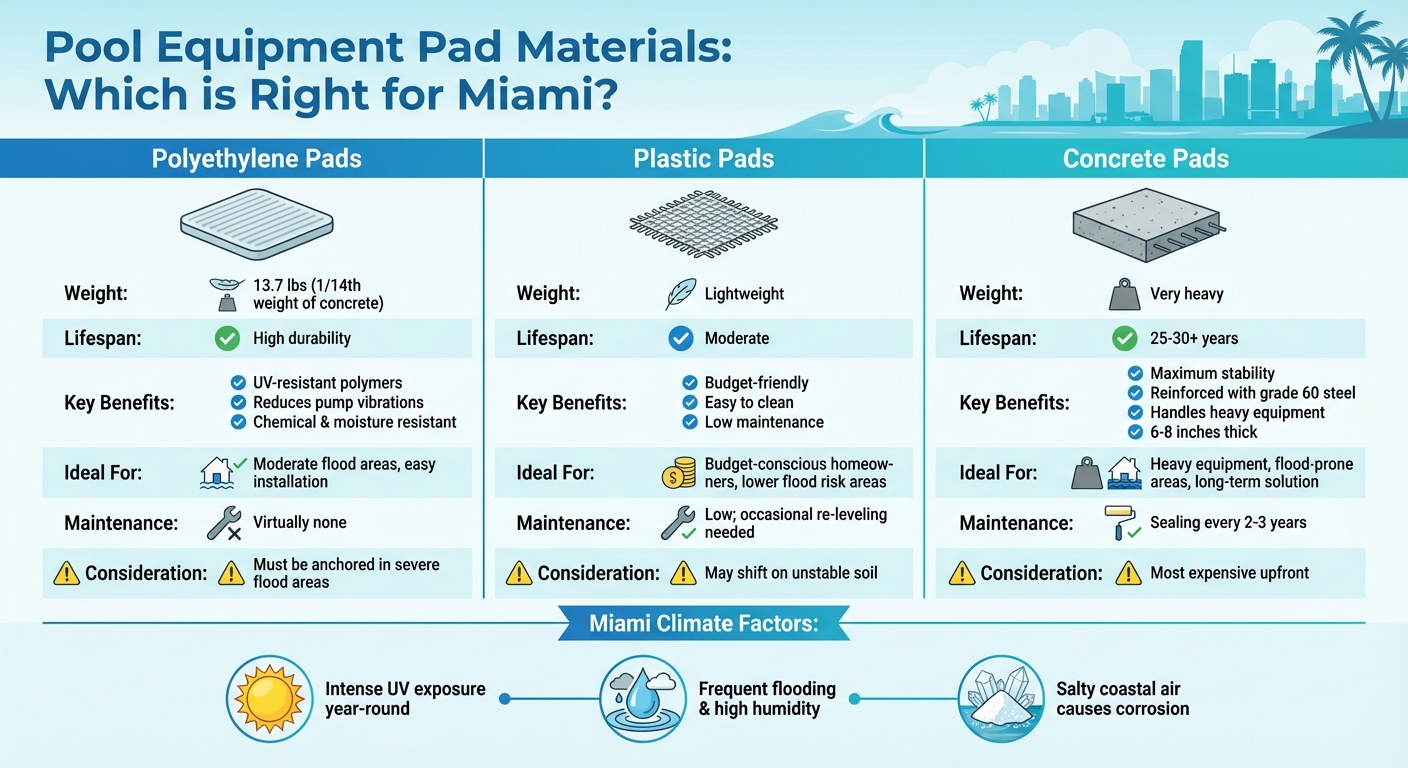
Pool Equipment Pad Materials Comparison for Miami Climate
Selecting the right material for your pool equipment pad is crucial, especially in Miami’s challenging climate. The intense UV rays, salty air, frequent flooding, and high humidity demand materials that can withstand these conditions. Let’s take a closer look at the strengths of different options.
Polyethylene Pads
Polyethylene pads are a lightweight solution, weighing just 13.7 pounds – about 1/14th the weight of a concrete pad. Despite their light weight, they’re tough, thanks to UV-resistant polymers that prevent sun damage and degradation from chemicals and moisture [9]. They also help reduce pump vibrations, which can extend the life of your equipment. However, because they’re so light, they need to be securely anchored in areas prone to severe flooding. This makes them ideal for locations with moderate flood risk [9].
Plastic Pads
Plastic pads are another practical choice, especially for homeowners on a budget. Made from durable geotextile materials, they’re easy to clean and require very little upkeep. However, they’re better suited for areas with lower flood risk. In heavy rain or on unstable soil, they may shift slightly, requiring occasional re-leveling [1]. Despite this, their affordability and ease of use make them an attractive option for many Miami pool owners.
Concrete Pads
Concrete pads are the go-to option if you’re looking for a long-term, stable foundation for your pool equipment. According to Miami Pool Company, concrete pads are highly durable and can handle heavy pumps and heaters with ease [1]. Precast concrete slabs are often reinforced with grade 60 steel and monofilament microfiber for added strength and vibration resistance [7]. Typically poured to a thickness of 6–8 inches – thicker than standard pool decks – they’re built to last. With proper sealing every 2–3 years to protect against UV fading and chlorine damage, a concrete pad can last 25 to 30 years or more. Its weight also makes it a reliable choice in flood-prone areas [8].
| Material | Weight | Lifespan | Ideal For | Maintenance |
|---|---|---|---|---|
| Polyethylene | 13.7 lbs [9] | High durability | Moderate flood areas, easy installation | Virtually none [9] |
| Plastic | Lightweight | Moderate | Budget-conscious, lower flood risk | Low; occasional re-leveling [1] |
| Concrete | Very heavy | 25–30+ years [8] | Heavy equipment, flood-prone areas | Sealing every 2–3 years [8] |
Installing Pool Equipment Pads in Miami
Installing pool equipment pads in Miami requires careful planning to protect against the city’s unique challenges: intense sun, frequent flooding, and hurricane-force winds. Each step of the process is tailored to address these environmental factors, ensuring your equipment remains safe and functional.
Site Preparation and Foundation
Start with a solid foundation. A poured concrete pad is the best choice for stability in Miami’s conditions [11]. Begin by leveling the site and clearing away any loose soil or debris. For most setups, a 4′ x 4′ concrete pad works well, but larger systems may need up to a 5′ x 12′ foundation. Include a crushed stone bed beneath the concrete, allowing plumbing to run through it. This setup prevents the need to break through concrete for future repairs and makes maintenance easier. Be sure to leave 6 inches of exposed pipe above ground to simplify valve replacements [11].
To protect against Miami’s intense UV rays, position the equipment in a shaded area. Opt for gray schedule 40 PVC for electrical lines, as it holds up better under the sun [11]. Once the foundation is ready, elevate the pad to reduce flood risks.
Elevating Pads Above Flood Levels
Flooding is a serious concern in Miami, even outside FEMA-designated flood zones. Nearly 60% of flood reports in Miami-Dade County occur in areas not officially classified as flood zones [13]. To safeguard your equipment, install it above the base flood elevation (BFE) as determined by Miami-Dade’s Floodplain Management Office [10].
Raise the concrete pad slightly above the surrounding ground to improve drainage [11]. For additional elevation, you can use cinder block shelves, wooden platforms set into concrete, or reinforced wooden boxes treated with waterproof sealant to prevent rot in Miami’s humid climate [10]. Just ensure the elevation doesn’t interfere with the pump’s self-priming capabilities.
To prevent backflow, install check valves on the incoming pipes. This step adds another layer of protection without affecting the pump’s performance [10][11]. Once elevated, focus on securing the equipment against hurricane-force winds.
Anchoring Equipment for Hurricane Protection
Hurricane-proofing is essential in Miami. Florida Building Code mandates that heaters and other mechanical equipment be anchored to withstand high wind pressures [11].
"In Florida, building codes require that the heater be anchored to the equipment pad or platform to withstand high wind pressures created during hurricanes." – Pentair MasterTemp Installation Manual [11]
Many manufacturers offer anchoring kits designed for Miami’s conditions, such as the Pentair Bolt Down Bracket Kit (P/N 460738), which uses specialized anchor clamps [11]. If a kit isn’t available, heavy-duty right-angle brackets can secure the equipment frame to the concrete. Make sure to anchor the equipment on multiple sides to resist wind from all directions. For example, a 3′ x 3′ compressor needs anchoring that can handle approximately 450 pounds of wind force [14].
To minimize noise and vibration, place a rubber sheet beneath the pump before anchoring it [11]. Use the manufacturer’s designated attachment points for the brackets to avoid damaging internal components [14]. Lastly, don’t forget that Miami-Dade County requires building permits for equipment pad installations, so check with your local building department before starting the project [12].
sbb-itb-a36f8f1
Maintaining Equipment Pads and Pool Equipment
Keeping your equipment pads and pool equipment in good condition isn’t just about avoiding expensive repairs – it’s about ensuring everything runs smoothly, even in Miami’s tough climate. A little regular upkeep can go a long way in extending the life of your setup.
Cleaning Pads and Removing Debris
In Miami, debris builds up fast, especially on equipment pads. Clearing it out weekly is crucial to avoid moisture buildup, which can lead to rust and decay [15][16]. Standing water and rotting vegetation can encourage algae and bacteria growth, which not only damages metal components but can also mess with electrical connections.
To keep things clean, consider installing a water spigot nearby. This makes it easy to rinse off pads and equipment, washing away corrosive salt residue [11][17]. If your pad is gravel-based, adding a fabric weed barrier underneath can stop plant growth from creeping in [16]. Make it a habit to sweep the pad monthly and ensure water drains away from the equipment instead of pooling around it.
Ventilation is another key factor. Equipment like heaters need plenty of airflow to function properly. Poor airflow can shorten the lifespan of electronic parts [11]. After cleaning, take a moment to check for any structural issues with the pad that could affect how your equipment performs.
Checking for Cracks and Damage
Every few months, take a close look at your concrete pad for cracks, settling, or other signs of wear. Miami’s sandy soil tends to shift over time, which can weaken the pad and cause water to pool rather than drain [17]. Even small cracks can quickly grow larger during heavy rains or when equipment vibrates during use.
"A concrete slab that’s too thin is more likely to crack under weight or water pressure. Over time, it may settle unevenly, creating dips or trip hazards." – Mike Carmody, MudMixer [8]
Don’t stop at the pad – inspect all equipment seals and gaskets for damage, especially from salt exposure [17]. PVC pipes, for instance, can become brittle and discolored from UV exposure [11]. If you notice this, spray-painting the pipes can add a protective UV barrier. Also, check unions, valves, and connections for leaks or corrosion. To stay organized, label all valves with a permanent marker or light engraving, and snap a photo of your equipment layout in case the labels fade under Miami’s intense sun [11].
Once you’ve confirmed everything is structurally sound, it’s time to add an extra layer of protection.
Applying Protective Coatings
Protective coatings are your best defense against Miami’s harsh conditions – think intense UV rays, salty air, and high moisture levels. Applying a concrete sealer every 2–3 years can safeguard your pad against water damage, chlorine, and fading from the sun [8]. Look for coatings designed specifically for coastal areas to get the best results.
Polyaspartic coatings are a smart choice for South Florida. They hold up better than standard epoxy, staying cooler, resisting chemicals, and standing up to UV rays [20]. For porous concrete, penetrating sealers like DECK-O-SHIELD PLUS can prevent salt from seeping in and causing that white, chalky staining known as “salt bloom” [19]. Silicone coatings are another great option – they can last up to 15 years and protect against standing water, salt fog, and UV damage [18].
Before applying any coating, make sure to power-wash the pad to remove mold, salt, and debris. Let it dry completely before proceeding [18][19]. For metal equipment, apply protective coatings when you first install it, and reapply annually to combat salt corrosion [17]. You might also want to install sacrificial anodes to shield expensive metal components from galvanic corrosion [17].
Alligator Pools Equipment Pad Services
Alligator Pools has been a trusted name in Miami-Dade since 1985, maintaining over 300 pools weekly and offering expert installation and maintenance services to protect your pool equipment. With decades of experience, they provide solutions designed to withstand Miami’s challenging weather conditions, including hurricane winds, salt air, and tropical storms [22].
Professional Pad Installation
A solid installation is the first step to avoiding future problems. Alligator Pools’ technicians ensure the foundation is prepared to handle settling and reduce flood risks. As a certified Pentair and Hayward Service Pro partner for the past 15 years, they follow manufacturer-approved techniques to maximize the longevity of your equipment. This includes raising pads above typical flood levels and securely anchoring equipment to meet Florida Building Code standards [11]. Their process also accounts for Miami’s intense heat, ensuring your equipment is positioned for optimal performance. For a diagnostic visit to evaluate your setup, they charge $125, which is credited toward the total cost if you choose to move forward [21].
Regular Maintenance Services
Routine maintenance can save you from expensive repairs down the road. Alligator Pools offers detailed inspections to identify potential issues early, such as wet or muddy areas around the equipment pad that might indicate underground leaks. Their certified technicians check pumps for strange noises or overheating and inspect filters and valves for blockages or leaks. The maintenance schedule is tailored to Miami’s year-round pool season and unpredictable weather, with emergency repairs typically addressed within 24 hours. Repairs under $125 are handled on-site during the visit [21]. This proactive approach ensures your pool equipment stays in top condition.
Local Expertise for Miami Homeowners
Alligator Pools’ team consists of Certified Pool Operators accredited by the National Pool & Spa Association, and the company is a licensed Florida Pool Contractor (license CPC1459915) [24]. They proudly serve neighborhoods across Miami-Dade, including Coral Gables, Kendall, Pinecrest, Palmetto Bay, Coconut Grove, and Cutler Bay.
"Our expertise keeps your pool operational year-round." – Alligator Pools [21]
Their recommendations are customized to fit each homeowner’s needs and budget. Whether you’re upgrading to single vs. variable-speed pool pumps to save 30–70% on energy costs or applying protective coatings to shield your equipment from salt corrosion, Alligator Pools provides solutions that work [23].
Conclusion
Miami’s intense sun, frequent flooding, and high humidity can take a toll on pool equipment, making protection a top priority. To keep your equipment in good shape, it’s essential to focus on the right materials, proper installation, and consistent upkeep. Concrete pads offer a sturdy, long-term foundation, while polyethylene and plastic options provide corrosion-resistant alternatives that stand up well to Miami’s challenging climate [1]. Opting for UV-stabilized and rust-free materials adds an extra layer of durability [1][3].
Raising equipment above flood levels and using marine-grade stainless steel hardware can help prevent damage from both water and wind. Additionally, grading the site to direct water away from your equipment safeguards it during heavy rains and tropical storms [4].
Regular maintenance is just as important as installation when it comes to extending the life of your pool equipment. Keeping intake grates clear and ensuring proper airflow are simple yet effective ways to prevent overheating and wear [25]. These small efforts can also lead to big savings – Florida pool owners, for example, can cut pumping costs by up to 75% by pairing properly sized equipment with shorter run times [26].
With pool pumps being the second-largest energy consumer in Florida homes (after air conditioning) and costing up to $270 annually in utility bills, taking steps to protect and maintain your equipment is an investment worth making [26]. A well-built foundation combined with regular care ensures your pool stays efficient and ready to use year-round, even in Miami’s demanding conditions.
FAQs
What materials work best for pool equipment pads in Miami’s climate?
In Miami’s hot and humid climate, where flooding is also a concern, using durable, weather-resistant materials for pool equipment pads is a must. These materials help safeguard pumps and other gear from the harsh effects of sun, water, and rust.
A thick concrete base, ideally 6–8 inches deep, provides the stability and strength necessary to support heavy equipment. This sturdy foundation also helps prevent cracks caused by moisture or shifting ground. To enhance protection, consider installing a vented enclosure made from galvanized or powder-coated steel. This type of enclosure shields equipment from UV rays, rain, and salty air while allowing airflow to prevent overheating. If you’re looking for a lighter alternative, a vinyl screen offers some defense but lacks the durability of steel.
For additional sun protection, you can use a PVC frame covered with UV-stable shade cloth. This setup creates a breathable canopy that blocks direct sunlight and helps reduce heat buildup. By combining these protective measures, you can ensure your pool equipment remains secure and functions efficiently, even in Miami’s challenging weather conditions.
How do pool equipment pads protect against flooding damage?
Pool equipment pads serve an important purpose by lifting pumps and other key gear off the ground. This creates a stable, dry surface that allows water to flow beneath the equipment during heavy rains or flooding. As a result, the risk of water damage or corrosion is significantly reduced.
In addition to protecting against water exposure, these pads help extend the life of your equipment and ensure it performs efficiently, even in the unpredictable and often harsh weather conditions of Miami.
Why is regular maintenance important for pool equipment in Miami’s climate?
Regular upkeep is crucial for pool equipment in Miami, thanks to the city’s challenging climate. The combination of intense heat, high humidity, and salty ocean air can speed up rust and wear. Add to that the frequent rain and occasional flooding, and your pool’s pumps and filters face even more strain. Without regular care, these factors can lead to overheating, corrosion, and pricey repairs.
Simple tasks like skimming debris, cleaning filters, and inspecting for leaks can make a big difference. Staying on top of maintenance not only keeps your equipment running smoothly but also extends its lifespan. Plus, well-maintained systems improve water circulation, which helps save energy, reduces the need for chemicals, and cuts down on operating costs. Regular checks also help catch small issues early, sparing you from bigger, more expensive problems down the road.