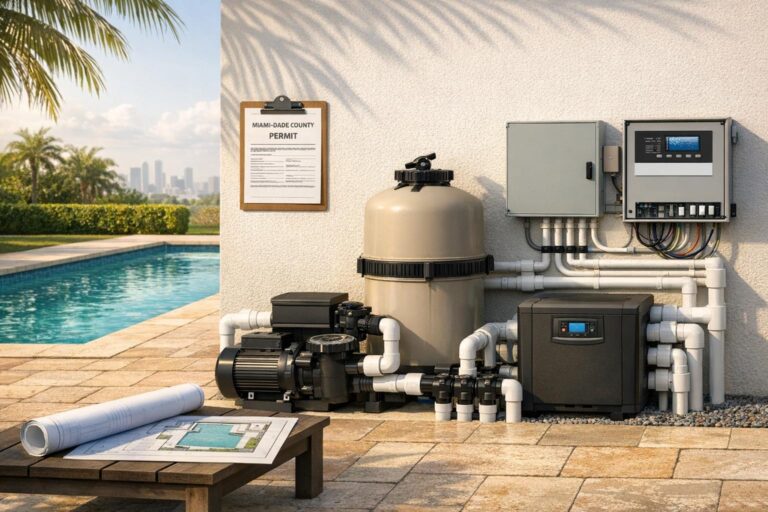

When your pool shows cracks or surface wear, you have two main options: repair the cracks or resurface the entire pool. Here’s what you need to know to make the right decision:
- Crack Repair: Ideal for minor, isolated damage. Costs range from $50 to $1,200, depending on severity. Repairs are quicker (1–3 days) but typically last only 1–3 years.
- Full Resurfacing: Best for widespread damage or aging surfaces. Costs range from $6,000 to $30,000, depending on materials. It takes longer (1–4 weeks) but lasts 5–30+ years, depending on the finish.
Quick Comparison
| Option | Cost Range | Timeline | Lifespan | Best For |
|---|---|---|---|---|
| Crack Repair | $50–$1,200 | 1–3 days | 1–3 years | Isolated cracks, minor damage |
| Full Resurfacing | $6,000–$30,000 | 1–4 weeks | 5–30+ years | Aging surfaces, major issues |
If your pool has minor cracks, a repair can buy some time. However, if cracks are widespread, the surface feels rough, or your pool is over 5–10 years old, resurfacing in Coral Gables is often the better choice. Miami-Dade pool owners should also consider the impact of the local climate, which can shorten the lifespan of certain materials like plaster. For long-term durability, finishes like pebble or tile are worth the investment.
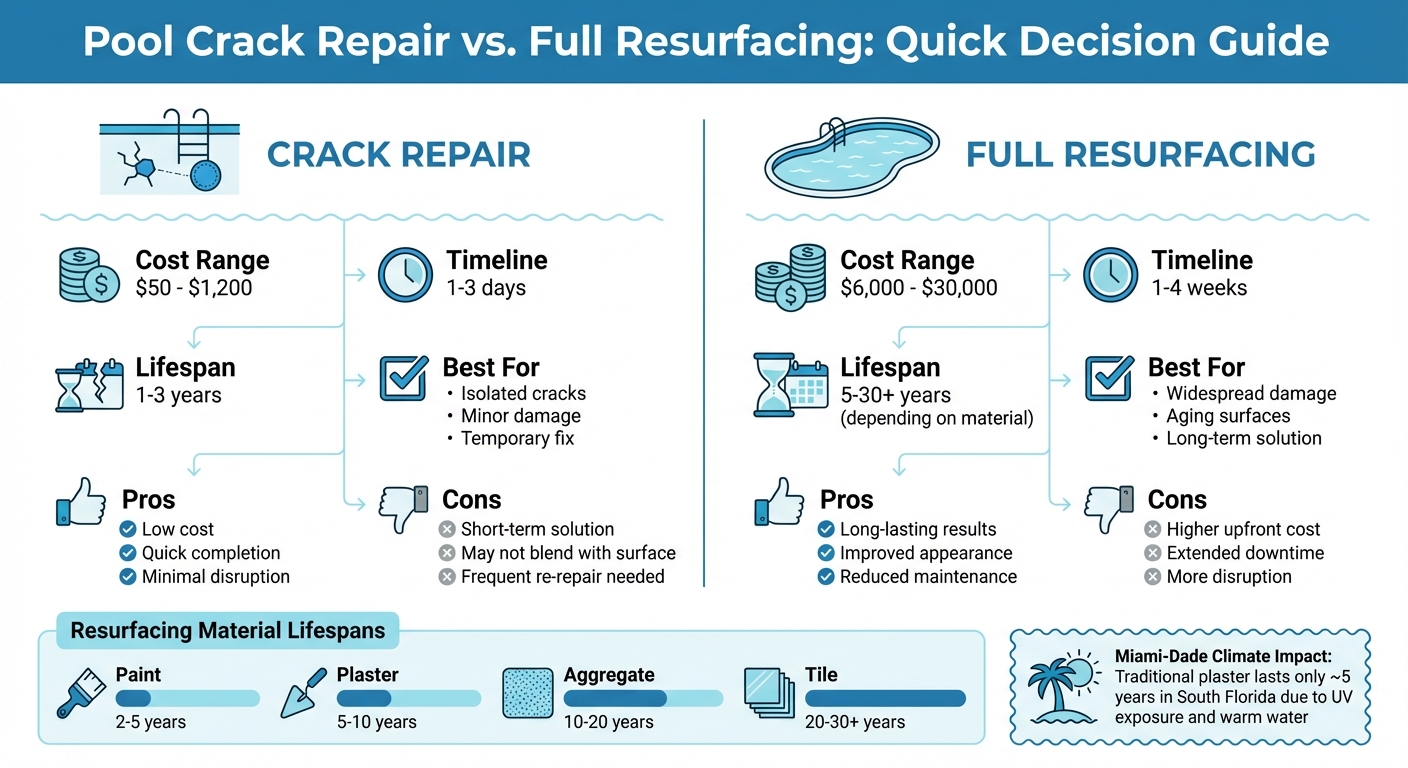
Pool Crack Repair vs Full Resurfacing Cost and Lifespan Comparison
How Much Does Resurfacing a Concrete Pool Cost?
sbb-itb-a36f8f1
What Is Pool Crack Repair?
Pool crack repair is all about sealing fractures in your pool’s surface or structure to restore its watertight seal and maintain its appearance – without needing a full resurfacing.
Shallow, surface-level cracks often look like spiderwebs and typically result from concrete shrinkage or temperature changes. These are usually fixed with materials like epoxy, pool putty, or plaster patches. On the other hand, deeper structural cracks require more extensive solutions, such as high-pressure injections or rebar stapling, to prevent further damage. The type of crack plays a crucial role in determining the best repair method.
"Surface cracks are usually harmless and easy to fix… [but] if you suspect you have a structural crack, it’s crucial to consult a pool professional." – John Chavez, Founder, Sublime Pools & Spa
How Pool Crack Repair Works
The repair process depends on the type and severity of the crack. Minor surface cracks are typically handled by cleaning the area with a wire brush and applying underwater epoxy or pool putty. For larger cracks, hydraulic cement provides a quick-setting solution, while deeper fissures may require epoxy or polyurethane injections. In cases where the pool shell is significantly weakened, rebar staples can be used to reinforce the structure. These steel staples join the crack edges and can cost between $1,000 and $3,000 [6].
To monitor the crack’s activity, mark its ends with a pencil and check after a few days. If the crack extends, it signals active damage that warrants professional evaluation.
When to Choose Crack Repair
Crack repair is a practical choice for isolated damage rather than extensive wear. It works well for hairline cracks or small leaks in an otherwise intact pool surface. This approach can temporarily stop water loss and delay the need for full resurfacing. However, if a crack is wider than a quarter-inch or your pool is losing water quickly, it may indicate a structural issue that requires expert assessment.
For pools with mostly intact plaster, addressing specific cracks can stretch the lifespan of the surface. When damage is minimal and localized, crack repair serves as a cost-effective, temporary solution.
"If you notice a crack, get your pool fixed ASAP. The longer you wait, the worse your problem can become." – Marcus Sheridan, Co-founder, River Pools
Advantages and Disadvantages of Crack Repair
The biggest appeal of crack repair is its affordability. Most repairs can be completed for just a few hundred dollars, making it a much cheaper option compared to a full resurfacing.
That said, there are some downsides. Repairs are generally short- to medium-term fixes, and patched areas may not blend seamlessly with the surrounding surface, especially if the pool’s plaster has aged. If your pool has multiple cracks or widespread surface damage, localized repairs might only delay the inevitable need for a complete resurfacing.
| Repair Method | Best For | Durability |
|---|---|---|
| Epoxy/Pool Putty | Small surface cracks | Short to Medium Term |
| Hydraulic Cement | Large cracks, active leaks | Medium Term |
| Rebar Staples | Structural shell cracks | Long Term |
| Injection Kits | Deep fissures | Medium Term |
What Is Full Pool Resurfacing?
Full pool resurfacing, also known as refinishing, involves replacing the entire interior surface of a pool with new material. This process removes the old, worn finish and applies a fresh layer over the entire surface, restoring both the pool’s appearance and structural integrity. It’s a comprehensive solution for addressing widespread damage that spot repairs can’t resolve.
"Pool plaster is the final coating on a concrete pool that creates the watertight seal and keeps the water in the pool."
- Ralph Tarulli, Pools and Construction Expert
The key difference between crack repair and resurfacing lies in the extent of the work. Crack repair is a temporary fix for specific damage – think of it as a quick patch job. Resurfacing, on the other hand, is a full-scale overhaul. Let’s break down how resurfacing works, its timeline, and the materials available.
How Pool Resurfacing Works
Resurfacing a pool typically takes 5 to 10 days, depending on weather and the materials used [3]. The process begins by draining the pool completely and removing the old surface around fittings, tiles, and coping. The pool shell is then prepped using methods like sandblasting or acid washing to create a rough texture that helps the new surface adhere. Afterward, a bond coat or primer is applied for extra security.
The chosen finish – whether plaster, aggregate, or tile – is applied next, often with hand-troweling to ensure even coverage. For plaster and aggregate finishes, the pool is refilled immediately, as these materials cure underwater. Proper care during the first few weeks is crucial: water chemistry should be monitored daily, and the surface must be brushed twice a day for 7 to 14 days to prevent scaling and ensure the finish sets correctly.
Material options vary in cost and durability. White plaster, a classic choice, costs about $5,500 per 1,000 square feet and lasts 5 to 10 years in hot climates like Miami. Exposed aggregate finishes cost around $6,500 per 1,000 square feet and can last 10 to 20 years. For a high-end option, glass tile installations can last 20 to 30+ years but may cost up to $30,000 for a complete resurfacing [2].
When to Choose Full Resurfacing
Resurfacing is the best option when damage is extensive. Signs that your pool may need resurfacing include multiple cracks, widening fissures, rough textures, or persistent stains that return quickly after cleaning. Other indicators include chronic water loss or the presence of "chalking" – a powdery calcium residue that signals plaster deterioration.
If your pool looks outdated or its surface makes water chemistry hard to maintain, resurfacing is also a chance to upgrade to more durable materials. Since the pool is drained during the process, it’s a good time to tackle other improvements, like replacing waterline tiles, upgrading to LED lighting, or repairing skimmers and drains. Combining these updates can save on future labor costs.
Advantages and Disadvantages of Full Resurfacing
Resurfacing offers a long-term solution, extending your pool’s lifespan by 10 to 20 years or more while improving its appearance and reducing maintenance headaches. However, it does come with higher upfront costs – ranging from $1,000 to $30,000, depending on the pool’s size and the material chosen. The process also requires downtime, leaving your pool unusable for at least a week.
| Material | Estimated Lifespan | Cost per 1,000 sq. ft. | Best For |
|---|---|---|---|
| Paint | 2–5 years | ~$1,500 | Temporary budget refresh |
| Plaster | 5–10 years | ~$5,500 | Standard concrete pools |
| Aggregate | 10–20 years | ~$6,500 | Durability and slip resistance |
| Tile | 20–30+ years | Up to $30,000 | Luxury aesthetics and longevity |
Cost Comparison: Crack Repair vs. Full Resurfacing
When deciding between crack repair and full resurfacing, it’s not just about the price tag. Durability and how long the project takes should also play a role in your choice. Here’s a breakdown of the costs to help you weigh your options.
Crack Repair Costs
For small repairs, you’re looking at about $50 to $300, but if the damage is more extensive, like structural issues, costs can jump to $240 to $1,200. Severe problems, such as spiderweb cracks or beam damage, can run as high as $4,000 to $6,000 [4][9]. Labor costs typically range from $45 to $70 per hour, though specialized work could cost up to $110 per hour [7].
While crack repair is less expensive upfront, it’s a shorter-term fix compared to resurfacing.
Full Resurfacing Costs
Resurfacing comes with a higher initial cost but provides a more comprehensive and long-lasting solution. For a 1,000-square-foot pool, resurfacing costs generally range from $6,000 to $15,000 [7]. The material you choose significantly impacts the price and longevity:
- Pool paint: Costs about $1–$2 per square foot and lasts 2–7 years.
- Standard plaster: Ranges from $4–$8 per square foot and lasts 7–12 years.
- Pebble finishes: Cost between $7–$20 per square foot, with a lifespan of 15–20+ years.
- Glass tile: The most expensive option, at $8–$30+ per square foot, but it can last 20–30+ years [7].
Additional expenses include draining and cleaning (about $600–$650 [7]) and refilling the pool, which costs roughly $55 per 5,000 gallons [4]. On average, the total cost for resurfacing across the U.S. is around $11,000 [8].
Cost Comparison Table
| Service Type | Typical Cost Range | Labor Time | Longevity |
|---|---|---|---|
| Minor Crack Repair | $50–$300 [4] | Hours–1 day | Temporary patch |
| Extensive Crack Repair | $240–$1,200 [4] | 1–2 days | Variable |
| Structural Beam Repair | $4,000–$6,000 [9] | 2–3 days | Depends on damage |
| Full Resurfacing (Paint) | $1,000–$2,000 [7] | 5–7 days | 2–7 years |
| Full Resurfacing (Plaster) | $6,000–$8,000 [7] | 5–7 days | 7–12 years |
| Full Resurfacing (Pebble) | $7,000–$15,000 [7] | 5–7 days | 15–20+ years |
| Full Resurfacing (Tile) | $8,000–$30,000+ [7] | 7–10 days | 20–30+ years |
In areas like Miami-Dade, where intense UV rays and warm water are constant challenges, plaster finishes may only last about 5 years. For this reason, investing in more durable options like pebble or tile often makes better sense for the long run [1].
Durability and Lifespan Comparison
When it comes to pool maintenance, the difference between crack repairs and full resurfacing lies in their longevity. Crack repairs are a short-term fix, while full resurfacing provides a more enduring solution.
How Long Crack Repairs Last
Crack repairs are, by nature, temporary. The patched areas often fail to form a strong bond with the existing surface, leading to cracks reappearing within a few years [10]. As one expert puts it:
"Patching your pool is not a sustainable option… if one section shows signs of deterioration, other sections will likely follow." [10]
For minor cosmetic cracks – those less than 1/8 inch – repairs can extend the pool’s usability for a short time. However, larger or widespread cracks usually signal deeper issues with the surface. On average, crack repairs last between 1 and 3 years.
In comparison, full resurfacing offers a more durable and comprehensive solution.
How Long Resurfaced Pools Last
Full resurfacing involves replacing the entire pool surface, creating a watertight barrier that protects against leaks and harsh chemicals [3]. The lifespan of the resurfaced pool largely depends on the material used:
| Material Type | Estimated Lifespan | Durability |
|---|---|---|
| Acrylic Paint | 2–4 Years | Very Low (Temporary) |
| Epoxy Paint | 5–7 Years | Low |
| Standard Plaster | 5–12 Years | Moderate |
| Quartz Aggregate | 12–20 Years | High |
| Pebble/Stone Aggregate | 15–20+ Years | Very High |
| Glass Tile | 20–30+ Years | Highest |
In regions like South Florida, environmental factors such as intense UV exposure and warm water can shorten the lifespan of some materials. For example, traditional white plaster typically lasts only 5 to 7 years in these conditions. On the other hand, quartz finishes can endure 12–20 years, pebble or exposed aggregate surfaces over 20 years, and glass tile up to 30 years with minimal upkeep [1][10].
Resurfacing also benefits pool maintenance. A smooth, new surface resists algae growth and makes water chemistry easier to manage, cutting down on maintenance costs. In contrast, worn surfaces with pits and cracks can trap algae, requiring more frequent chemical treatments [3].
Project Timeline and Disruption
The time and disruption involved in pool repairs can vary significantly depending on whether you’re addressing cracks or undergoing a complete resurfacing. Each process has its own timeline, requirements, and impact on pool usability.
Crack Repair Timeline
Crack repairs are typically quick, wrapping up in 1–3 days. For minor cracks, there’s no need to completely drain the pool – just lower the water level to below the damaged area [12]. The crew will clean, prep, and patch the crack with specialized materials. Once the patch is in place, the pool can usually be refilled almost right away, minimizing downtime.
Full Resurfacing Timeline
Full resurfacing, on the other hand, is a much lengthier process, taking anywhere from 1 to 4 weeks. The actual work – draining, prepping, applying the new surface, and refilling – takes 5–10 days, but the curing process can extend the timeline significantly, up to 28 days [3][13].
During this time, additional care is required, especially for cement-based finishes like plaster. Daily brushing is needed for 7 to 14 days to remove plaster dust and avoid scaling [5]. Pool use and equipment like heaters and cleaners must remain off-limits for 2–4 weeks [5]. In areas like Miami-Dade, where the water table is high, contractors may also need to pump groundwater continuously to prevent the pool shell from shifting or popping out of the ground [5][6].
| Project Phase | Crack Repair | Full Resurfacing |
|---|---|---|
| Duration | 1–3 days | 1–4 weeks |
| Draining Required | Partial (below crack level) | Full |
| Pool Downtime | Minimal | Total (up to 10+ days) |
| Post-Project Labor | None | High (daily brushing/testing) |
| Equipment Usage | Normal | No heater/cleaner for 2–4 weeks |
Each option comes with its own level of disruption and commitment, so understanding these timelines can help you plan accordingly.
What Miami-Dade Pool Owners Should Consider
For pool owners in Miami-Dade, understanding how local conditions and professional expertise impact the lifespan of pool surfaces is essential.
How Miami’s Climate Affects Pool Surfaces
Miami’s climate puts pool surfaces to the test. The combination of intense UV rays, high humidity, and consistently warm water speeds up wear and tear compared to cooler regions. This often leads to issues like etching, staining, and surface texture breakdown. For example, traditional white plaster typically lasts only about 5 years under these conditions due to the heat and chemical demands [1].
Heavy rains and tropical storms add to the challenge by embedding debris and minerals into aging, porous surfaces [1]. In some cases, hairline cracks can worsen under Miami’s extreme weather, especially if the underlying surface is already compromised [1][3]. Full resurfacing becomes a better option, as it can reveal hidden structural cracks near critical areas like waterline tiles and return jets – problems often exacerbated by the region’s high temperatures [14].
These factors highlight the importance of professional expertise, which we’ll explore next.
Why Hire Licensed Contractors
Given Miami-Dade’s unique climate challenges, working with a licensed contractor ensures that your pool project is built to last. Licensed Florida pool contractors meet strict requirements, including at least 4 years of verified experience, passing competency exams, and carrying both general liability and workers’ compensation insurance [15].
"Non-licensed contractors may not be insured, leaving you liable for any injuries or damages. There may be little to no state-governed recourse if you have issues with non-licensed contractors since the state isn’t governing their actions." – Florida Swimming Pool Association [15]
For added peace of mind, companies like Alligator Pools offer a 3-year guarantee against applicator errors, such as flaking or peeling, along with a 10-year manufacturer warranty on materials [14]. Before committing to any contractor, you can verify their license at www.MyFloridaLicense.com [15].
Best Materials for Florida Pools
Not all pool finishes are built to handle Florida’s harsh conditions. For example, exposed aggregate finishes like Diamond Brite by SGM are designed for high-heat environments and typically last 7–10 years, outperforming traditional plaster’s 5-year lifespan [1]. These finishes use a mix of cement with quartz or pebbles, which makes them more resistant to issues like mottling and etching [1].
"In Miami’s climate, UV- and stain-resistant finishes offer better long-term value." – Alligator Pools [1]
If durability is your top priority, glass tile stands out as the best option. It can last 20–30+ years, even in Miami’s intense sun. Although the cost of glass tile starts at $30,000, its non-porous and UV-resistant properties allow for individual tile replacement without needing to redo the entire surface [1][10]. In comparison, quartz aggregate finishes cost between $8,000 and $12,000 [11].
Timing also matters. The ideal window for resurfacing in South Florida is from October to February, when cooler temperatures help prevent new surfaces from curing too quickly and cracking [11].
Choosing the right materials and timing your project carefully can make all the difference in extending the life of your pool and maximizing your investment.
Conclusion
Deciding between crack repair and full resurfacing comes down to evaluating your pool’s current state and your long-term plans. For minor hairline cracks under 1/8 inch, a simple repair might do the trick. But if you’re seeing widespread staining, a rough texture that feels like sandpaper, or cracks as wide as a credit card, full resurfacing is likely the better choice for the long haul. Waiting too long to resurface can lead to common pool repair costs now and could increase future resurfacing expenses by up to 30% [11].
The climate in Miami-Dade adds another layer of urgency. Standard plaster finishes often last only about five years in this environment, while more modern options like quartz aggregate can stretch that lifespan to 7–10 years [1]. Putting off resurfacing doesn’t just impact your pool’s appearance – it can lead to structural issues, higher water bills from leaks, and increased chemical costs.
Here’s a quick test to check your pool’s condition: rub the wall of your pool. If you notice white residue, your plaster is wearing away [11]. Another sign to watch for is a hollow sound when you tap the surface with a coin – this indicates delamination, which means resurfacing is needed right away [11].
Evaluate your pool using these tips and choose a solution that balances cost and durability. For expert advice and services, reach out to Alligator Pools at https://alligatorpools.com. They offer licensed pool resurfacing and renovation in Miami-Dade, backed by a 3-year workmanship guarantee and a 10-year manufacturer warranty [14].
FAQs
How can I decide between repairing pool cracks and resurfacing the entire pool?
Determining whether to fix cracks or resurface your pool comes down to assessing the pool’s surface condition. Small, surface-level cracks that don’t compromise the pool’s structure can usually be fixed with straightforward crack repairs. But if you’re dealing with extensive cracking, peeling, rough surfaces, stains, or leaks, resurfacing might be the better option to restore both the look and strength of your pool.
Resurfacing goes beyond simple repairs – it involves removing the old finish and applying a new one. This process can address deeper structural problems and help prevent future damage. Not sure which route to take? Reaching out to a professional pool contractor can give you clarity and ensure your pool gets the care it needs for the long haul.
What are the advantages of investing in a higher-quality pool resurfacing material?
Opting for top-tier resurfacing materials can make a big difference over time. These materials often last for more than 15 years, meaning you won’t have to deal with resurfacing as often. Plus, their durability can help cut down on maintenance expenses, which saves you money over the years. While the upfront cost might be higher, the extended lifespan and reduced upkeep can make it a smart, budget-friendly option for many pool owners.
How does Miami’s tropical climate impact the durability of pool surfaces?
Miami’s warm, sunny, and humid weather plays a big role in how long pool surfaces last. The strong UV rays can speed up the breakdown of materials, leading to problems like cracks, stains, and a rough texture over time. Add in the high humidity and frequent rain, and traditional plaster finishes tend to wear out even faster.
If you have a plaster pool surface in Miami, you can expect it to last around 5-7 years. On the other hand, more durable options like pebble or tile surfaces can hold up for 15-20 years, provided they’re well-maintained. Keeping up with regular maintenance and resurfacing when needed is key to protecting your pool from the elements and keeping it looking great.