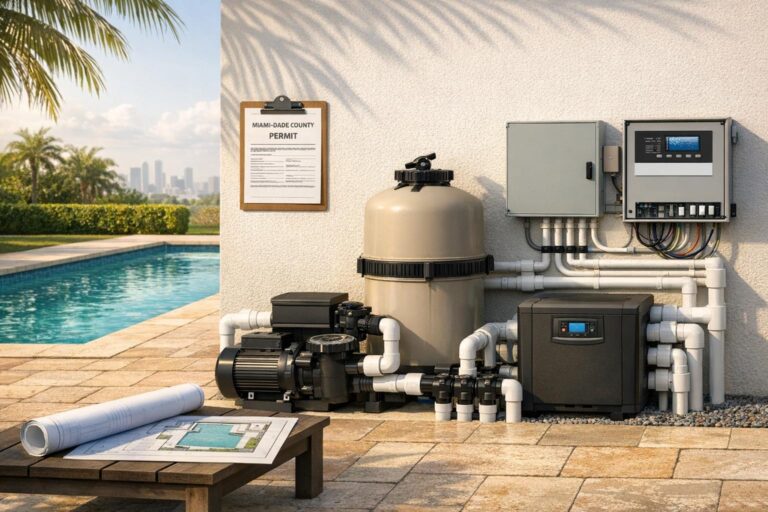

Pool motor burnouts in Miami can be expensive but are largely preventable. The city’s heat, salty air, and constant pool use put extra strain on motors, but with regular maintenance, you can avoid costly repairs and replacements. Here’s what you need to know:
- Costs of Burnouts: Repairs range from $500–$1,500. Regular maintenance, costing just $25–$40 per week, saves money in the long run.
- Why Motors Fail Faster in Miami: High heat, humidity, salty air, and year-round pool use accelerate wear and tear.
- 7 Common Causes and Fixes: Overheating, clogged filters, wrong pump size, low water flow, electrical issues, bearing failure, and running the pump dry are common issues. Solutions include proper ventilation, regular filter cleaning, and professional inspections.
- Maintenance Schedule: Weekly, monthly, and biannual tasks like cleaning baskets, checking filters, and inspecting electrical connections can extend a motor’s lifespan to 5–7 years.
- DIY vs. Professional Help: Simple tasks like cleaning filters can be done at home, but electrical or mechanical issues require a pro.
Bottom line: Preventive care is cheaper than emergency repairs. Stick to a maintenance routine to keep your pool motor running smoothly despite Miami’s tough conditions.
Why Is My Pool Pump So Hot?
Why Pool Motors Fail Faster in Miami
Miami’s climate puts relentless pressure on pool motors, making them wear out faster than in many other places. The combination of intense heat, constant humidity, and salty air creates a perfect storm for motor damage. Here’s a closer look at how these factors take a toll.
Heat and Humidity Effects
Miami’s tropical weather means high temperatures and humidity are the norm. This constant heat causes motors to work harder, while the humidity contributes to excessive condensation – up to 8–10 gallons per hour [6]. That moisture doesn’t just evaporate; it corrodes electrical connections over time [7]. In extremely humid conditions, equipment often has to run longer to manage both cooling and moisture, which means more energy use and extended wear and tear [8]. You may even notice rust forming on motor casings or electrical boxes due to this constant exposure [7].
Salt Air and Rust
Living near the ocean has its perks, but for pool motors, the salty air is a nightmare. Ocean breezes carry salt mist that speeds up corrosion on metal components [10]. Parts like pump seals, electrical connections, fan motors, and condenser coils are particularly vulnerable [9][10][11]. Over time, the salt-induced rust weakens these parts, leading to cracks, leaks, and reduced efficiency.
Year-Round Pool Use
In Miami, swimming isn’t just a summer activity – it’s a year-round lifestyle [12][13]. While that’s great for pool owners, it means pool motors rarely get a break. Continuous operation puts extra stress on bearings, seals, and windings, keeping motors hotter for longer periods and increasing the risk of burnout [14]. With all this extra usage, maintenance needs to be more frequent to keep up with the demand.
7 Causes of Pool Motor Burnouts and How to Prevent Them
Understanding these seven common causes can help you avoid costly motor damage. Here’s what you need to know and the steps you can take to prevent issues.
1. Overheating from Poor Ventilation
Pool pumps generate a lot of heat during operation, so proper airflow is essential to keep them cool. Placing a pump in a small, enclosed space can trap heat, drastically shortening its lifespan. This is especially critical in hot climates like Miami, where outdoor temperatures can amplify the problem [5][4][1].
How to prevent overheating: Ensure there’s at least 12 inches of clearance around the pump for ventilation [16]. If the pump is in direct sunlight, consider adding a sunshade, umbrella, or pergola to keep it cooler [5][1]. For pumps installed in enclosed spaces, use a fan-assisted ventilation system. Make it a habit to clear debris from vents and cooling fins every month [15][17].
Warning sign: If the motor casing is too hot to touch comfortably, you likely have a ventilation issue that needs immediate attention.
Next, let’s look at how dirty filters can impact motor performance.
2. Clogged or Dirty Filters
When filters are clogged with debris, water flow is restricted. This forces the pump motor to work harder, increasing energy use and causing overheating over time [18]. In areas like Miami, where pools are used year-round and storms are frequent, filters tend to clog faster.
How to prevent filter clogs: Clean cartridge filters every 2–4 weeks, or weekly during summer. Backwash sand or DE filters when the pressure gauge reads 8–10 PSI above the clean baseline [18]. Mark the clean baseline on your pressure gauge to know when it’s time for maintenance, and replace filter media according to the manufacturer’s recommendations.
Quick test: Run the pump on high speed for 30 seconds and check the return jets. Weak water flow suggests a restriction in the system.
Warning sign: A pressure gauge reading 8–10 PSI above the clean baseline indicates it’s time to clean the filter.
Proper pump sizing is another key factor in motor longevity.
3. Wrong Pump Size and RPM Settings
Using a pump that’s too large or too small for your pool can lead to serious problems. An oversized pump creates excessive pressure, potentially damaging pipes, valves, and other components [3]. On the other hand, an undersized pump struggles to circulate water, forcing it to run continuously under strain until it burns out [3][19]. Single-speed pumps running at maximum speed also generate unnecessary heat and wear [20].
How to prevent sizing problems: If you have a variable-speed pump, operate it at 1,200–1,800 RPM for daily use, reserving higher speeds for tasks like vacuuming. Have a professional evaluate your system every 1–2 years to ensure the pump is appropriately sized [3]. Upgrading to a variable-speed pump can improve efficiency and reduce heat buildup [20].
Warning sign: Loud noise or noticeable vibrations at high speeds may indicate the pump is either too large or running too fast for your system.
Low water flow can also spell trouble for your motor.
4. Low Flow and Cavitation
Cavitation happens when the pump struggles to pull enough water, causing air bubbles to form and collapse violently. This can damage seals, bearings, and impellers [19]. Low flow is often caused by blocked suction lines, low water levels, or clogged skimmer baskets. Miami’s frequent debris and palm seeds make skimmer maintenance especially important.
How to prevent low flow: Keep the water level at the middle of the skimmer opening. Clean skimmer baskets several times a week, especially after storms. Regularly check and clear the pump strainer basket and inspect suction fittings monthly.
Warning signs: Rattling or grinding noises, visible air bubbles in the strainer basket, or lower-than-normal pressure readings indicate a flow issue.
Electrical problems are another common cause of motor failure.
5. Electrical Problems and Power Surges
Frequent storms in Miami can lead to lightning strikes or power surges, which can damage motor windings. Loose electrical connections also create resistance, generating heat that harms components over time.
How to prevent electrical damage: Install a surge protector for your pool equipment, either as a whole-house system or a dedicated unit. Schedule an annual inspection with a licensed electrician to check connections and voltage levels (typically 208–240V for residential pumps). Tighten connections quarterly to ensure safe operation.
Warning signs: Breaker trips, flickering lights when the pump starts, or a burning smell near the motor or electrical box require immediate professional attention.
Now, let’s talk about bearing maintenance.
6. Bearing Failure from Lack of Lubrication
Bearings allow the motor shaft to spin smoothly, but heat and humidity can accelerate wear. While some motors have sealed bearings that require no upkeep, others need regular lubrication. Without it, bearings can dry out, causing friction and eventually seizing up, which damages the motor.
How to prevent bearing failure: Check your motor’s manual to determine if it has sealed or non-sealed bearings. Lubricate non-sealed bearings twice a year – once before summer and once before winter. Listen for grinding or squealing noises, which may indicate bearing wear. Replace bearings at the first sign of trouble to avoid further damage.
Warning signs: Grinding or squealing noises, slow startups, or delays in reaching full speed suggest bearing problems.
Lastly, avoid running your pump without water.
7. Running the Pump Dry
Running a pump without water is one of the quickest ways to destroy it. Without water, the mechanical seal overheats, the impeller can melt, and the motor windings may burn out. This often happens after filter cleaning, during startup with closed valves, or when suction lines are blocked.
How to prevent dry running: Always ensure the suction and return valves are open before turning on the pump. After cleaning or servicing, re-prime the pump properly. Installing a low-flow shutoff switch can automatically turn off the pump if water flow drops too low. Always check that the strainer basket is filled with water and that suction lines are clear before starting the pump.
Warning signs: No water movement at the return jets, a high-pitched whining noise, or an empty strainer basket indicate the pump may be running dry.
Miami Pool Motor Maintenance Schedule
Miami’s relentless heat, high humidity, and salty air create tough conditions for pool motors. Sticking to a regular maintenance routine can prevent motor burnouts and significantly extend its lifespan. This schedule is tailored for South Florida’s unique environment, focusing on proper ventilation, clean filters, and secure electrical connections.
Weekly Tasks
During peak debris seasons, clean skimmer baskets multiple times a week. The rapid buildup of leaves and other debris can clog baskets, reduce water flow, and put extra strain on the motor [22]. While the pump is running, listen for any unusual sounds like grinding, squealing, or rattling – these could signal potential issues.
Once you’ve handled these weekly basics, it’s time to dive into monthly maintenance for a deeper checkup.
Monthly Tasks
Clean the pump strainer basket thoroughly, ensuring all debris is removed. Check the seal for cracks or wear. Inspect the motor’s surrounding area to clear vents and maintain at least 12 inches of open airspace [21]. This helps with ventilation and prevents overheating. Watch for signs of suction leaks, such as air bubbles in the strainer basket or odd noises, which could indicate a problem with the system.
For more intensive upkeep, follow the quarterly and annual tasks outlined below.
Quarterly and Annual Tasks
Every three months, deep clean your filter. Backwash sand or DE filters, or remove and rinse cartridge filters. Tighten all electrical connections and inspect visible components for any signs of rust or corrosion [24][21]. Keep an eye out for chemical fumes near the motor, as they can damage internal parts over time [21].
Twice a year – before summer and winter – lubricate non-sealed bearings. Additionally, schedule a professional inspection every six months to check the motor’s capacitor, voltage, and seals. Finally, conduct a full electrical audit annually to ensure everything is running smoothly and safely.
sbb-itb-a36f8f1
When to Call a Professional vs. DIY
Tasks You Can Do Yourself
There are plenty of routine pool motor maintenance tasks that homeowners can handle without much hassle. For instance, cleaning skimmer baskets a few times a week is a simple way to keep things running smoothly. You can also backwash sand filters or replace cartridge filters without needing any special tools. If you have a variable-speed pump, adjusting the RPM settings is usually straightforward. Clearing vents and trimming back plants around the motor area are also easy jobs that don’t require any technical skills. Additionally, replacing pump O-rings, keeping an eye on filter pressure gauges, and ensuring water levels stay at mid-skimmer are all tasks you can tackle on your own. These small but consistent efforts go a long way in preventing most motor issues.
However, when problems go beyond these basic tasks, it’s time to consider professional assistance. Let’s dive into when that’s necessary.
Tasks That Need a Professional
Some issues are too complex or risky to handle on your own and require the expertise of a professional. For instance, if you hear grinding, screeching, or squealing noises, it’s likely a sign of bearing or capacitor failure – this is a job for a technician. Electrical problems, such as tripped breakers, sparks, or burning smells, should also be left to the pros. Major leaks in the pump housing, replacing impellers, or diagnosing issues like cavitation demand specialized tools and knowledge. As Miami Pump puts it:
"If your pump won’t start at all, trips circuit breakers repeatedly, or shows signs of electrical issues, shut it off immediately and call for professional service."
Attempting to fix these complex problems on your own often leads to bigger, more expensive issues. Protecting your investment sometimes means knowing when to step back. If repair costs exceed 50% of the price of a new pump or if your motor is over 8 years old, it’s usually more cost-effective to replace it rather than repair it.
To give you a clearer picture of the costs and time involved, here’s a comparison:
Cost Comparison: DIY vs. Professional
| Task | DIY Cost | DIY Time | Professional Cost | Professional Time |
|---|---|---|---|---|
| Clean skimmer/pump basket | $0 | 5–10 minutes | $50–$75 (if part of service call) | 5 minutes |
| Replace pump O-ring | $5–$15 | 15–30 minutes | $75–$150 | 20 minutes |
| Backwash filter | $0 | 10 minutes | $50–$100 | 10 minutes |
| Replace pump bearing | $65–$100 (parts only) | 2–4 hours | $65–$300 (parts + labor) | 1–2 hours |
| Replace motor | $250–$600 (parts only) | 3–6 hours | $500–$1,500 (full replacement) | 1–3 hours |
| Electrical diagnostics | Not recommended | N/A | $100–$200 | 30–60 minutes |
Cost Analysis: Prevention vs. Replacement
Pool Motor Maintenance Costs: Prevention vs Emergency Replacement in Miami
Initial and Ongoing Prevention Investments
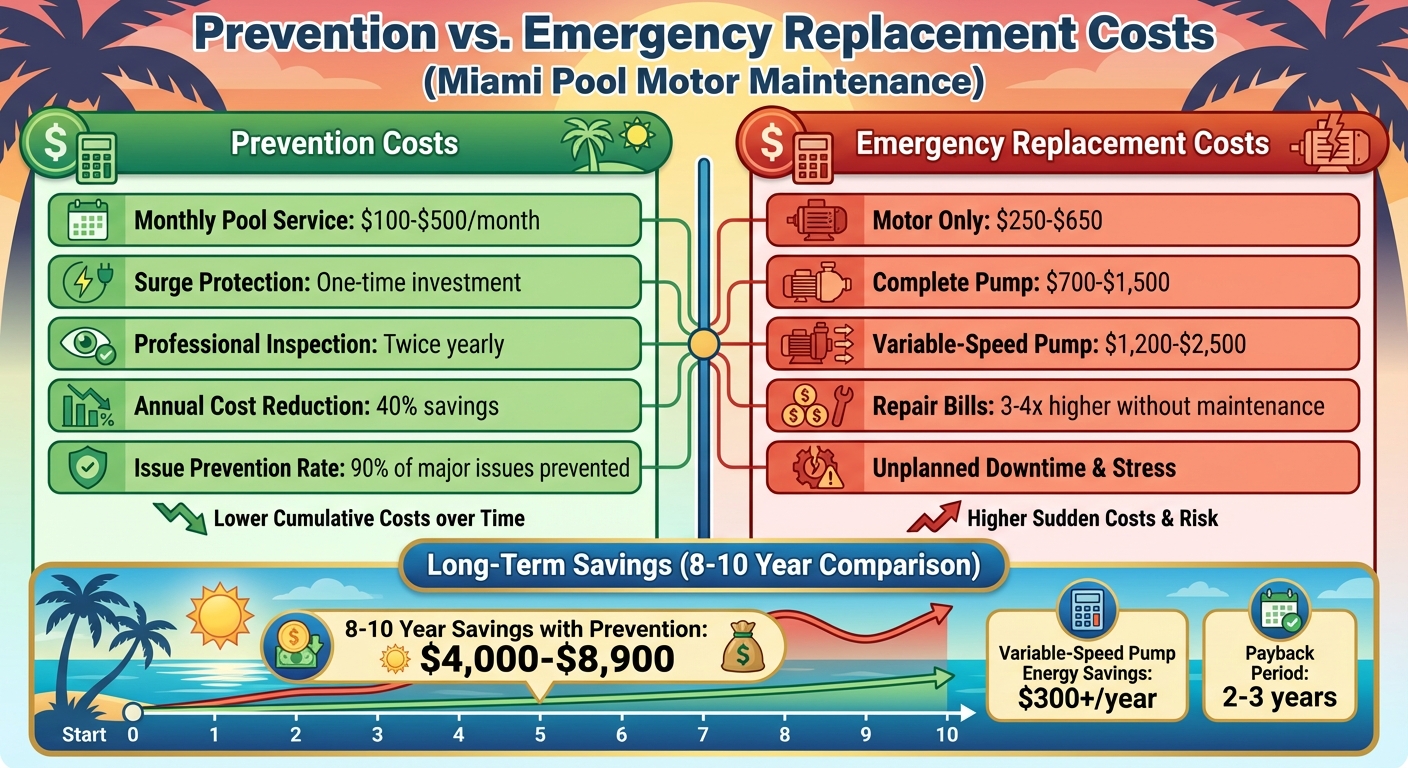
Taking preventive steps can save you a lot of money by avoiding costly emergency repairs. For example, installing surge protection, improving ventilation around the pump area, or scheduling a professional motor inspection are relatively small, one-time expenses. These investments pale in comparison to the unpredictable costs of emergency repairs. If you already use a monthly pool service in Miami – typically costing between $100 and $500 – many of these preventive measures are likely included. Now, let’s compare these prevention costs to what you might face with emergency replacements.
Emergency Replacement Costs
When your pool motor unexpectedly fails, the costs can add up quickly. Replacing just the motor can run between $250 and $650, while a complete pump replacement ranges from $700 to $1,500. If you opt for a variable-speed pump, which is more energy-efficient but comes with a higher upfront cost, you’re looking at $1,200 to $2,500. These sudden expenses can be a financial burden, especially when compared to the smaller, predictable costs of regular maintenance.
Long-Term Savings from Prevention
Preventive maintenance isn’t just about avoiding emergencies – it’s about long-term savings. Homeowners who stick to a maintenance schedule typically reduce their annual pool costs by 40% [27]. In fact, simple preventive actions can prevent 90% of major issues [27]. Over an 8–10-year period, proper upkeep can save you between $4,000 and $8,900 [2]. On the other hand, skipping regular maintenance often leads to repair bills that are three to four times higher [27].
There’s also the added benefit of energy savings. A variable-speed pump, for instance, can cut your electricity costs by $300 or more annually [25]. This means it could pay for itself in just two to three years through lower utility bills [26]. Beyond the financial advantages, these steps also help extend the life of your equipment, making it more reliable in Miami’s challenging climate. When you add up all the avoided emergency costs, extended equipment lifespan, and reduced energy bills, prevention clearly makes the most financial sense.
Protecting Your Pool Motor in Miami
Miami’s heat and humidity, combined with constant pool use, can put a lot of strain on your pool motor. The good news? Most motor failures are avoidable with consistent maintenance and early problem detection. As Professional Aquatic Services explains:
"Like your home’s air conditioning, your pool pump works best with regular, steady use, mainly in Florida’s heat." [23]
By following a few simple steps, you can help keep your motor running smoothly and extend its lifespan.
What to Do This Week
Start by turning off the power at the breaker for safety. Inspect the motor for visible issues like cracks, corrosion, or signs of wear [17]. While you’re at it, listen for any unusual noises – these could signal worn bearings or potential blockages [3][17]. Next, clean out the pump and skimmer baskets, and check the filter gauge. If the pressure reading is high, clean or replace the filter as needed [3][17][23]. Lastly, clear debris from the vents and cooling fins to help prevent overheating [3][21].
Long-Term Maintenance Plan
Routine care can help your pool motor last its typical 8–12 years. During Miami’s hot summers, aim to run the pump for 8–12 hours daily. In cooler months, 4–6 hours a day is usually enough, but avoid turning the pump off entirely to prevent sudden thermal cycling [23]. Schedule professional inspections twice a year – they can catch issues like worn bearings, electrical faults, or seal leaks before they become major problems [17]. Additionally, always maintain proper water levels, fix leaks promptly, and store pool chemicals away from the motor to avoid unnecessary damage [21].
Schedule a Motor Health Check
Keeping an eye out for warning signs is crucial. If you hear strange noises, notice overheating, or experience frequent breaker trips, don’t ignore them. Alligator Pools offers Miami homeowners a free 15-minute motor health consultation to identify potential issues before they turn into costly repairs. With over 40 years of experience in Miami-Dade County, their certified technicians can help you take the right steps to protect your pool motor. Call today or visit their website to schedule an inspection and keep your pump in top shape.
FAQs
What are the warning signs that my pool motor is failing in Miami?
If your pool motor is acting up, there are a few telltale signs to watch for. These include the motor feeling unusually hot, reduced water flow, strange noises like grinding or humming, or even a burning smell. Other red flags might be frequent breaker trips, a sluggish startup, or visible damage such as rust, corrosion, or a bulging capacitor. And if your motor is over 8 years old, it could simply be reaching the end of its life.
Catching these problems early can save you from expensive repairs or replacements. If you’re noticing two or more of these warning signs, it’s smart to call in a professional for an inspection right away.
How often should I maintain my pool motor to avoid burnouts?
To keep your pool motor running smoothly and avoid costly burnouts, stick to a regular maintenance routine. Start with weekly tasks like cleaning out the skimmer baskets and paying attention to any unusual noises or vibrations coming from the motor. Then, every 3–4 months, take time for a more detailed inspection. This includes cleaning the pump strainer, checking that the motor has proper ventilation, and tightening any loose electrical connections. By following a maintenance plan suited to Miami’s climate, you can extend the life of your motor and save yourself from expensive repairs down the line.
Should I repair or replace my pool motor if it starts having problems?
It all comes down to the condition and age of your motor. If the issue is minor and the motor is relatively new, repairing it can often be the more budget-friendly choice. But when the motor is older (around 8 years or more), heavily damaged, or if the repair costs climb above 50% of the price of a new one, replacing it usually makes more sense in the long run.
For homeowners in Miami, it’s worth factoring in the local climate. The heat, humidity, and salt-laden air can take a toll on motors. If you notice significant corrosion or wear, upgrading to a more durable, corrosion-resistant model could save you from future headaches – and expenses.