
Bromine is an alternative to chlorine for pool sanitation, offering unique benefits and drawbacks. It’s less harsh on skin and eyes, effective in hot water, and performs well across a broader pH range. However, it costs more, breaks down quickly in sunlight, and works slower than chlorine. Here’s what you need to know:
Pros:
- Gentler on Skin and Eyes: Less irritation compared to chlorine.
- Low Odor: Produces minimal chemical smell.
- Effective in Hot Water: Works well up to 104°F.
- pH Stability: Retains effectiveness even with fluctuating pH.
- Reusable: Can be reactivated with shock treatments.
Cons:
- Higher Cost: About 40% more expensive than chlorine.
- Sunlight Sensitivity: Degrades rapidly under UV light.
- Slower Sanitization: Takes longer to kill bacteria and algae.
- Bromamine Buildup: Requires regular shock treatments to prevent irritation.
- Residue Issues: Can leave a film on skin and swimwear.
Bromine works best for indoor pools, spas, and shaded areas, but it’s less practical for outdoor pools in sunny regions due to its UV sensitivity. While pricier, its benefits in specific conditions can make it a worthwhile choice.
5 Pros of Using Bromine for Pools
Causes Less Skin and Eye Irritation
Did you know that the culprit behind red eyes and itchy skin in pools isn’t actually chlorine but its byproducts, chloramines? These compounds form when chlorine reacts with nitrogen and ammonia from swimmers, creating harsh and irritating effects.
Bromine, on the other hand, produces bromamines, which are much gentler on the skin and eyes. Unlike chloramines, bromamines rarely cause stinging or dryness, making bromine a great option for those with sensitive skin or "chlorine sensitivity." As Alpha Omega Pools puts it:
"Bromine is easier on the skin, and is usually selected by folks with sensitive skin or eyes." [5]
This gentler approach also means fewer pH adjustments are needed, keeping water chemistry stable and swimming conditions more comfortable. Plus, bromine pools don’t have that strong chlorine smell, which is another bonus.
Produces Less Odor
That strong "pool smell" you might associate with chlorine? It’s not actually chlorine – it’s chloramines. Bromine, however, reacts differently, forming bromamines, which produce little to no odor.
Rick Patterson from Poolonomics sums it up perfectly:
"Bromamines (the byproduct of bromine) don’t give off the same nasty odor, so while the residual smell may be slightly less desirable than chlorine, it will never smell as bad as a chlorine pool under a heavy load." [10]
This makes bromine especially appealing for indoor pools, where chemical odors can linger, and for swimmers prone to respiratory sensitivities.
Maintains Effectiveness in Hot Water
Bromine stands out in heated pools and spas thanks to its higher boiling point. Unlike chlorine, which evaporates quickly at higher temperatures, bromine remains stable and effective. Even in hot water, bromine continues to sanitize efficiently.
In the pH range of 7.2 to 7.8, bromine’s active form (HOBr) stays over 90% effective [1]. Chlorine, on the other hand, loses its effectiveness as temperatures and pH levels rise. This makes bromine a reliable option for pools and spas that operate under varying conditions.
Works Well at Different pH Levels
Pool pH can fluctuate due to weather, swimmer activity, and chemical use. Chlorine’s performance drops significantly as pH increases – for example, at a pH of 8.0, chlorine’s effectiveness can plummet to just 23%. Bromine, however, retains about 83% of its active form at the same pH [1]. Even at a pH of 8.65, bromine maintains roughly 50% of its active form [3].
This stability means fewer emergency adjustments and more consistent water quality, saving time and effort for pool owners.
Can Be Reactivated with Shock Treatment
One of bromine’s standout features is its ability to be reactivated. After sanitizing, bromine converts into inactive bromide ions, which can be reactivated with an oxidizer like non-chlorine shock (potassium monopersulfate) or liquid chlorine. This process creates a "bromide bank" in the pool water, allowing bromine to be reused.
This reactivation reduces the need for frequent chemical additions, offering a more efficient and cost-effective way to maintain pool sanitation. It’s like having a backup supply of sanitizer ready to go with each shock treatment.
Why You Should Avoid Bromine In Pools
5 Cons of Using Bromine for Pools
While bromine has its advantages, there are a few drawbacks pool owners should keep in mind:
Costs More Than Chlorine
Bromine is about 40% pricier per pound compared to chlorine. This means annual pool maintenance costs can jump from around $620 with chlorine to somewhere between $1,150 and $1,400 with bromine[11]. On top of that, you’ll need regular oxidizer treatments to recharge the bromide bank, further increasing costs.
Breaks Down Quickly in Sunlight
One major downside of bromine is how quickly it deteriorates under UV light. Direct sunlight can destroy nearly half of the bromine in just 60 to 90 minutes[6]. Unlike chlorine, bromine can’t be stabilized with cyanuric acid, making it a poor choice for sunny, outdoor pools. As Rick Patterson from Poolonomics puts it:
"Bromine is commonly not used in outdoor pools, especially sunny outdoor pools, because it traditionally cannot be stabilized or protected from the sun."
Additionally, UV exposure can transform bromine into bromate ions (BrO₃⁻), which the EPA has identified as a potential concern for outdoor pools.
Sanitizes More Slowly
Although bromine is effective at killing bacteria and algae, it works at a slower pace compared to chlorine. This slower oxidation process can lead to cloudy water, often requiring the use of extra enzyme or oxidizer treatments to maintain clarity.
Creates Bromamine Buildup
When bromine reacts with nitrogen compounds, it forms bromamines. While these are less pungent than chloramines, they can still cause skin, eye, and respiratory irritation – especially in indoor pools. To avoid this, regular shock treatments are necessary to minimize bromamine buildup.
Leaves Residue on Skin and Swimwear
Bromamines tend to stick to skin and swimwear, meaning swimmers may need to rinse more thoroughly after a dip[5].
sbb-itb-a36f8f1
Bromine Pros and Cons Comparison Table
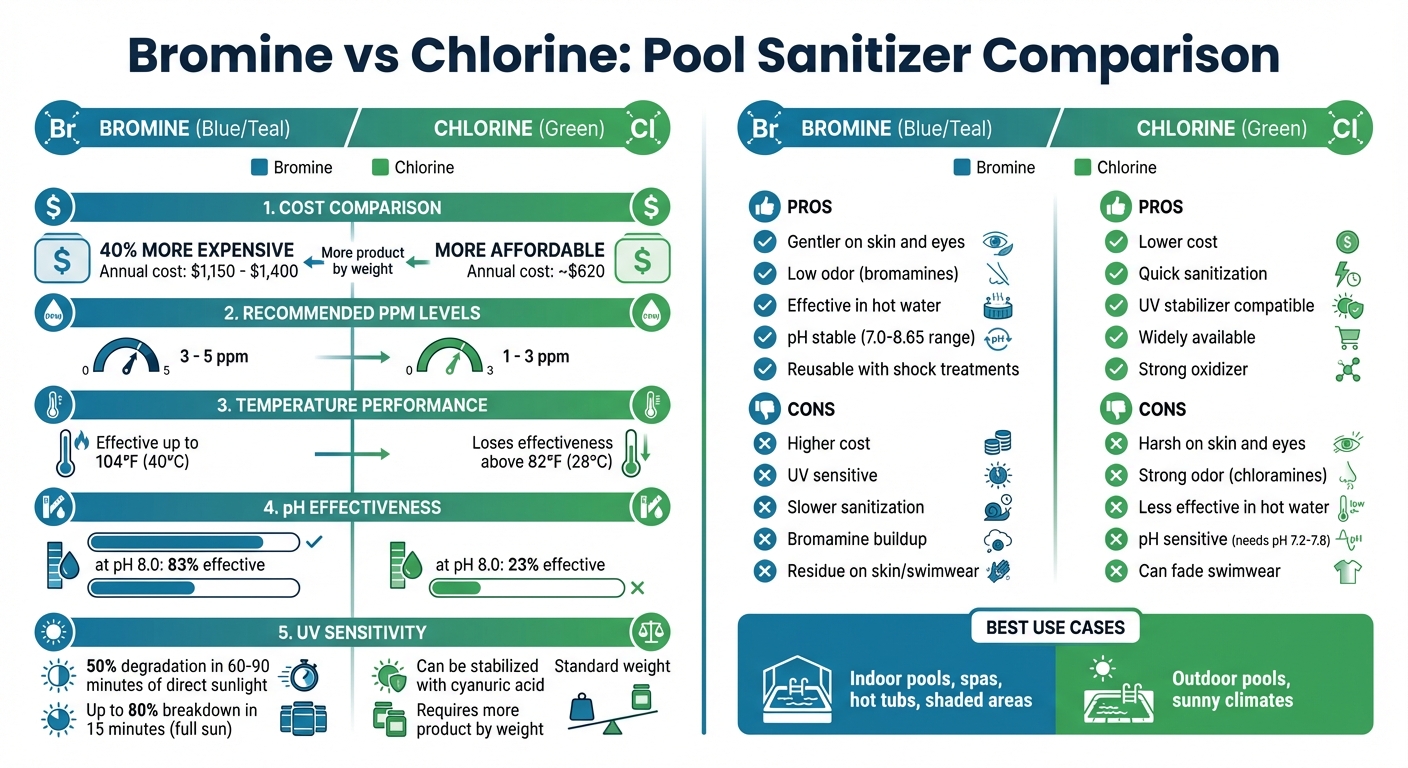
Bromine vs Chlorine Pool Sanitizer Comparison Chart
Here’s a quick comparison of bromine’s strengths and weaknesses for pool maintenance:
| Feature | Advantages | Disadvantages |
|---|---|---|
| Cost | Can be reactivated with shock treatments, which might reduce the need for additional chemicals over time [5][4]. | Higher initial cost and requires more product by weight to achieve the same effect as chlorine [7][3]. |
| Odor & Comfort | Has a milder scent and is easier on skin and eyes [5][4]. | Bromine byproducts can occasionally cause mild irritation [6]. |
| Temperature Performance | Remains stable in hot water, making it perfect for spas and heated pools [8]. | Works slower than chlorine, which can be an issue when quick disinfection is needed. |
| pH Stability | Effective across a pH range of 7.0–8.65, retaining about 50% of its activity even at higher pH levels [3][4]. | Breaks down quickly under UV light, losing about 50% of its effectiveness within 60–90 minutes of direct sunlight [6]. |
| Maintenance | Requires less frequent testing and dosing, making it more forgiving if you miss a few days [12][5]. | Improper management can lead to bromamine buildup, which reduces its effectiveness. |
Bromine levels for pool water should ideally be between 3–5 ppm, compared to chlorine’s recommended 1–3 ppm [4]. Because bromine is about 2.25 times heavier than chlorine, you’ll need more to achieve the same sanitizing effect [7][3]. However, one of bromine’s standout features is that it can be reactivated through shock treatments, converting bromide ions back into active hypobromous acid [9].
This table gives a clear overview of when bromine might be the better choice, depending on your pool’s specific needs and conditions.
When to Choose Bromine for Your Pool
Bromine is a solid choice when its benefits outweigh its higher cost and sensitivity to UV light. It’s particularly effective for indoor pools, hot tubs, and spas. Unlike chlorine, bromine performs reliably at temperatures up to 104°F (40°C), while chlorine starts to lose effectiveness above 82°F (28°C) [2][4][5].
If you or your family members have sensitive skin, allergies, or respiratory concerns, bromine might be the better option. This is because bromine produces byproducts called bromamines, which tend to cause less irritation compared to chloramines from chlorine [4][5]. Bromine also maintains its effectiveness even when the pool’s pH level rises (remaining 83% effective at a pH of 8.0), making it a great choice if pH control is a challenge [1]. These qualities make bromine particularly useful for pools with unique conditions or specific environmental demands.
Bromine for Miami-Dade Pool Owners
At first glance, bromine’s ability to handle high temperatures might seem perfect for Miami’s warm climate. However, its extreme sensitivity to UV rays makes it less suitable for outdoor pools in Florida. In full sun, bromine can degrade rapidly – up to 80% of it can break down within just 15 minutes of exposure [2]. Unlike chlorine, bromine doesn’t have UV stabilizers like cyanuric acid to protect it from sunlight [3][9].
If your pool gets full sunlight throughout the day, the quick breakdown and higher cost of bromine make it a less practical option. For outdoor pools in Miami-Dade, these factors suggest that bromine works best in shaded areas or indoor settings. Given the unique challenges of the local climate, consulting a professional can help you make the best decision for your pool.
How Alligator Pools Can Help

Navigating the complexities of bromine use – like conversion, equipment adjustments, and ongoing maintenance – requires expertise. That’s where Alligator Pools comes in. Our team evaluates whether bromine is the right fit for your pool based on factors like sun exposure, water usage, and temperature. If bromine is the best option, we ensure a seamless transition from chlorine to bromine, carefully managing your pool chemistry throughout the process [5].
We also install and maintain the specialized equipment needed for bromine systems, addressing challenges like slower tablet dissolution. Our weekly maintenance services include managing the "bromide bank" and using non-chlorine shocks to reactivate bromide ions, keeping your bromine system running efficiently.
With over 40 years of experience serving Miami-Dade, Alligator Pools has the expertise to maintain bromine-treated pools in areas like Coral Gables, Kendall, Pinecrest, and beyond. Let us help you keep your pool in perfect condition.
FAQs
Why isn’t bromine ideal for outdoor pools in sunny climates?
Bromine isn’t ideal for outdoor pools in sunny regions because it degrades rapidly under UV rays. This quick breakdown means you’ll need to reapply it often or rely on stabilizers to keep it effective. For pool owners in sunny climates, this can translate to more frequent maintenance and increased costs to ensure the water stays sanitized.
Is bromine more cost-effective and efficient than chlorine for pool sanitation?
Bromine is often pricier than chlorine, sometimes costing up to 40% more. Despite the higher cost, it has distinct benefits depending on your pool’s setup. Chlorine is typically the more affordable option and works quickly to sanitize water, making it especially effective in cooler temperatures or for pools requiring rapid treatment.
Bromine, however, shines in higher temperatures and across a range of pH levels, which is why it’s a popular choice for hot tubs or heated pools. It also has the advantage of producing less odor and being gentler on the skin. While bromine’s benefits come at a higher price, the decision between the two largely depends on your pool’s specific requirements and your budget. Chlorine is a cost-effective, fast-acting solution, while bromine performs better in warmer and more stable conditions.
Why is bromine a good choice for indoor pools and spas?
Bromine is a great option for indoor pools and spas. Why? It gives off less odor compared to chlorine, making it much more enjoyable in enclosed areas. Plus, it works well even at higher temperatures and pH levels, which is perfect for heated settings like spas. Another bonus: bromine keeps sanitizing even after it reacts with contaminants, helping maintain consistently clean water.