
Neglecting your Miami pool during summer can cost you thousands. Here’s why: Miami’s intense heat, humidity, and storms create the perfect conditions for algae growth, chemical imbalances, and equipment damage. Without regular maintenance, your pool can turn into a green mess in days, leading to costly repairs.
- Algae outbreaks: Cleaning costs $150–$400 per visit, while regular maintenance is just $100–$300 per month.
- Equipment failure: Replacing a pump can cost $700–$1,300, with filters running $1,500–$2,000.
- Structural damage: Repairs like resurfacing can climb to Repairs like resurfacing can climb to $10,000–$20,000.0,000–$20,000.
Routine care, like weekly brushing, chemical balancing, and debris removal, prevents these problems. In Miami’s climate, staying ahead of issues saves money and keeps your pool safe and enjoyable. Skip maintenance, and you risk turning your oasis into a financial nightmare.
Watch This If You PAY For Pool Maintenance!
How Miami’s Summer Weather Damages Pools
Miami’s summer weather doesn’t just make pool maintenance a hassle – it actively works against you. The intense heat, high humidity, and frequent tropical storms create a perfect storm for pool damage, both to its water quality and structural integrity.
Heat and Humidity Fuel Algae Blooms
With summer temperatures hovering between 80–90°F, Miami’s pools become an ideal breeding ground for algae. The warm water speeds up algae growth, while intense UV rays degrade chlorine faster than usual, making it harder to keep your pool sanitized[1][6].
On top of that, South Florida’s wet season, spanning May to October, brings an average of 8–12 inches of rain per month[6]. Heavy downpours dilute your pool’s chemicals, throwing off pH and alkalinity levels[1]. Rainwater also introduces organic debris, which feeds algae growth[1][6]. Without regular cleaning, stagnant areas like shaded corners or behind ladders can develop algae colonies in just a few days[1].
To combat this, test your pool’s water chemistry 2–3 times per week during the summer[1]. Aim to keep free chlorine levels between 2.0–3.0 ppm, and make brushing pool walls, benches, and tile lines a weekly habit. Shocking the pool in the evening, when sunlight won’t burn off the chlorine, is another effective preventative measure[1][5].
But algae isn’t the only concern – summer storms can wreak havoc on your pool’s structure and equipment.
Storms Bring Debris and Equipment Hazards
Tropical storms don’t just mess with your pool’s water chemistry; they can cause serious structural and equipment damage, leading to costly repairs. Heavy rain can saturate the ground, putting pressure on the pool shell. In extreme cases, this can cause cracks or even lift the pool out of the ground if water levels drop too low[7][3]. Yvonne Florian from IFAS explains the risk:
"If you have drained your pool down below the skimmer and no rain comes, this could burn up your pump motor costing you hundreds of dollars in pump repairs or replacement."[7]
Storm debris – like leaves, twigs, mud, and even patio furniture – can clog filters and pump baskets, overloading your pool’s system and increasing the likelihood of equipment failure[6]. Organic matter left on the water’s surface can also cause stains and corrosion, potentially requiring expensive resurfacing[7]. Additionally, power surges during storms can damage electrical components, and if debris blocks the pump intake, it could cause the motor to burn out[7].
One critical tip: Never drain your pool before a storm. The water’s weight helps stabilize the pool against the pressure from saturated soil[7][3]. After the storm passes, prioritize clearing debris, rebalancing chemicals, and inspecting your equipment to prevent long-term damage. These steps are essential to protecting your pool and avoiding hefty repair bills.
What Skipping Pool Maintenance Actually Costs
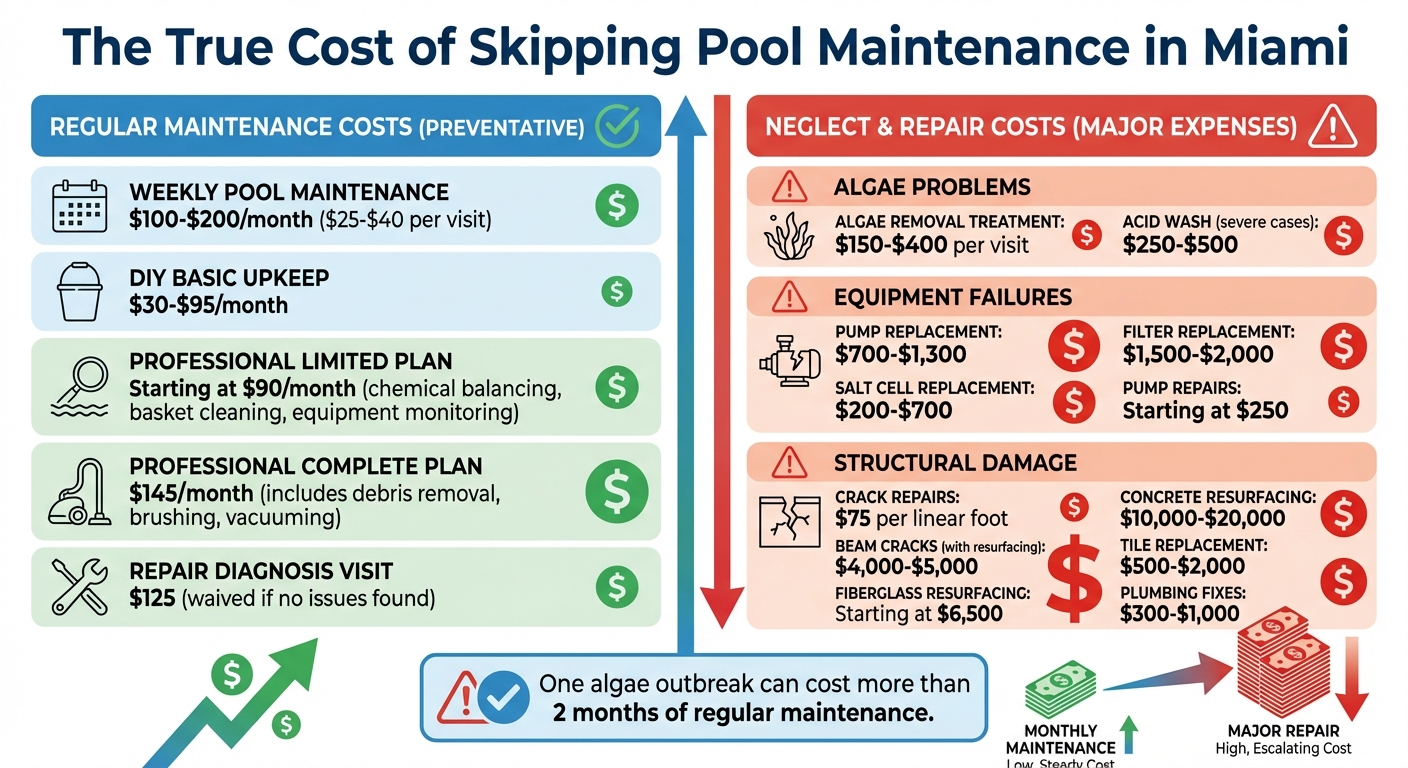
Pool Maintenance Costs vs Repair Costs in Miami
Miami’s intense summer heat can turn a neglected pool into a costly headache. Ignoring regular upkeep often leads to expensive repairs that could have been avoided with consistent care.
Algae Cleanup Costs vs. Regular Maintenance
In Miami, weekly pool maintenance typically costs between $100 and $200 per month, or about $25 to $40 per visit. This service usually includes chemical balancing, skimming, and brushing[12]. On the other hand, neglecting these routine tasks can result in algae infestations, which are far pricier to fix. Algae removal treatments can range from $150 to $400 per visit[9], and in severe cases, an acid wash might be required, costing $250 to $500[9]. As DCP Pool Services points out:
Weekly service typically offers the best value because it prevents problems that require expensive corrections[11].
To put it in perspective, just one algae outbreak can cost more than two months of regular maintenance. And that doesn’t even factor in potential equipment repairs caused by the neglect.
Equipment Failures from Lack of Care
Skipping maintenance doesn’t just affect water clarity – it can wreak havoc on your pool’s equipment. For example, replacing a pool pump can cost between $700 and $1,300[12], while new filters range from $1,500 to $2,000[12]. If you have a saltwater system, salt cell replacements add another $200 to $700 to the bill[9]. Even pump repairs start at $250[9].
In Miami’s high temperatures, poor water chemistry or clogged filters can cause a pump to fail in just weeks. A simple diagnostic visit, which costs around $125, could prevent a much more expensive four-figure replacement[10].
Structural Damage and Major Repair Bills
Unbalanced water doesn’t just harm equipment – it can also damage the pool itself. Over time, improper water chemistry erodes surfaces, leading to cracks that cost about $75 per linear foot to repair[12]. Beam cracks, which often require resurfacing and patching, can run between $4,000 and $5,000[12]. For more extensive damage, full resurfacing costs skyrocket: fiberglass starts at $6,500, while concrete resurfacing ranges from $10,000 to $20,000[12].
Additional repairs, like replacing tiles ($500–$2,000) or fixing plumbing ($300–$1,000), only add to the expense[13]. Compare that to the $30 to $95 per month many Miami pool owners spend on basic DIY upkeep[4], and the financial benefits of regular maintenance become crystal clear. Regular care not only keeps your pool looking great but also saves you from massive repair bills down the line.
sbb-itb-a36f8f1
Health Dangers of Poorly Maintained Pools
Failing to properly maintain a pool isn’t just about aesthetics – it can pose serious health risks. Miami’s warm and humid climate creates the perfect breeding ground for bacteria and algae, which can lead to a range of health and safety concerns.
Harmful Bacteria in Unbalanced Water
When chlorine levels drop, pools can become a haven for harmful bacteria and pathogens [14]. For instance, poorly maintained pools may harbor E. coli and Cryptosporidium – a parasite that can survive even in treated water [15].
The consequences of exposure to contaminated water are no small matter. Even brief contact can cause gastrointestinal issues [15]. Additionally, imbalances in water chemistry can lead to the formation of chloramines, which irritate the eyes and skin. These conditions may also encourage the growth of "pink algae" biofilms, further complicating the problem [14][15].
To prevent these risks, the CDC advises keeping free chlorine levels between 1.0–3.0 ppm and maintaining a pH between 7.2 and 7.8 [15]. Proper chemical balance not only protects swimmers’ health but also reduces the risk of other hazards.
Slip and Fall Risks from Algae Buildup
Beyond bacteria, algae growth introduces its own set of dangers. When algae accumulate, they create a slippery, green film on pool surfaces like floors, steps, ladders, and surrounding decks [14]. This slick coating significantly raises the likelihood of slips and falls, especially for vulnerable groups like children and older adults.
Algae-filled water also reduces visibility below the surface, making it harder to gauge pool depth or notice if a swimmer is in distress. This adds another layer of risk, complicating efforts to ensure safety.
Routine pool maintenance is essential to address these issues, keeping your pool safe, clean, and enjoyable even during Miami’s intense summer months.
How to Prevent Expensive Pool Problems
Avoiding costly pool repairs is easier than you might think. With a consistent maintenance routine and a proactive approach to small issues, Miami pool owners can save significantly over the lifespan of their pools.
Weekly Maintenance Saves Money
Sticking to a weekly maintenance schedule can help you sidestep expensive repairs. Keeping your pool’s water chemistry balanced – chlorine levels between 1.0–3.0 ppm, pH between 7.2–7.8, and total alkalinity between 80–120 ppm – is key to preventing bacteria growth and equipment damage [5][8][16].
During Miami’s heavy rains or hot summers, test your pool water 2–3 times a week to ensure it stays balanced. A weekly routine of skimming debris, vacuuming, clearing baskets, and brushing pool surfaces is essential [1]. Brushing areas like walls, tiles, steps, and shaded corners – especially behind ladders – helps stop algae from taking hold.
"Brushing your pool on a weekly basis is also very important for preventing algae growth and preserving the quality and longevity of your pool’s surface."
- Village Spa & Pools [16]
Another tip: Keep the pump trap filled and ensure the water level stays at least halfway up the skimmer hole. This prevents air from entering the system and causing costly motor issues [16].
For those who prefer professional help, Alligator Pools offers two maintenance plans tailored for Miami’s unique conditions. The "Limited" plan, starting at $90 per month, includes chemical balancing, basket cleaning, and equipment monitoring [10]. For a more thorough service – covering debris removal, brushing, and vacuuming – the "Complete" plan is available for $145 per month [10]. Pairing regular maintenance with equipment checks ensures your pool stays in excellent shape for years to come.
Schedule Regular Equipment Inspections
Taking care of your pool equipment is just as important as maintaining the water. Be on the lookout for unusual motor noises, puddles, or salt and calcium buildup, as these could signal early equipment issues [5][1].
"By consistently inspecting and servicing your equipment, you keep your pool in excellent shape and avoid major repairs."
Pay attention to your filter pressure – if it rises 8–10 PSI above the usual level, it’s likely time to backwash or rinse the system [1]. Additionally, check automation systems and timers every few months to ensure they’re calibrated for seasonal changes. This helps prevent energy waste and keeps your pool chemicals balanced [17].
Alligator Pools also offers repair diagnosis visits for $125, with the fee waived if no issues are found [10]. This no-risk approach makes it easier to catch minor problems before they escalate into expensive breakdowns.
Diamond Brite Resurfacing Protects Your Pool
Upgrading your pool’s surface with materials like Diamond Brite can significantly reduce maintenance needs. This modern resurfacing option helps protect against etching and scaling, which are common in Miami’s harsh conditions [2]. It also lowers chemical use and labor over time.
Alligator Pools provides on-site inspections and includes a 3-year workmanship guarantee with their resurfacing services, ensuring long-lasting results. Combining this upgrade with a solid maintenance routine can save you from hefty repair bills down the road.
Conclusion
Skipping pool maintenance during Miami’s scorching summer isn’t just inconvenient – it can lead to serious expenses and risks. A well-maintained pool can quickly spiral into disrepair, resulting in equipment failures, structural damage, and even health hazards that could cost you thousands.
The financial risks of neglect are clear. Starting at just $90 per month, expert pool maintenance can save you from hefty repair bills. Without regular care, you could face costs for pump replacements, liner repairs, or even a complete pool overhaul – expenses that can easily climb into the tens of thousands.
But it’s not just about money. Regular maintenance protects both your health and property. Routine inspections catch small issues before they turn into major problems [1][2]. And in Miami’s subtropical climate, the unique demands of pool care require more than generic maintenance tips.
Since 1985, Alligator Pools has been the trusted choice for Miami-Dade homeowners. With licensed and insured service, a no-risk repair guarantee, and expertise in South Florida’s specific challenges, they offer everything from weekly maintenance to Diamond Brite resurfacing backed by a 3-year workmanship guarantee. For stress-free pool ownership that protects your wallet and your family’s health, rely on their 40+ years of experience.
FAQs
How can I tell if my pool needs maintenance during Miami’s summer?
Changes in your pool’s water are often the first indicators that something isn’t quite right. If the water appears cloudy, turns green, or takes on an unusual hue, it might point to issues like a malfunctioning filtration system, imbalanced chemicals, or the early stages of algae growth. To confirm, use a testing kit to check the chlorine levels and pH. Ideally, the pH should stay between 7.4 and 7.6 for optimal conditions.
Mechanical problems can also hint at the need for maintenance. Unusual sounds from the pump or filter – like grinding or humming – might mean there’s air trapped in the lines, worn-out parts, or even a motor on the verge of failing. Cracks in the pool surface, damp spots around the deck, or visible leaks are other red flags. Addressing these promptly can save you from more expensive repairs down the line.
Debris accumulation is another issue to watch, especially after Miami’s frequent rainstorms. Leaves, insects, and other debris can encourage the growth of algae and bacteria. A strong chlorine odor, murky water after a rainstorm, or a filter working overtime are clear signs that it’s time to clean the system and test the water chemistry. Tackling these issues early can prevent them from escalating into bigger problems.
How does Miami’s summer weather impact pool equipment?
Miami’s tropical weather can be tough on pool equipment. The intense UV rays from the summer sun aren’t just harsh on your skin – they can also fade vinyl liners, degrade plastics, and even cause cracks in components like pump housings and automatic cleaners. Meanwhile, the humid, salty air in South Florida speeds up rust and corrosion on metal parts such as ladders, rails, and pump shafts, which can lead to early wear and tear.
Severe weather events, like thunderstorms or hurricanes, bring their own set of challenges. Heavy rains can flood pump areas, clog filters with debris, and expose electrical components to water – raising the risk of short circuits. Plus, the relentless strain on pumps during hot, humid months can lead to overheating and long-term motor damage.
To keep your pool equipment in good shape, regular inspections are key. Add UV-protective covers, apply anti-corrosion coatings, and make sure everything is secured before storm season hits. These proactive measures can go a long way in preventing damage and keeping your pool system running smoothly.
What health problems can arise from swimming in an unmaintained pool?
Swimming in a pool that isn’t properly maintained can expose you to recreational water illnesses (RWIs). These illnesses are caused by bacteria, viruses, and parasites that thrive in water that hasn’t been treated correctly. Common issues include ear infections (like swimmer’s ear), skin rashes, irritated eyes, and even respiratory problems from breathing in contaminated mist.
One of the most concerning risks is diarrheal illness. Germs like Cryptosporidium, norovirus, and E. coli can cause severe stomach cramps, vomiting, and diarrhea if you accidentally swallow contaminated water or if it gets into your nose or mouth. On top of that, if the pool’s pH levels are off, bacteria can multiply, potentially causing skin infections and other irritations.
Keeping yourself safe means making sure the pool is well-maintained. Proper water treatment, balanced chlorine levels, and regular testing are critical. This is especially important during Miami’s hot summers when pools need extra attention to stay safe and clean.