
When air enters your pool pump system due to suction leaks, it can cause severe damage. These leaks allow air to replace water, leading to overheating, cavitation, and eventual pump failure. Ignoring the problem could cost you thousands in repairs, but fixing most leaks is inexpensive and straightforward.
Key Takeaways:
- Signs of Suction Leaks: Air bubbles under the pump lid, frothy water, or bubbles in return jets.
- Common Causes: Worn O-rings, loose fittings, cracked pipes, or underground plumbing issues.
- DIY Fixes: Replace O-rings, tighten fittings, or use products like Fix-A-Leak or Pool Putty (costs under $30).
- When to Call a Pro: Persistent leaks, underground plumbing issues, or complex systems.
Act quickly to avoid costly damage. Most suction leaks are easy to repair, but professional help may be needed for complex problems.
Signs Your Pool Has a Suction Leak
Warning Signs to Look For
One clear indicator of a suction leak is air bubbles under the pump lid. Small leaks may cause a steady stream of bubbles, while larger ones can lead to splashing, frothing, or even the pump basket filling with air [1].
Another red flag is bubbles making their way back into your pool through the return jets. This happens when air travels through the entire system [1]. You might also notice your pump struggling to start or having difficulty pulling water effectively. Sounds like gurgling, whining, or hissing often point to air entering the system [5]. If you hear what sounds like gravel or marbles rattling around, it could signal cavitation – a problem that can damage the impeller [7].
"A suction side air leak is most commonly indicated by air under the pump lid." – PoolZoom [1]
Other signs include low filtration pressure and reduced water levels at the skimmer [1]. If you notice any of these issues, it’s time to investigate further using targeted testing methods.
How Leaks Affect Your Pool’s Performance
Suction leaks can cause serious problems for your pool. When air enters the system, it disrupts circulation and filtration, leading to issues like cloudy water, chemical imbalances, and even algae growth [5][8].
Beyond water quality, leaks also make your pool less efficient. They force the system to work harder, increasing energy costs and putting extra stress on internal components [8]. Over time, even a small leak can snowball into bigger problems, reducing filtration efficiency and weakening overall circulation.
How to fix Air leaks in Pool Pump: fix Air Bubbles in Pool Pump: Pool Pump not priming
How to Find Suction Leaks in Your Pool System
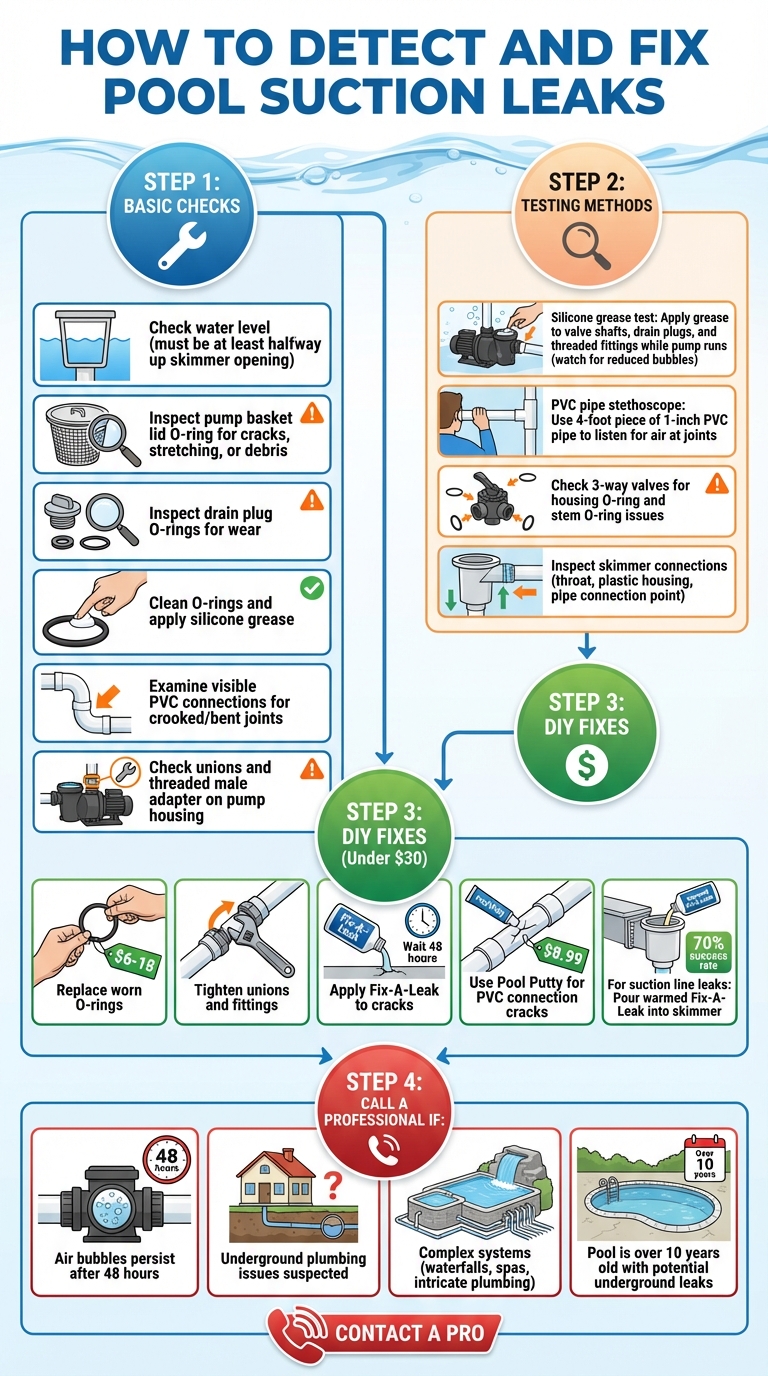
How to Detect and Fix Pool Suction Leaks: A Step-by-Step Guide
Basic Checks: Start Here First
Before diving into complex diagnostics, start with the basics. First, ensure the pool’s water level is at least halfway up the skimmer opening – this prevents air from being pulled into the system unintentionally [1].
Next, inspect the pump basket lid’s O-ring and the drain plug O-rings for any signs of wear, such as cracks, stretching, or accumulated debris. If they appear dirty, clean them thoroughly, and apply a thin layer of silicone grease before putting them back in place [1][12].
Take a close look at all visible PVC connections. If you notice any crooked or bent joints, it could indicate poor gluing, which might lead to leaks [1][6]. Pay extra attention to unions connecting pipes to equipment and the threaded male adapter on the front of your pump housing – these areas are common culprits [1][9].
If these steps don’t uncover the issue, move on to more specific testing techniques to locate the source of the leak.
Testing Methods to Pinpoint Leaks
One effective approach is the silicone grease test. With the pump running, apply silicone grease to suspected leak points, such as valve shafts, drain plugs, and threaded fittings. If a leak exists, the grease will be drawn in, and you should see fewer air bubbles in the pump basket [12].
Another handy trick involves using a 4-foot piece of 1-inch PVC pipe as a makeshift stethoscope. Place one end near suspected joints and listen carefully for the sound of air being sucked in [12]. This method is especially useful for diagnosing leaks in 3-way valves, which tend to develop problems with their housing O-rings and stem O-rings [1][6].
Don’t forget to check the skimmer connections, as they are a frequent source of leaks [10]. Examine the skimmer throat, look for cracks in the plastic housing at the bottom, and inspect the connection point where the pipe meets the skimmer. If your pool is over a decade old, underground plumbing leaks might also be worth considering, as they are surprisingly common in older systems [10].
sbb-itb-a36f8f1
Low-Cost Solutions for Suction Leaks
Keeping your pool pump running smoothly doesn’t have to break the bank. With a few affordable fixes, you can tackle suction leaks and maintain your pool’s performance.
Simple Repairs You Can Do Yourself
Finding and fixing a suction leak doesn’t require a professional in every case. Most repairs cost less than $30 and can be done in under an hour. For example, replacing worn O-rings is a quick and effective solution. A bottle of J-B Weld WaterWeld Epoxy Putty costs about $6.17, while an 8-oz bottle of Fix-A-Leak is priced between $17.80 and $17.97 [14].
If you notice leaks around wall fittings, lights, or skimmers, here’s a straightforward fix: Turn off the pump, let the water settle, and apply warmed Fix-A-Leak to the crack using a squeeze bottle. Allow 48 hours for it to set before restarting the pump. This method works on cracks up to 1/8 inch in vinyl, gunite, or fiberglass pools [13][15].
For suction line leaks, try this: Warm a 32-oz bottle of Fix-A-Leak for 10–15 minutes. Pour half of it into the skimmer with the pump off, run the pump for two seconds to draw it in, then add the rest of the bottle. Let it sit for three days. This approach has about a 70% success rate [16].
Leaks at PVC connections can often be resolved by tightening unions and replacing worn O-rings. Make sure to use new O-rings pre-lubricated with silicone grease for a proper seal [3]. For cracks around equipment connections, Pool Putty – a two-part epoxy priced at around $8.99 for a 10-oz container – works well and can even be applied underwater [14].
If these DIY options don’t solve the problem, it may be time to consider professional help.
When to Call Alligator Pools for Repairs

If air bubbles persist 48 hours after trying DIY fixes, the problem could involve underground plumbing or structural issues [18]. Attempting to repair complex leaks yourself can sometimes lead to higher costs in the long run.
That’s where Alligator Pools comes in. Our licensed technicians use advanced tools like thermal imaging and acoustic sensors to pinpoint hidden leaks without unnecessary digging or damage [17][19]. We provide upfront, transparent estimates and back our repairs with a 3-year workmanship guarantee, so you can trust the fix will last.
Professional help is especially important for pools with features like waterfalls, spas, or intricate plumbing systems. These setups often require shutting down multiple components to isolate the leak’s source [18]. Acting quickly with professional intervention can prevent further damage and reduce water waste [20].
How to Prevent Suction Leaks and Protect Your Pump
Suction leaks might seem like a small inconvenience, but they can wreak havoc on your pump and wallet. Even a minor leak can waste thousands of gallons of water annually, adding $200–$500 to your water bill. Catching leaks early is much cheaper, with detection services typically ranging from $150 to $500. However, ignoring the problem could result in repair costs exceeding $10,000 [11]. The key to avoiding these headaches? Early detection and consistent maintenance.
Regular Maintenance Tasks
To keep your pump running smoothly, a little routine care goes a long way:
- Inspect the pump lid O-ring monthly. Cracks or dryness in the O-ring allow air to seep into the system, reducing suction and overworking your pump. A quick fix? Apply silicone grease or O-ring lubricant, like Magic Lube, to keep the seals flexible and airtight [12].
- Clean your skimmer and pump baskets weekly. This ensures steady water flow and prevents debris buildup. Also, make sure the water level stays at least halfway up the skimmer opening to avoid air intake.
- Watch for warning signs. Air bubbles in the return lines or strange gurgling sounds often signal a leak. To pinpoint the problem, pour water over valves and fittings using a garden hose. If the bubbles stop, you’ve likely found the culprit. Tackling these issues early can save you from costly repairs.
"Regular maintenance, cleaning, and repairs can significantly extend the lifespan of your pool and its equipment." – Alligator Pools [21]
Benefits of Professional Maintenance from Alligator Pools
While DIY maintenance is essential, professional care provides an added layer of protection. Alligator Pools offers weekly maintenance services designed to catch and fix small problems before they escalate. During every visit, their certified technicians thoroughly inspect your pump system, filter, and connections for wear and tear. They also replace critical components like O-rings, gaskets, and shaft seals to ensure watertight seals.
Professional inspections go beyond the surface. Using advanced tools, Alligator Pools can detect hidden leaks in underground pipes – issues that are nearly impossible for homeowners to spot [22]. Minor repairs are handled on the spot, preventing further damage and costly downtime. With over 40 years of experience in Miami-Dade County, Alligator Pools knows how Florida’s unique climate affects pool equipment and offers year-round solutions to protect your investment.
"Ignoring minor problems can lead to major, expensive repairs down the line, but regular maintenance can prevent these issues from spiraling out of control." – Alligator Pools [21]
Conclusion: Stop Suction Leaks Before They Burn Out Your Pump
Suction leaks might seem like a small nuisance, but they can deprive your pump of the water it needs to function properly[2]. When air gets into the system, the pump has to work harder, which can lead to overheating and, eventually, burnout[2][4]. What starts as a minor issue can quickly spiral into costly repairs.
Here’s the upside: most suction leaks – about 99% – are easy to fix[1]. Start with some basic checks: examine the pump lid O-ring, make sure baskets are clean, and look for telltale signs like air bubbles or gurgling noises. You can often resolve these problems by replacing a cracked O-ring or tightening a loose fitting, and these fixes are usually quick and inexpensive.
That said, not every leak is a DIY job. Some require the expertise of a professional. Alligator Pools, with over 40 years of experience in Miami-Dade County, specializes in spotting and addressing these issues early during routine inspections. Catching problems early prevents them from escalating into bigger headaches.
"When properly identified and repaired, further damage will be prevented, saving money on repair bills, equipment replacement, and down time." – Alligator Pools
The key is to act fast when you notice warning signs. A well-maintained pump can last 8–10 years[23], but only if leaks are addressed promptly. Whether you tackle the simpler fixes yourself or call in certified technicians, taking immediate action protects your pump and keeps your pool running smoothly.
FAQs
What are the key signs of a suction leak in your pool pump system?
When dealing with a suction leak in your pool pump system, there are a few telltale signs to watch for. Look out for air bubbles streaming from the return jets, water leaks near the pump, or air trapped beneath the pump lid. You might also experience a drop in pump performance or hear strange noises while the system runs. Catching and fixing these problems early can save you from expensive repairs down the line.
How can I fix a suction leak in my pool system without hiring a professional?
To tackle a suction leak on your own, the first step is pinpointing the problem. While the pump is running, apply water, shaving cream, or soapy water to pipe connections and fittings. If you spot bubbles or notice a change in suction, you’ve found the leak. Once identified, tighten any loose fittings or replace worn-out seals, o-rings, or connections. For small cracks, applying pool-safe sealants can do the trick. However, if the leak is buried underground or hard to reach, it’s a good idea to call in a professional for help with detection and repair.
When should I call a professional to fix a suction leak in my pool?
If you’ve tried fixing the suction leak but can’t pinpoint or resolve the issue, it might be time to bring in a professional. This is especially true for problems involving underground pipes, intricate plumbing setups, or signs like water damage, unusual noise, or visible pump wear – all of which may need specialized tools and expertise to handle properly.
Taking care of suction leaks promptly can save you from expensive repairs down the road and keep your pool system running efficiently. When in doubt about how serious the problem is, reaching out to an expert can provide clarity and peace of mind.