
Algae can turn your pool into a green, slippery mess, but preventing it is easier than you think. Here’s a quick guide to keep your pool algae-free:
- Run Your Pump Daily: Circulate water for 8–12 hours to prevent stagnation.
- Maintain Chlorine Levels: Keep free chlorine between 1–4 ppm; test water 2–3 times weekly.
- Shock Weekly: Boost chlorine to remove contaminants and prevent algae.
- Brush and Vacuum: Clean walls, steps, and corners weekly to remove spores.
- Use Algaecide: Add it weekly as a backup to chlorine.
- Remove Debris: Skim daily and limit sunlight with covers to reduce algae growth.
- Test After Storms/Parties: Check and adjust chlorine, pH, and alkalinity promptly.
5 Essential Tips for Keeping Your Pool Algae-Free & Saving Money!
1. Run Your Pump and Filter System Daily
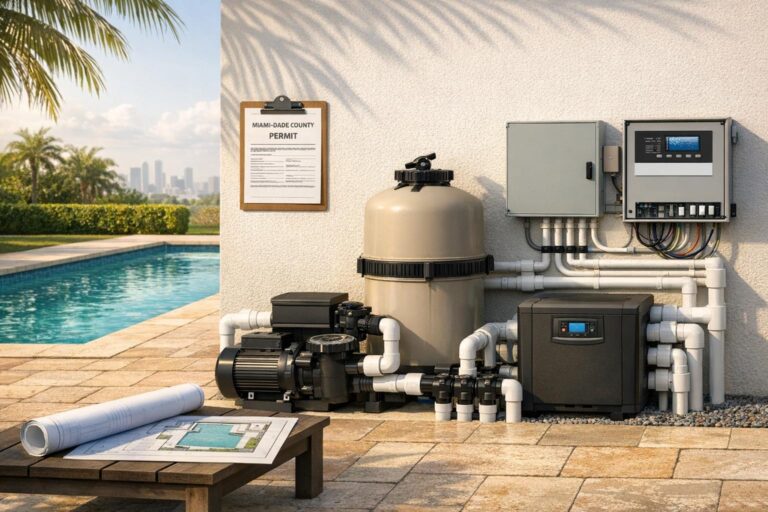
Your pool pump and filter play a key role in keeping algae at bay. When water remains stagnant, algae spores settle on surfaces like walls, steps, and corners, creating the perfect conditions for growth. By keeping the water moving, you disrupt this process, ensuring debris and spores are directed to the filter before they can latch on. Plus, daily circulation helps evenly distribute chlorine and other sanitizers, reducing the "dead spots" where algae tend to thrive [1][2]. Here’s how to make the most of your pump and filter system.
Experts typically recommend running your pump and filter for 8–12 hours each day during swimming season to ensure at least one full turnover of your pool’s water [1][2]. In hotter climates like South Florida, where algae grow more quickly, it’s often better to aim for the higher end of that range – or even longer. To figure out the right run time for your pool, calculate its volume and divide it by your pump’s flow rate using the turnover time formula. For instance, a 20,000-gallon pool with a 50 GPM (gallons per minute) pump will take about 6.7 hours for one full turnover. Running the pump for 10–12 hours in warm areas can achieve nearly two turnovers, offering stronger algae prevention. During heat waves, after storms, or when the pool sees heavy use, consider extending your pump’s run time to keep algae from taking hold [1][2].
If you’re looking for an energy-efficient option, variable-speed pumps are a great alternative to traditional single-speed models. These pumps run at lower speeds for 12–20 hours a day, maintaining steady circulation while using less energy – an especially effective method in warmer regions [2].
Keep an eye out for signs of poor circulation. Cloudy water, debris collecting in corners or behind ladders, fine sediment on the pool floor after vacuuming, sanitizer levels dropping quickly, or a slimy feel on pool walls in certain areas can all indicate that your pump isn’t running long enough or your filtration system isn’t working efficiently [1][2][3].
A clean filter is just as important as a properly running pump. A dirty or clogged filter slows water flow and allows debris to recirculate, which undermines the benefits of good circulation. Sand filters typically need backwashing when the pressure gauge shows an 8–10 psi increase over the clean starting pressure. Cartridge filters should be rinsed off at similar pressure rises, while DE filters require backwashing and recharging with fresh DE. Always check the manufacturer’s guidelines for specific maintenance instructions. After treating algae, it’s a good idea to clean your filter and run the pump continuously for about 24 hours to clear out dead algae and other contaminants [3].
Some areas of the pool, like steps, corners, spots behind ladders, or around pool lights, can become "dead zones" where circulation is weak. To address this, adjust your return jets to create a circular flow that pushes water toward the skimmers and across these tricky spots. Regularly brushing these areas also helps move debris into the main flow so the filter can capture it [2][3].
If algae keep showing up despite proper circulation and sanitation, it could point to deeper problems like outdated or undersized equipment, poor plumbing design, or hidden circulation issues. For those in Miami-Dade County dealing with persistent algae, Alligator Pools can help diagnose these problems, recommend equipment upgrades, and create a customized maintenance plan to keep your pool water moving and algae-free year-round.
2. Keep Chlorine or Bromine at Proper Levels
Chlorine or bromine acts as your pool’s main line of defense against algae. When sanitizer levels drop too low, algae spores can multiply quickly, turning your pool into a breeding ground for green water. Keeping sanitizer levels within the recommended range not only prevents algae growth but also protects swimmers from irritation and helps maintain your pool’s surfaces and equipment. Regular testing is key to ensuring these levels stay consistent, complementing proper water circulation.
For most residential pools in the U.S., free chlorine should stay between 1–3 ppm (up to 4 ppm during peak swimming season). Bromine pools, on the other hand, should maintain levels between 3.0–5.0 ppm. During busy swimming months, test sanitizer levels 2–3 times per week, while weekly testing may suffice in cooler months. After heavy use or a storm, always test again. In areas like South Florida, where swimming is common year-round, testing three times weekly or even daily during heat waves can help catch drops before algae becomes an issue. For the most accurate results, opt for a DPD liquid test kit instead of test strips, as strips can lose accuracy when exposed to extreme temperatures or stored for too long.
Chlorine is most effective when the pH is kept between 7.2–7.6. If the pH climbs above 7.8, adding a pH reducer alongside your sanitizer ensures the chlorine works efficiently to combat algae.
If free chlorine levels dip below 1.0 ppm, act quickly. Adding approximately 1 quart of liquid chlorine (12.5% strength) or 1 pound of calcium hypochlorite to a 10,000-gallon pool will raise levels by roughly 1.0 ppm. Always add chemicals to the deep end with the pump running, and retest a few hours later to confirm you’ve reached the target range. Never mix different chemicals directly – add them separately, allowing the pump to circulate water between additions.
On the flip side, excessive sanitizer levels (above 5.0 ppm) can irritate skin and eyes, fade swimwear, and damage pool surfaces. If levels are too high, stop adding chemicals, run the filter, and let sunlight and circulation naturally reduce the excess. In some cases, you may need to partially drain and refill the pool to restore balance.
Cyanuric acid (CYA), or stabilizer, is another critical factor for outdoor pools, as it shields chlorine from breaking down under UV rays. However, higher CYA levels mean you’ll need to maintain higher free chlorine levels to effectively prevent algae. Many pool owners in sunny climates rely on stabilized chlorine tablets and monitor their CYA to ensure their chlorine remains effective.
Small, frequent adjustments are more effective than waiting until algae becomes visible. Beyond balancing sanitizer levels, make sure your pool’s overall water chemistry supports chlorine’s effectiveness. Interestingly, many irritation issues blamed on "too much chlorine" are actually caused by low free chlorine combined with high chloramines – byproducts of chlorine reacting with contaminants. Regularly shocking your pool to eliminate chloramines, along with maintaining proper sanitizer levels, can lead to clearer, more comfortable water.
For those who prefer a hands-off approach, professional services can simplify pool maintenance. Companies like Alligator Pools offer weekly services that keep sanitizer levels balanced and algae at bay. Their CPO-certified technicians handle testing, adjustments, and dosing tailored to local weather patterns – a particularly valuable service in Florida’s year-round swimming climate.
3. Shock Your Pool Regularly
Your pool’s daily sanitizer levels can’t tackle every contaminant. Sweat, sunscreen, body oils, and organic debris all consume chlorine, a process known as "chlorine consumption", which weakens your pool’s defense against algae. Shock treatments, or superchlorination, temporarily spike chlorine levels to break down these contaminants, restoring water balance and preventing algae from taking hold. Think of it as hitting the reset button on your pool’s chemistry for better algae control.
Shock treatments work hand-in-hand with daily pump operation and sanitizer management. For most backyard pools, shocking once a week during swim season is an effective way to keep algae at bay. In warmer areas like Miami-Dade County, where pools are used year-round and water temperatures stay high, many pool experts recommend sticking to this weekly schedule all year long. Algae thrive in warm water, making consistent shocking even more critical when temperatures rise.
Timing is key when shocking your pool. Plan to do it in the evening or at night rather than during the day. Why? Midday UV rays can quickly break down elevated chlorine levels, reducing the shock’s effectiveness. By shocking in the evening, you give the treatment several hours to work uninterrupted, targeting contaminants and algae spores before the sun can weaken it.
Before shocking, test your water chemistry. Shock treatments are most effective when your pH is between 7.2 and 7.6. If the pH is too high, use a pH reducer first to ensure the shock can work at full strength. Always calculate your pool’s volume and follow the manufacturer’s dosing instructions. Avoid guessing – overdosing can damage your pool’s surfaces and equipment, while underdosing won’t fully eliminate algae spores.
Types of Pool Shock
- Calcium hypochlorite (cal-hypo): The most common option for weekly algae prevention, cal-hypo typically contains 65–73% available chlorine. For an average 15,000–20,000 gallon pool, you’ll need about 1–2 pounds of cal-hypo per week. It delivers a strong chlorine boost but adds calcium to the water, which you’ll need to monitor in areas with hard water to avoid scaling.
- Dichlor (stabilized chlorine): This type adds both chlorine and cyanuric acid, which helps protect chlorine from UV breakdown. However, frequent use can lead to excessive stabilizer levels, which can eventually reduce chlorine’s effectiveness.
- Non-chlorine oxidizers: These products, like potassium monopersulfate, remove contaminants without adding chlorine. They’re ideal for use between chlorine shocks or when you need swimmers to re-enter the pool sooner. Keep in mind, they work best when your free chlorine levels are already at 2 ppm or higher, but they’re less effective against active algae blooms.
To safely shock your pool, pre-dissolve granular shock in a clean bucket of pool water if the product label instructs you to. With the pump running, pour the solution around the deep end or near the return jets. Keep the pump and filter running continuously for 8–24 hours after applying the shock to circulate the chemicals and filter out dead algae and other contaminants. Swimming should be avoided until free chlorine levels drop back to the safe range of 1–4 ppm, as specified on the product label.
In addition to your weekly routine, you should shock your pool after heavy use or severe weather. Pool parties and days with a lot of swimmers introduce extra sweat, sunscreen, and body oils, so shocking the pool that evening is a smart move. Similarly, heavy rain or windstorms can bring in debris and dilute sanitizer levels, creating a perfect environment for algae growth. During hot, sunny stretches, consider shocking twice a week, as higher temperatures speed up algae growth and increase chlorine consumption.
Safety First
When handling shock products, always wear safety glasses, gloves, and appropriate clothing. Never mix different types of chemicals in the same container. Always add chemicals to water – not water to chemicals – and work outdoors in a well-ventilated area. Store shock products in their original containers, in a cool, dry, and ventilated space, away from acids, children, pets, and heat sources.
If you’d rather avoid handling strong chemicals or want to ensure your pool stays on a consistent maintenance schedule, professional services can take care of shocking for you. For example, Alligator Pools includes shock treatments as part of their weekly maintenance plans. Their CPO-certified technicians adjust dosing based on local water conditions, your pool’s surface type, and recent weather – especially valuable in Florida’s warm climate, where algae control requires constant attention.
4. Brush Walls and Vacuum Weekly
Even if your pool’s water chemistry is perfectly balanced and your filtration system runs daily, algae spores can still cling to surfaces and start forming colonies. Regular brushing is key to breaking algae’s hold on the pool’s plaster, tile, vinyl, or fiberglass surfaces. This simple step prevents those tiny patches from turning into major algae problems.
Certain areas of your pool don’t get as much water circulation, making them prime spots for algae growth. Pay extra attention to corners, steps, behind ladders, around lights, and along the waterline. These areas tend to collect debris and are more prone to algae buildup.
Choosing the Right Brush
The type of brush you use depends on your pool’s surface. For plaster or concrete pools, a stainless-steel or combination brush (nylon and stainless steel) works best to remove algae without damaging the surface. Pools with pebble or aggregate finishes benefit from a stiff nylon brush that cleans effectively without scratching. If your pool has a vinyl liner or fiberglass shell, stick with a soft nylon brush to avoid tears or scratches. For waterlines, a nylon or specialized tile brush is ideal. Use firm, steady pressure to lift debris without harming the surface.
Once you’ve selected the proper brush, stick to a consistent weekly cleaning routine.
A Simple Weekly Routine
A weekly brushing session only takes about 15–30 minutes for a typical backyard pool, though larger or more complex pools might take a bit longer. Start by turning on the pump to ensure the debris you loosen gets pulled into the filter. Focus on brushing the waterline, walls (using overlapping strokes from top to bottom), steps, benches, sun shelves, and spa spillways. Push debris on the pool floor toward the main drain so it can be vacuumed more easily.
After brushing, most of the loosened dirt and algae will settle on the pool floor. This is where vacuuming comes in. For manual vacuuming, connect the hose to the skimmer, remove any air from the hose, and vacuum slowly in straight, overlapping lines. Keep the multiport valve set to "Filter" unless you’re dealing with fine algae, in which case you can switch to "Waste" and then refill the pool.
While automatic cleaners – whether robotic, suction-side, or pressure-side – are convenient, they don’t scrub surfaces like manual brushing. For algae-related issues, a slow, deliberate manual vacuuming session is often more effective. Use automatic cleaners as a supplement, not a replacement, to your weekly routine.
When to Brush More Often
During the summer or after heavy pool use, it’s a good idea to brush two or three times a week. Warmer water, sunscreen residue, and organic debris like leaves and pollen can provide nutrients for algae to thrive, especially if sanitizer levels are strained.
Spotting Early Warning Signs
Brushing regularly also helps you catch early signs of algae. Look out for slimy or rough walls, light-colored dust that quickly reappears after brushing, or dark spots that are tough to remove. If you notice clouds of fine green or gray material lifting off the floor while brushing, take extra care. Re-brush those areas thoroughly, vacuum to waste if needed, test your water, and adjust sanitizer levels. Chlorine should stay between 1–4 ppm, and pH should be between 7.2–7.6. In some cases, a shock treatment may be necessary to stop algae from spreading.
Making It Work Together
Brushing, vacuuming, and maintaining proper circulation all work together to keep algae at bay. Brushing loosens algae and biofilm, vacuuming removes the debris, and the filtration system captures any remaining particles while distributing sanitizer evenly. Common mistakes include skipping vacuuming after brushing (which allows debris to settle again), vacuuming too quickly (stirring up particles), running the pump for too few hours, or forgetting to clean or backwash the filter after heavy vacuuming. Don’t forget to empty your skimmer and pump baskets before and after maintenance to ensure smooth water flow.
If your schedule or specific conditions make regular maintenance challenging, consider professional help. For example, Alligator Pools, a trusted name in Miami-Dade County since 1985, offers weekly maintenance plans that include thorough brushing and vacuuming. Their CPO-certified technicians understand how South Florida’s warm climate and intense sunlight speed up algae growth. They customize brushing techniques and schedules based on your pool’s surface, recent weather conditions, and how often it’s used. This tailored approach pairs perfectly with other algae-prevention methods discussed here.
sbb-itb-a36f8f1
5. Add Algaecide and Control Phosphates
Once you’ve got your filtration, sanitizer, shock treatments, and brushing routines in place, adding algaecide and managing phosphates can provide an extra layer of protection for your pool. Even with ideal chlorine levels and daily filtration, algae spores can sneak in. That’s where algaecide comes in – it acts as a backup defense, stepping in when chlorine alone isn’t enough. By stopping algae spores from growing into visible blooms, algaecide works alongside proper circulation and sanitizer use. For the best results, add it to clean, clear water. If algae are already visible, you’ll need more aggressive measures like shocking, brushing, and vacuuming.
Choosing the Right Algaecide
Not all algaecides are the same, so picking the right one for your pool matters. Polyquat algaecides (polymeric quaternary ammonium) are a popular choice for regular use. They’re non-foaming and compatible with both chlorine and saltwater systems, making them a versatile option. Always check the label for dosing instructions. For vinyl liner or fiberglass pools, polyquat products are generally preferred since they help avoid foaming issues.
Quat algaecides are budget-friendly but can foam in pools with water features like waterfalls or spas. Copper-based algaecides are highly effective against stubborn algae types, such as yellow or mustard algae, but they require careful use. Overdosing or using them in water with a high pH can lead to metal stains on surfaces or even discolor swimmers’ hair. If algae keep coming back despite balanced chlorine levels, a copper-based algaecide might be worth considering – just make sure to follow dosing instructions closely and maintain proper water chemistry.
How Often to Apply Algaecide
In warmer areas of the U.S., like South Florida, where water temperatures often stay above 70–75°F, adding algaecide weekly during swim season is a common practice. Before applying, ensure your pH is between 7.2 and 7.6 and free chlorine levels are at 1–4 ppm. Measure your pool’s volume, add the algaecide as directed, and run the pump for 4–24 hours.
It’s best to add algaecide after shock treatments, once chlorine levels have returned to their normal range. High chlorine levels can break down some algaecide formulas. During heat waves, periods of heavy use, or before extended breaks when you might not test the water as often, dosing two or three times a week can be helpful.
Understanding Phosphates
Algae prevention isn’t just about chemicals – it’s also about controlling nutrients. While algaecide targets spores directly, managing phosphates tackles the nutrients that algae feed on. Phosphates can enter your pool through dust, leaves, fertilizers, rain runoff, and even swimmer waste. They act like fertilizer for algae, helping spores multiply if sanitizer levels drop. Pools surrounded by landscaping or filled with municipal water are especially prone to phosphate buildup.
When and How to Use Phosphate Removers
Phosphate removers, often lanthanum-based, are helpful when phosphate levels rise above 500–1,000 parts per billion. Here’s how to use them:
- Test the water
- Balance pH and chlorine levels
- Add the recommended dose of phosphate remover
- Run the pump for several hours
- Clean the filter afterward
If phosphate levels remain high, use smaller doses over time and retest after each treatment. Keep in mind, phosphate removers are a supporting tool – they don’t replace chlorine.
Safety and Compatibility
Always handle pool chemicals with care. Never mix different chemicals in the same container, and add them separately to the pool with the pump running. Follow label instructions for wait times between shocking and adding algaecide, and keep swimmers out of the water until the recommended re-entry time. Store chemicals in a cool, dry, and well-ventilated space.
A Practical Weekly Routine
For a typical 15,000-gallon in-ground pool, a good routine might include adding a preventive dose of algaecide (adjusted for your pool’s size) with the pump running, along with monthly phosphate testing. If phosphate levels are high, treat with a phosphate remover, circulate the water for several hours, and clean the filter.
This approach complements daily circulation and weekly filter checks to keep algae under control. In places like South Florida, where warm water and strong sunlight create ideal conditions for algae growth, consistent use of algaecide and phosphate control can reduce the need for frequent shocking.
When to Call for Help
If algae persist despite following these steps – maintaining proper chlorine levels, regular brushing, and using the right chemical treatments – or if you notice staining or discoloration after using copper-based algaecides, it might be time to call a professional. Recurring algae or phosphate problems could indicate deeper issues like poor circulation, dead spots, or an inefficient filter. Licensed pool services, such as Alligator Pools in Miami-Dade County, can diagnose these problems, recommend a tailored treatment plan, and help keep your pool clear and inviting.
6. Remove Debris and Limit Sunlight Exposure
Keeping your pool clean and free of algae goes beyond just maintaining proper filtration and chemical balance. Managing debris and limiting sunlight exposure are equally important steps. Things like leaves, dirt, and other debris don’t just make your pool look messy – they also provide nutrients that algae thrive on. As debris decomposes, it releases phosphates, which fuel algae growth while also depleting chlorine levels, leaving your pool more vulnerable.
Daily Skimming and Basket Care
A quick daily skim can make a huge difference. Use a telescopic skimmer to remove floating debris like leaves, pollen, and grass clippings before they sink to the bottom. This five-minute task can save you hours of scrubbing and chemical treatments later on.
Don’t forget about your skimmer and pump baskets. Empty them regularly – daily during heavy leaf-fall or pollen seasons – to keep water circulating efficiently. Full baskets can restrict water flow, creating stagnant areas where algae can take hold. When skimming, use long, overlapping strokes to push debris toward one corner for easier removal.
Blocking Sunlight with Pool Covers
Algae rely on sunlight to grow, so using a well-fitted pool cover can be a game-changer. Covers not only block sunlight but also keep out debris, reducing cleaning time and chemical use. Solid or automatic covers are especially effective, cutting debris by as much as 90%.
Use your cover strategically. Keep the pool covered during long idle periods – overnight, weekdays, or while you’re on vacation. Before swimming, remove the cover, run the pump, and check chlorine and pH levels as usual. After storms or windy days, skim off any debris before re-covering the pool to prevent more material from getting in. For short daily use, leaving the pool uncovered is fine as long as you maintain proper cleaning, circulation, and sanitizer levels.
Landscaping to Minimize Debris
The plants and trees around your pool can significantly impact how much debris ends up in the water. Trim overhanging branches to create a buffer zone between the pool and nearby vegetation. Even a few feet of clearance can make a noticeable difference.
If you’re planning new landscaping, opt for plants that shed fewer leaves, flowers, and seeds. Keep hedges and bushes a few feet away from the pool to reduce windblown debris. These small adjustments can cut down on maintenance and help keep your water clear and algae-free.
Balancing Sunlight and Pool Comfort
While managing sunlight exposure is key to preventing algae, you don’t need to keep your pool in full shade. Partial shade options like umbrellas, pergolas, or shade sails can help control algae while keeping the pool warm and inviting.
Covers are best used during long idle periods or during peak midday sun when the pool isn’t in use. If you use a solar cover to retain heat, be sure to remove it regularly for brushing and vacuuming. This prevents warm, stagnant pockets of water where algae could grow.
Spotting Early Algae Warnings
Keep an eye out for early signs that debris and sunlight might be causing algae issues. A slight green or yellow tint in the water, persistent cloudiness, or slippery surfaces on steps and corners are all red flags. If you notice these, act quickly. Skim and vacuum thoroughly, brush all surfaces (especially low-circulation areas), and clean out skimmer and pump baskets. Test and balance your water, ensuring chlorine is in the proper range and pH stays between 7.2 and 7.6. Running the pump longer that day can also improve circulation and help address the issue.
When to Call in the Pros
If you’re dealing with heavy vegetation or frequent storms, it might be worth reaching out to Alligator Pools for weekly cleaning and maintenance. Their expertise can help keep your pool in top shape with less effort on your part.
7. Test Water After Storms and Pool Parties
Storms and pool parties can throw your pool’s chemistry out of balance, creating a perfect environment for algae to thrive. Heavy rain dilutes sanitizers, lowers chlorine levels, and introduces contaminants like dirt, leaves, and even fertilizers that feed algae. On the other hand, pool parties bring in sweat, body oils, sunscreen, and cosmetics, all of which quickly deplete free chlorine, leaving your pool vulnerable to algae growth. Addressing these chemical shifts promptly is key to maintaining a clean and safe pool.
Testing your water as soon as possible after these events – ideally the same day or within hours – can prevent minor imbalances from turning into major problems. Delaying even a day or two gives algae spores time to settle and grow, potentially turning a simple fix into a multi-day cleanup headache.
What to Test and Target Ranges
After a storm or heavy pool use, focus on these key water parameters to keep algae at bay:
- Free Chlorine: Maintain levels between 1–4 ppm.
- pH: Keep it within the range of 7.2–7.6.
- Total Alkalinity (TA): Aim for 80–120 ppm to stabilize pH and avoid erratic swings caused by rainwater dilution.
If possible, test for phosphates as well. Phosphates act as a fertilizer for algae and often spike when runoff from landscaping, decks, or roofs washes into the pool. Even if the water looks clear initially, depleted chlorine levels could give algae the upper hand within hours. Following these guidelines ensures your pool chemistry bounces back quickly.
Post-Storm Action Steps
Once the storm has passed, start by clearing out physical debris. Skim leaves and branches, and empty skimmer and pump baskets to restore proper water circulation. Adjust the water level if needed and run the pump continuously for several hours after cleaning.
Test the water for free chlorine, pH, and alkalinity immediately. If chlorine levels are low, bring them back to the target range and adjust pH as needed. For very low chlorine levels or hazy water, apply a shock treatment to oxidize organic materials and kill any early algae spores. Many experts recommend temporarily raising chlorine to around 10 ppm during shock treatments to handle heavy organic loads.
Brush pool surfaces and vacuum to remove sediment. After severe storms, backwash or clean your filter to maintain proper flow and filtration. Retest the water within 24 hours to ensure chlorine and pH levels remain stable, as lingering contaminants can continue to disrupt your pool’s chemistry.
After Pool Parties
Large gatherings introduce a different set of challenges, primarily from the high organic load left by bathers. Sweat, body oils, and other contaminants increase the "chlorine demand", so it’s important to act quickly. Use a shock treatment or a high-dose sanitizer adjustment right after the party to replenish chlorine levels. Extend the pump run time to help circulate and clean the water.
The next morning, brush and vacuum the pool to remove any debris or residues that could encourage algae growth. Retest free chlorine and pH levels, making adjustments as needed to keep them in the ideal range. This proactive approach prevents the cloudy, slightly green water that often appears a day or two after busy pool weekends if chemistry isn’t addressed promptly.
When pH Changes Impact Sanitizer Strength
Maintaining proper pH is critical for chlorine to work effectively. Rainwater, which is slightly acidic and low in alkalinity, can significantly lower your pool’s pH and total alkalinity, making it harder for chlorine to do its job. Even if your test shows sufficient free chlorine, a low pH can render it less effective against algae. Conversely, if pH drops too low and alkalinity isn’t in the recommended range, you’ll face rapid pH swings that destabilize your pool chemistry. Keeping pH between 7.2–7.6 and alkalinity within the target range ensures your chlorine can perform at its best.
Sequencing Additional Treatments
Sometimes, extra steps are needed after storms or heavy use. Follow this sequence for the best results:
- Adjust pH and alkalinity first.
- Shock the pool if necessary.
- Allow the water to circulate and retest.
- Add maintenance doses of algaecide or phosphate remover as recommended by your test results and product instructions.
Make sure to allow enough circulation time between each treatment for the chemicals to work effectively.
The Cost of Skipping Post-Event Testing
Skipping water testing after a storm or party can lead to low chlorine levels, pH imbalances, and rapid algae growth. Preventing algae through timely testing and adjustments is far easier – and cheaper – than dealing with an algae bloom. A neglected pool may require multiple shocks, algaecide treatments, filter cleanings, and several days of downtime to restore.
Professional Support for Busy Pool Owners
If you’re short on time or unsure how to handle post-event adjustments, professional pool services can help. Trained technicians can spot early issues like hazy water or slippery surfaces and apply the right treatments to stabilize your pool quickly.
For example, companies like Alligator Pools in Miami-Dade County specialize in residential pool care and can integrate post-storm services into regular maintenance routines. Their technicians handle everything from debris removal to water balancing, ensuring your pool stays clear and algae-free – especially during South Florida’s stormy summer months. For homeowners who prefer expert oversight or simply don’t have the time, professional maintenance can provide peace of mind and keep algae problems at bay.
Conclusion
Keeping your pool free from algae doesn’t have to be complicated. By sticking to a consistent routine that includes daily circulation, maintaining proper sanitizer and pH levels, weekly shocks, brushing and vacuuming, using algaecides and phosphate treatments, removing debris, and conducting post-event water testing, you can create an environment where algae simply can’t thrive.
This proactive approach not only keeps algae at bay but also helps protect your pool’s surfaces and equipment while saving you money in the long run. Routine maintenance minimizes the need for large-scale chemical treatments and prevents issues like staining or scale buildup, which can lead to costly repairs down the line. Plus, it ensures your pool looks great and operates smoothly for years to come.
For those living in warm, sunny areas like Miami-Dade County – where year-round swimming and intense sunlight make algae control a bigger challenge – staying on top of maintenance is especially important. If you don’t have the time or expertise to manage it yourself, professional pool care is a smart solution.
Since 1985, Alligator Pools has been helping Miami-Dade residents keep their pools pristine. Their Certified Pool Operators (CPO) provide comprehensive weekly maintenance services, including water testing, chemical balancing, shock treatments, brushing, vacuuming, debris removal, and equipment inspections. They also identify trouble spots, optimize filtration and circulation systems, and perform preventative filter cleanings. Their expertise ensures that early signs of trouble – like cloudy water or slippery surfaces – are addressed before they become bigger problems.
Whether you prefer to handle maintenance yourself or rely on a trusted local professional, maintaining an algae-free pool is entirely achievable. With a little effort or expert help, you can enjoy sparkling, clear water all year long while safeguarding your investment.
FAQs
How can I check if my pool’s circulation system is working properly to prevent algae?
To keep your pool’s circulation system working efficiently, start by checking the water movement. Look for steady ripples or flow patterns on the surface, particularly near the return jets. If the water seems still or you spot areas where debris gathers, it might be a sign that your circulation system needs attention.
Make it a habit to inspect the pump and filter regularly. A clean filter and a smoothly running pump are essential for good water flow. Watch out for clogs, leaks, or any strange noises – these can signal potential issues. A well-maintained circulation system not only helps prevent algae but also ensures your pool stays clean and inviting.
How do variable-speed pumps help prevent algae in your pool?
Variable-speed pumps are a better defense against algae than single-speed models because they keep water circulating consistently and at the right speeds. This steady movement pushes pool water through the filtration system more often, cutting down on stagnant spots where algae love to grow.
Another big advantage is their energy efficiency. You can run these pumps for longer periods without worrying about a big jump in your energy bill. More operating time means improved filtration and better distribution of chemicals – both essential for keeping algae at bay. If you want a cleaner, healthier pool, switching to a variable-speed pump is a smart move.
How does managing phosphates help prevent algae in your pool?
Phosphates serve as a primary food source for algae, so keeping their levels in check is crucial for maintaining an algae-free pool. When you reduce phosphates, you cut off a key nutrient algae rely on to thrive. This makes other maintenance practices – like proper filtration, chemical balancing, and routine cleaning – work more effectively.
Incorporating a phosphate remover into your pool care routine can strengthen your algae prevention efforts, particularly in areas where rain, debris, or water runoff contribute to higher phosphate levels.