
Green pool water means algae have taken over, and it’s not just about looks – it can signal chemical or filtration problems. Here’s what you need to know to fix it:
- Causes: Low chlorine, imbalanced pH, poor filtration, debris, and metal contamination.
- Solutions: Scrub surfaces, clean filters, test and balance water, shock the pool, and use algaecide.
- Prevention: Maintain chlorine (1–4 ppm), pH (7.2–7.8), and alkalinity (80–120 ppm). Test weekly and clean filters regularly.
In warm, humid areas like South Florida, algae can grow fast. Regular maintenance and professional help can keep your pool clear year-round.
Green Pool CURE: How to Clear Up POOL ALGAE Overnight (24-Hour Fix)
What Causes Green Pool Water
Understanding why your pool water turns green is key to solving the issue quickly and avoiding future problems. In Miami-Dade County, the combination of low chlorine levels, chemical imbalances, poor circulation, and contamination creates the perfect environment for algae growth. Let’s break down the specific reasons behind green pool water in this region.
Low Chlorine Levels and Algae Growth
Chlorine acts as your pool’s primary defense against algae. In South Florida, the intense heat and strong UV rays deplete chlorine levels faster than usual. When chlorine levels fall below 1.0 ppm (parts per million), algae spores – already present in the environment – can multiply rapidly.
This problem gets worse during the summer, as temperatures often climb above 85°F and pool usage increases. Heavy rainfall, a common occurrence from June to October, further dilutes chlorine levels. Even a brief thunderstorm can lower chlorine concentrations enough to allow algae to flourish.
To prevent green water, it’s essential to maintain free chlorine levels between 1.0 and 3.0 ppm.
Imbalanced Pool Chemicals
Even if chlorine levels are adequate, chemical imbalances can make it less effective. For example, when pH levels rise above 7.8, chlorine’s ability to combat algae decreases significantly. Similarly, total alkalinity outside the ideal range of 80–120 ppm destabilizes pH levels, creating conditions where algae can thrive.
Phosphates, which act as a food source for algae, worsen the situation. These can enter your pool through fertilizer runoff, decaying organic matter, or even some pool chemicals. Once present, phosphates make algae growth much harder to control.
Faulty Pumps or Dirty Filters
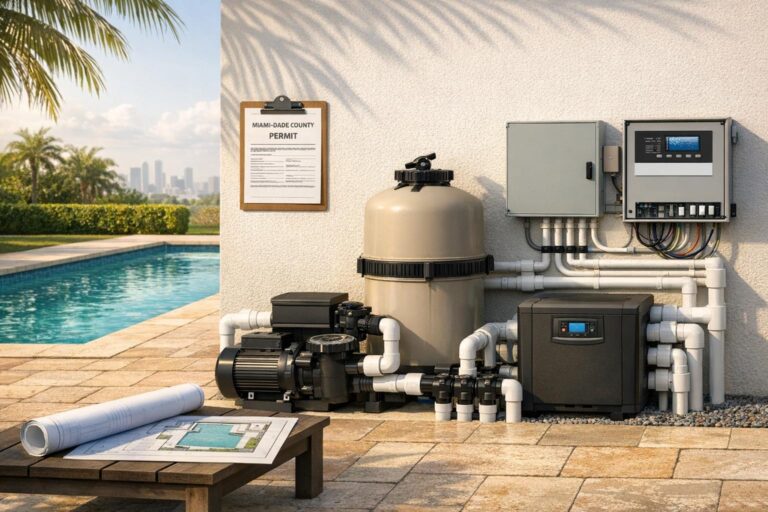
Your pool’s circulation system plays a critical role in keeping the water clean and algae-free. When pumps or filters aren’t functioning properly, problems escalate quickly in South Florida’s warm climate.
Inefficient filtration allows debris to accumulate and water to stagnate, creating the perfect breeding ground for algae [1]. Even if chlorine levels appear normal, poor circulation can cause "dead zones" where chemicals don’t reach, allowing algae to grow unchecked. Additionally, clogged or dirty filters reduce water flow and fail to trap algae spores and other contaminants. In some cases, filters themselves can become hotspots for algae growth if not cleaned regularly.
Debris and Metal Contamination
South Florida’s lush vegetation contributes to pool contamination. During the spring months (March through May), pollen from palm trees, oak trees, and other plants can overwhelm your filtration system. This organic matter not only clouds the water but also provides nutrients that feed algae.
Fallen leaves and grass clippings add phosphates to the water, which, combined with sunlight and warm temperatures, encourage algae to spread.
Metal contamination is another potential issue. Copper levels above 0.2 ppm can cause a green or blue-green discoloration often mistaken for algae, while iron contamination can create a different shade of green that doesn’t respond to standard algae treatments. Metals can enter your pool through corroded equipment, certain chemicals, or water sources with high mineral content. These issues often become noticeable after adding chemicals or refilling the pool, as the metals react with the water.
How to Clear Green Pool Water
If your pool water has turned green, quick action is essential, especially in warm climates like Miami-Dade County, where algae can spread fast. Follow these steps to bring your pool back to its clear, sparkling state.
Brush and Vacuum Pool Surfaces
Before adding any chemicals, give your pool a thorough scrub. Use a stiff-bristled brush to break up algae on all surfaces, including walls, floors, and steps. Then, vacuum the pool slowly to avoid stirring up debris. If there’s a significant buildup, vacuum directly to waste to prevent clogging your filter.
Clean or Backwash Pool Filters
Your filter needs to be in top condition to handle the cleanup. If you have a sand filter, backwash it until the water runs clear. For cartridge filters, remove and clean them thoroughly. DE filters should be backwashed and recharged. If the algae problem is severe, consider cleaning or backwashing the filter again midway through the treatment process.
Test and Balance Water Chemistry
Use a reliable test kit to check your pool’s water chemistry. Adjust the pH to between 7.2 and 7.4 (or up to 7.8 if using calcium hypochlorite shock). Set the total alkalinity to 100–150 ppm (or 80–100 ppm for calcium hypochlorite) and ensure cyanuric acid levels are between 25–75 ppm [4][2].
Shock Treatment and Algaecide Application
A strong shock treatment is your next step. Use double or triple the regular amount of shock, such as 1 lb of calcium hypochlorite per 15,000 gallons of water. Apply the shock after sunset to prevent UV rays from breaking it down [2][5]. Within 24–48 hours, you should see noticeable improvements in water clarity.
After the shock treatment has reduced the algae, apply an algaecide as a secondary measure. Wait at least 24 hours after shocking before adding algaecide, as combining the two can reduce their effectiveness. Choose an algaecide specifically formulated for the type of algae in your pool to ensure the best results. This step helps eliminate lingering spores and prevents new growth.
Run Filter System Continuously
Keep your filter running nonstop for at least 24 hours – or until the water is clear – to help circulate the chemicals and remove dead algae [2][5]. For the entire process, plan to run your pump for 36–48 hours [4]. Check the filter pressure regularly, and if it spikes, backwash or clean the filter before resuming operation.
sbb-itb-a36f8f1
How to Prevent Green Pool Water
Once your pool is back to its sparkling self, a few simple maintenance habits can keep it that way. Staying ahead of potential algae issues is much easier than dealing with a full-blown outbreak. Especially in Miami-Dade, where warm temperatures and frequent rain create ideal conditions for algae, consistent care is key to maintaining clear water year-round.
Keep Chlorine Levels Consistent
Chlorine is your pool’s best defense against algae. Aim to keep free chlorine levels between 1-4 ppm at all times. In South Florida’s sun-soaked climate, chlorine tends to break down faster, so weekly shocking is a must to maintain its effectiveness and keep algae at bay [18, 20].
To help chlorine do its job, maintain cyanuric acid (CYA) levels between 30-50 ppm. This protects chlorine from breaking down too quickly under UV rays. However, if CYA levels go above 50 ppm, chlorine becomes less effective, and you might need to dilute your pool water [18, 22]. Also, keep your pH levels between 7.2-7.8 – higher pH levels weaken chlorine’s sanitizing ability [8, 21, 22]. Total alkalinity should stay within 80-120 ppm to help stabilize pH and support chlorine performance [21, 22].
Test Your Pool Water Weekly
Testing your pool water every week is crucial, especially in Miami-Dade, where heavy rain or frequent use can quickly throw off your pool’s balance. After such events, test your water and adjust the chemicals within 24 hours if needed. Focus on key measurements like free chlorine, pH, total alkalinity, and cyanuric acid levels.
Phosphate levels are another factor to watch. Keep them below 100 ppb since high phosphates act as food for algae [18, 22]. Phosphates can sneak into your pool through fertilizer runoff, leaves, or other organic debris.
For added support, consider using weekly maintenance products like ARM & HAMMER™ Clear Balance™ Pool Maintenance Tablets. These can help stabilize pH and alkalinity, ensuring your chlorine stays effective [3]. If you’re looking for extra peace of mind, professional pool services can provide tailored solutions for your specific needs.
Consider Professional Pool Maintenance
Professional pool maintenance can make a big difference, especially in South Florida’s unique climate. Companies like Alligator Pools are well-versed in Miami-Dade’s weather patterns and water conditions, offering expertise that helps prevent green water emergencies.
Regular professional service includes thorough water testing, precise chemical balancing, equipment inspections, and early detection of potential issues. Problems like clogged filters, malfunctioning pumps, or chemical imbalances can be addressed before they escalate.
Professional services are especially helpful during hurricane season or the summer months when extreme weather can strain your pool system. Skilled technicians can prepare your pool for storms and quickly restore it afterward, ensuring proper chemistry and functionality.
Equipment upkeep is another vital piece of the puzzle. Clean filters, efficient pumps, and a well-maintained circulation system are essential for preventing algae growth. Routine inspections by professionals ensure your equipment runs smoothly and any issues are caught early.
Pool Maintenance Tools and Products for Miami-Dade
Keeping your pool water clear and balanced in South Florida requires the right tools and products. With intense UV rays, frequent rain, and warm temperatures all year long, Miami-Dade pool owners face unique challenges. Reliable equipment is essential to manage water chemistry and prevent algae growth effectively. While quick chemical treatments are a must, having the right tools ensures your maintenance routine is efficient and keeps your pool in top condition.
Water Test Kits and Testing Supplies
In South Florida’s unpredictable climate, accurate water testing is non-negotiable. To keep your pool balanced, you need test kits that reliably measure essential chemicals. Liquid reagent kits are often more precise than test strips, and for even greater accuracy, digital pH meters and TDS (Total Dissolved Solids) meters can be excellent additions to your toolkit.
Pool Shock and Algae Control Products
Quality shock treatments and algaecides are must-haves for pool owners in Miami-Dade. Calcium hypochlorite shock is particularly effective in the region’s conditions, while copper-based algaecides offer long-lasting defense against algae. Be sure to store these products in cool, dry places to preserve their effectiveness, especially in South Florida’s humid environment.
Alligator Pools Professional Services
For pool owners looking to enhance their maintenance routine, Alligator Pools offers a trusted solution. Serving South Florida since 1985, we specialize in expert pool care tailored to Miami-Dade’s needs. Our weekly maintenance services include water testing, chemical balancing, and equipment inspections to keep your pool running smoothly. We also provide quick equipment repairs and installations to address algae and chemical issues before they escalate. From Coral Gables to Kendall, Doral to Pinecrest, our experienced team is committed to reliability and peace of mind, backed by a 3-year workmanship guarantee and transparent pricing.
Conclusion: Keep Your Pool Clear and Clean
Keeping your pool water clear and inviting boils down to swift action and consistent care. Green water is a clear sign of algae growth and chemical imbalance, which can create a breeding ground for bacteria and other harmful pathogens. This makes it crucial to act quickly when issues arise.
Once algae take hold, it can take 4–5 days to clear up[6]. What’s more, algae can start growing in less than 24 hours[7] if chlorine levels drop suddenly. Small chemical imbalances can escalate fast, so staying on top of your pool’s condition is key to avoiding time-consuming cleanups.
The best way to tackle green water is to prevent it from happening in the first place. Regular water testing, maintaining proper chlorine levels, and keeping your filtration system in good condition are essential. Events like heavy rain or a day of active swimming can throw off your pool’s balance, so it’s important to adjust chemicals promptly. Routine brushing, vacuuming, and filter cleaning are also effective in preventing algae from taking hold.
For pool owners in Miami-Dade, professional maintenance can make a big difference, especially with the region’s intense sun, frequent rain, and warm weather. Alligator Pools has been serving South Florida since 1985, offering weekly maintenance, equipment repairs, and expert chemical balancing. Plus, their services are backed by a 3-year workmanship guarantee.
If you’re looking for reliable pool care in Miami-Dade County, contact Alligator Pools today!