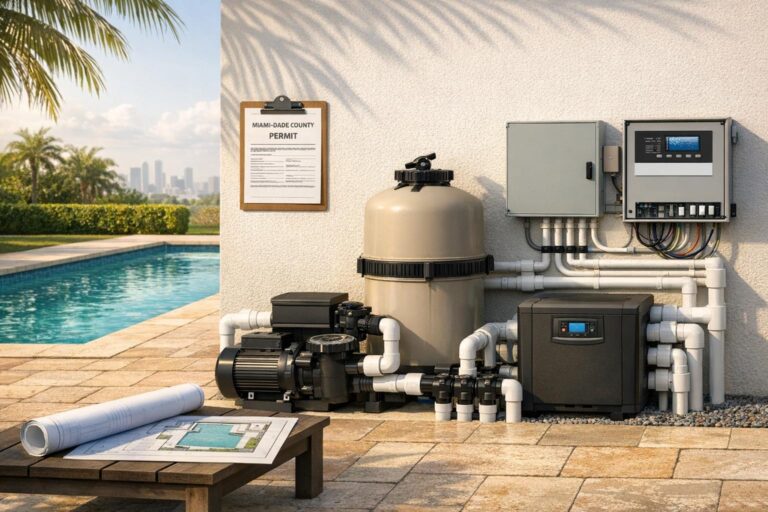

Maintaining your saltwater pool’s salt cell is key to saving money and avoiding headaches. A salt cell typically lasts 3–7 years, but proper care can push it to the higher end of that range. Here’s how to keep it running efficiently:
- Balance Water Chemistry: Keep pH (7.2–7.6), alkalinity (80–120 ppm), and calcium hardness (200–400 ppm) within the recommended ranges to prevent scaling and corrosion.
- Inspect Monthly: Look for calcium buildup, debris, or signs of wear. Address issues early to prevent costly damage.
- Clean When Necessary: Clean the salt cell every 3–6 months, or more often in hard water areas, using a diluted acid solution. Avoid over-cleaning to protect the cell’s coating.
- Use Additives: Add scale inhibitors and phosphate removers to reduce mineral buildup and ease strain on the cell.
- Improve Circulation: Maintain a clean filter and ensure the pump runs efficiently to promote even water flow and reduce calcium deposits.
Routine upkeep, like testing water twice a week and cleaning filters, ensures steady chlorine production and extends the salt cell’s life. If scaling persists, consult a pool professional for help.
Maximize Your Salt Cell’s Lifespan
1. Keep Water Chemistry Balanced
Maintaining proper water chemistry is crucial for keeping your salt cell in good working order. When pH, calcium hardness, or alkalinity levels are off, calcium scale can build up on the metal plates inside the cell. This buildup reduces the cell’s ability to convert salt into chlorine, which can lead to premature failure.
Here’s what you need to aim for in a saltwater pool:
- pH: 7.2 to 7.6
- Total alkalinity: 80 to 120 ppm
- Calcium hardness: 200 to 400 ppm
Staying within these ranges helps prevent both scaling and corrosion. Keeping levels on the lower end of the range provides a buffer against excessive scale formation [4].
Testing your pool water regularly – ideally twice a week – is essential for catching imbalances early. Focus on monitoring pH, calcium hardness, and alkalinity. If your chlorine levels seem lower than normal, it could be an early sign of scale buildup interfering with the cell’s ability to function. Other warning signs include cloudy water or algae growth, which indicate that the salt cell isn’t producing enough chlorine due to calcium deposits on the metal plates.
If you notice any imbalances, adjust them immediately. For severe chlorine shortages, you may need to shock the pool with chlorine while correcting the pH levels.
In areas with hard water, such as Arizona, Nevada, or Florida, scaling can happen more quickly. If you live in one of these regions, consider testing more frequently than twice a week and aim to keep calcium hardness closer to 200 ppm to minimize buildup [3][4].
Many modern salt cells come with a self-cleaning feature that reverses the polarity of the plates to reduce calcium deposits. While helpful, this feature works best when water chemistry is properly balanced. If the water is too far out of range, even a self-cleaning cell can struggle to manage scale buildup [2][4].
Keeping your water chemistry in check doesn’t just protect the salt cell – it can also extend its lifespan, pushing it closer to the upper end of the typical 3–7 year range. Balanced water also prevents skin and eye irritation, protects your other pool equipment, and helps keep algae and bacteria at bay. This simple habit is one of the smartest and most cost-effective ways to maintain your pool.
Once you’ve got your water chemistry under control, make sure to inspect your salt cell monthly for any early signs of trouble.
2. Inspect Your Salt Cell Monthly
Make it a habit to inspect your salt cell every month. Regular checks can spot potential problems early, saving you from expensive repairs and ensuring your pool stays in top condition. This routine helps you catch scaling and fine-tune your cleaning and maintenance practices.
What to Look For During Your Monthly Check
Before starting, turn off the pool pump, disconnect the salt cell, and put on protective gear like goggles, gloves, and closed-toed shoes. Once you’re ready, carefully examine the inside of the salt cell:
- Look for white, flaky calcium buildup on the metal plates. These deposits can interfere with the cell’s performance.
- Blue or green deposits might indicate a different issue that needs attention.
- Check for debris stuck in the cell, as this can also disrupt functionality.
- Inspect the cell housing and connections for cracks, corrosion, or loose fittings. Any of these can reduce the system’s efficiency.
- Pay close attention to the control panel on your salt system. Warning lights like "Low Chlorine" or "Cell Service" often signal malfunctions. If chlorine output seems low despite a clean cell, the problem might stem from circulation issues rather than the cell itself.
By addressing these signs early, you can avoid costly repairs and extend the salt cell’s lifespan, which typically ranges from 3 to 7 years [4]. Ignoring calcium buildup, on the other hand, can reduce chlorine production, harm water quality, and damage the cell over time.
Special Considerations for Hard Water Areas
If you live in a hard water region – like Arizona, Nevada, or South Florida – scaling can occur more quickly. In these areas, monthly inspections are even more critical, and you may need to clean your salt cell more often than the standard 3- to 6-month interval.
Keep a Maintenance Log
Keep track of your inspections by documenting the date, any scale or debris you find, and the cell’s chlorine production. A detailed log can help you identify recurring issues and provide valuable information to technicians if you ever need professional help.
3. Clean Your Salt Cell Properly
Taking care of your salt cell is crucial to prevent calcium buildup and avoid unnecessary repairs.
How Often Should You Clean?
Experts suggest cleaning your salt cell every 3–6 months, but the actual frequency depends on your pool’s specific conditions[5]. Inspect the cell monthly and clean it only when you notice visible scaling. Over-cleaning, especially with acid, can damage the protective coating on the metal plates, making the cell unusable[4]. If your pool has high calcium levels, elevated pH, or gets heavy use, you might need to clean it more often – possibly every 2–3 months in areas with hard water. On the other hand, pools with balanced water and moderate use may only need cleaning twice a year.
Gather Supplies and Use Protective Gear
Before you start, gather the following supplies: a diluted acid solution (muriatic acid or Acid Magic), a bucket large enough to submerge the cell, a soft brush, a garden hose, and fresh water[4][2].
Safety comes first when handling acid. Wear chemical-resistant gloves, safety goggles, and closed-toed shoes to protect yourself from accidental splashes[4]. Always work outdoors in a well-ventilated area, and keep children and pets away from your workspace.
Step-by-Step Cleaning Process
- Turn off the pool system at the breaker.
- Disconnect the salt cell from the pool lines by loosening the unions.
Now, prepare your acid solution. Remember: always add acid to water, not water to acid to avoid dangerous splashing or reactions. A common ratio is one part muriatic acid to four parts water, but always check your product’s specific instructions[3][1].
Submerge the salt cell in the solution and let it soak for 5–10 minutes[3][1]. You’ll notice bubbling, which means the acid is dissolving the scale. Once the bubbling stops, the cleaning is done. Don’t leave the cell in the acid longer than necessary – prolonged exposure can harm the plates.
After soaking, remove the cell and dispose of the acid according to local regulations. Use a soft brush to gently scrub off any remaining deposits, but avoid wire brushes or abrasive tools that can scratch the cell’s protective coating[2]. Rinse the cell thoroughly with fresh water to remove any leftover acid and debris[2][3][4].
When you’re done, reassemble the system.
Reinstall and Monitor
Once the salt cell is clean and dry, reattach it securely to the system, ensuring all connections are tight to prevent leaks[2]. Turn the pool system back on and monitor chlorine levels over the next few days to ensure the cell is working properly[2][3]. If chlorine production doesn’t return to normal, the cleaning may have been incomplete, or there could be another issue requiring professional help. Continue testing your water weekly to maintain balanced chemistry and reduce future scaling[2][3].
What to Avoid
One common mistake is cleaning the cell too often. Only clean it when you see visible scale during your inspections. Cleaning unnecessarily can wear down the protective coating. Also, always rinse thoroughly to remove all acid residues.
If you’re dealing with persistent scaling even after regular cleaning, your water chemistry may be off. Keep your pool’s pH between 7.2 and 7.6 ppm, total alkalinity between 80 and 120 ppm, and calcium hardness between 200 and 400 ppm to reduce scaling[5][4]. Proper water balance is key to preventing future buildup.
Still having trouble? Contact Alligator Pools for expert advice. As trusted pool professionals in Miami-Dade County, we offer full-service maintenance to keep your equipment in top shape.
sbb-itb-a36f8f1
4. Use Salt System Additives
Keeping your salt cell in top shape requires more than just regular cleanings and inspections. Chemical additives can provide an extra layer of protection, helping to prevent the buildup of minerals that can disrupt chlorine production. Let’s explore how these additives work and how to incorporate them into your pool care routine.
How Additives Protect Your Salt Cell
Salt system additives are specially designed to combat mineral buildup and other contaminants. They contain sequestering agents and calcium inhibitors, which bind with minerals to stop scale from forming. Additionally, they help clear out phosphates and organic debris – two culprits that can interfere with chlorine production [4]. By keeping your water cleaner, these additives reduce the strain on your salt cell, potentially extending its lifespan to the higher end of its typical 3–7 year range [4].
Common Product Types
Additives come in different formulations, each designed to tackle specific issues. For example:
- Some products use a two-part system: one part removes phosphates and organic matter, while the other prevents scaling with sequestering agents and calcium inhibitors [4].
- A product like Poolside Cell Saver offers a more comprehensive solution, protecting against both scaling and corrosion [1].
The choice between these products depends on whether you need to address a single problem, like phosphate removal, or multiple issues at once [4].
When and How to Use Them
For the best results, add these chemicals as a preventative measure, not as a reaction to visible problems. Follow the manufacturer’s instructions and incorporate additives into your maintenance routine from the start. Here’s a simple plan:
- Use additives after balancing your water chemistry.
- Test your pool water twice a week to ensure pH, alkalinity, and calcium hardness stay in their ideal ranges:
- pH: 7.2–7.6
- Total Alkalinity: 80–120 ppm
- Calcium Hardness: 200–400 ppm
Keeping these levels steady ensures that your additives work as intended [4]. If you live in a hard water area – like Arizona, Nevada, or South Florida – you may need to use additives more frequently to counteract the higher mineral content [3].
Additives Work Best with Balanced Chemistry
It’s important to note that additives are not a substitute for balanced water chemistry. They’re most effective when used alongside proper pH, alkalinity, and calcium hardness management.
The Cost-Benefit Reality
Additives are a small investment that can save you big in the long run. By preventing the need for frequent, intensive cleanings, they help preserve your salt cell’s lifespan and reduce wear and tear [1][3]. Adding them to your regular maintenance routine is a cost-effective way to protect your pool system.
For personalized advice on selecting the right additives, reach out to Alligator Pools. With over 40 years of experience maintaining salt systems in Miami-Dade County, they can recommend the best products for South Florida’s challenging water conditions.
5. Improve Water Circulation
For your salt cell to work effectively, it relies on consistent water flow. Poor circulation can lead to uneven salt distribution, debris buildup around the cell, and reduced chlorine production. It can also speed up calcium deposits on the cell plates, which makes maintenance harder and shortens the cell’s lifespan. Keeping water moving steadily helps prevent these issues, ensuring smoother chlorine conversion and protecting the cell from localized corrosion. Paired with balanced water chemistry and regular maintenance, proper circulation is a crucial step in extending your salt cell’s life and performance.
Keep Your Filter System Clean
Your pool’s filter plays a key role in supporting good water circulation. A clogged or dirty filter forces the pump to work harder, delivering less water to the salt cell. This not only strains your system but can also lead to calcium buildup and debris blockages. To avoid this, clean your filter weekly by emptying baskets and backwashing at high pressure. This simple habit keeps water flowing freely and helps maintain your salt cell’s efficiency.
Monitor Your Pump Performance
The pump is responsible for driving water through the salt cell, so it’s essential to keep it running at the settings recommended by the manufacturer. Regularly check all connections in the pool line and the salt cell to make sure they’re secure. If you notice a drop in water flow, address the issue immediately to prevent further complications.
Seasonal Adjustments Matter
During the summer or periods of heavy pool use, you may need to run your pump longer to maintain proper water flow. Even in the off-season, avoid letting the water stagnate, as this can lead to calcium deposits and other issues that affect your system.
Circulation and Additives Go Hand in Hand
Good circulation doesn’t just benefit the salt cell – it also ensures that any additives you use, like scale inhibitors, are evenly distributed throughout the pool. This helps maximize their effectiveness in preventing calcium buildup.
When to Call the Professionals
If cleaning your filter and checking your pump doesn’t fix circulation problems, it might be time to bring in an expert. Professionals like Alligator Pools, with over 40 years of experience in Miami-Dade County, can assess your pump’s capacity, filter efficiency, and overall system design. They can pinpoint circulation bottlenecks and recommend solutions tailored to South Florida’s water conditions. With consistent care of your filters, pump, and circulation system, you can often extend the life of your salt cell to 3–7 years or more.
Conclusion
Your salt cell is an important investment, and with the right care, it can last anywhere from 3 to 7 years. Taking steps like balancing water chemistry, inspecting regularly, cleaning when needed, using additives, and improving water circulation can go a long way in preventing calcium buildup and scaling – the main culprits behind most failures. These straightforward practices, when done consistently, ensure steady chlorine production and keep your pool water crystal clear.
Staying proactive with maintenance not only extends the life of your salt cell but also saves you money. A well-maintained cell can delay costly replacements and reduce your reliance on extra chemicals. Even adding just one or two extra years to your salt cell’s lifespan can make a noticeable difference in your pool budget. On the other hand, neglecting it can lead to inefficiency, forcing you to spend more time and money manually balancing your pool chemistry.
The good news? Maintaining your salt cell doesn’t require a ton of effort. Routine water testing, monthly inspections, timely cleaning, and proper use of additives are all you need. Weekly water testing takes only a few minutes, while monthly visual checks help catch issues early. Cleaning the cell as soon as scale appears reduces unnecessary wear, and additives offer additional protection between cleanings. Plus, keeping your filter clean and running your pump at the recommended settings ensures proper water flow, which is key for your salt cell to operate effectively.
For those who prefer professional help or face ongoing issues, expert service can make a big difference. Alligator Pools, a trusted name with over 40 years of experience in Miami-Dade County, specializes in maintaining and repairing pool equipment. They understand the unique challenges of South Florida’s water, which often contains high mineral levels that can be tough on salt cells. As a licensed Florida pool contractor (license CPC1459915), they deliver safe, high-quality work that meets strict standards.
"All of our pool technicians are certified professionals, holding the Certified Pool Operator (CPO) certification from the National Pool & Spa Association." – Alligator Pools
Whether you decide to handle maintenance yourself or rely on professionals, consistency is the key. By sticking to these practices, you’ll not only maximize your salt cell’s efficiency but also enjoy a sparkling, swim-ready pool for years to come.
FAQs
How do I know if my salt cell needs cleaning or replacement?
To figure out if your salt cell needs cleaning, start by checking for visible scale buildup or a noticeable drop in chlorine production. If your pool water isn’t staying properly chlorinated even though your settings are correct, it could mean the cell is dirty or nearing the end of its lifespan. When you spot scaling, clean the cell with a mild acid solution, but be cautious – over-cleaning can wear it out faster.
If cleaning doesn’t improve its performance and the cell has been in use for 3 to 7 years (the usual lifespan), it might be time to replace it. Always refer to your salt system’s manual for detailed maintenance instructions to keep it working efficiently.
How can I tell if there’s calcium buildup in my salt cell?
Calcium buildup in your salt cell usually looks like a white, chalky residue or scale coating the cell plates. This can lead to reduced chlorine production, and you might even see a warning light on your pool system signaling a problem. By inspecting your salt cell regularly, you can spot buildup early and help protect your pool equipment from potential damage.
What are the risks of using chemical additives in a saltwater pool?
Using chemical additives in a saltwater pool requires care, as improper handling can lead to issues. Overuse of certain chemicals, such as stabilizers or calcium, can throw off the pool’s balance, harming water quality and potentially damaging equipment like the salt cell. Mixing incompatible chemicals can also cause dangerous reactions or weaken the effectiveness of your pool’s sanitization system.
To keep things running smoothly, stick to the manufacturer’s instructions, test your pool water frequently, and only use additives specifically designed for saltwater pools. When in doubt, reaching out to a pool care professional can help ensure your pool remains safe and in great condition.