
Resurfacing your pool in Miami in 2026 can cost anywhere from $4,500 to over $30,000. Several factors impact pricing, including pool size, material choice, and labor costs. Here’s a quick breakdown:
- Average Cost Range: $4,500–$20,000 (basic to premium finishes).
- Material Costs:
- Plaster: $3–$5 per sq. ft. (shorter lifespan in Miami’s climate).
- Quartz: $7–$10 per sq. ft. (more durable than plaster).
- Pebble: $8–$12 per sq. ft. (long-lasting and low maintenance).
- Glass Tile: $15–$75 per sq. ft. (luxury option, lasts 20+ years).
- Labor Costs: $45–$75 per hour, with projects typically taking 5–7 days.
- Additional Expenses: Repairs, draining/refilling, and optional upgrades like waterline tiles or deck resurfacing.
Regular resurfacing every 7–15 years is essential for structural health and maintaining home value. Miami’s heat, humidity, and UV exposure can shorten the lifespan of pool finishes, making durable materials a better long-term investment.
How Much Does Resurfacing a Concrete Pool Cost?
sbb-itb-a36f8f1
2026 Pool Resurfacing Costs in Miami
Miami homeowners planning pool resurfacing projects in 2026 should expect costs to vary depending on the pool’s size, the materials used, and the labor involved. On average, prices range from $4,000 to $15,000, though high-end options like full glass tile installations can exceed $30,000. Compared to 2024–2025, labor and material costs have risen by about 10%, driven by higher demand and a shortage of skilled labor in South Florida. Miami-area pool professionals now charge between $45 and $65 per hour, meaning an 8-hour workday can cost between $401 and $467 for labor alone [1][3][7]. Below is a closer look at costs based on pool size and per-square-foot pricing.
Costs by Pool Size
The size of your pool plays a major role in determining resurfacing expenses. Here are some average costs for different pool dimensions:
- Small pools (12-by-20 feet): Basic plaster resurfacing costs range from $1,560 to $2,400.
- Medium pools (16-by-32 feet): Costs typically fall between $3,328 and $7,000.
- Large pools (20-by-40 feet): Expect to pay anywhere from $5,200 to $12,000 or more, depending on the selected finish [1][8].
For a 215-square-foot pool, representing a smaller residential pool, resurfacing costs for basic materials and labor are estimated between $653 and $740 [3]. Alternatively, many contractors calculate pricing based on the pool’s total surface area.
Per-Square-Foot Pricing
Contractors often use per-square-foot pricing to estimate resurfacing costs. Here’s a breakdown of typical rates for different finishes:
- Basic plaster or marble dust: $3.00–$5.00 per square foot, offering the most affordable option.
- Quartz aggregate: $7.00–$10.00 per square foot.
- Pebble finishes: $8.00–$12.00 per square foot.
- Premium glass tile: Starts at $15.00 per square foot and can exceed $75.00 per square foot for intricate designer patterns [3][8].
These rates generally include materials and labor but exclude extra expenses like draining, acid washing, or fixing cracks. It’s wise to set aside an additional 10% to 15% of your budget to cover any unexpected repairs [7].
Pool Resurfacing Materials and Prices
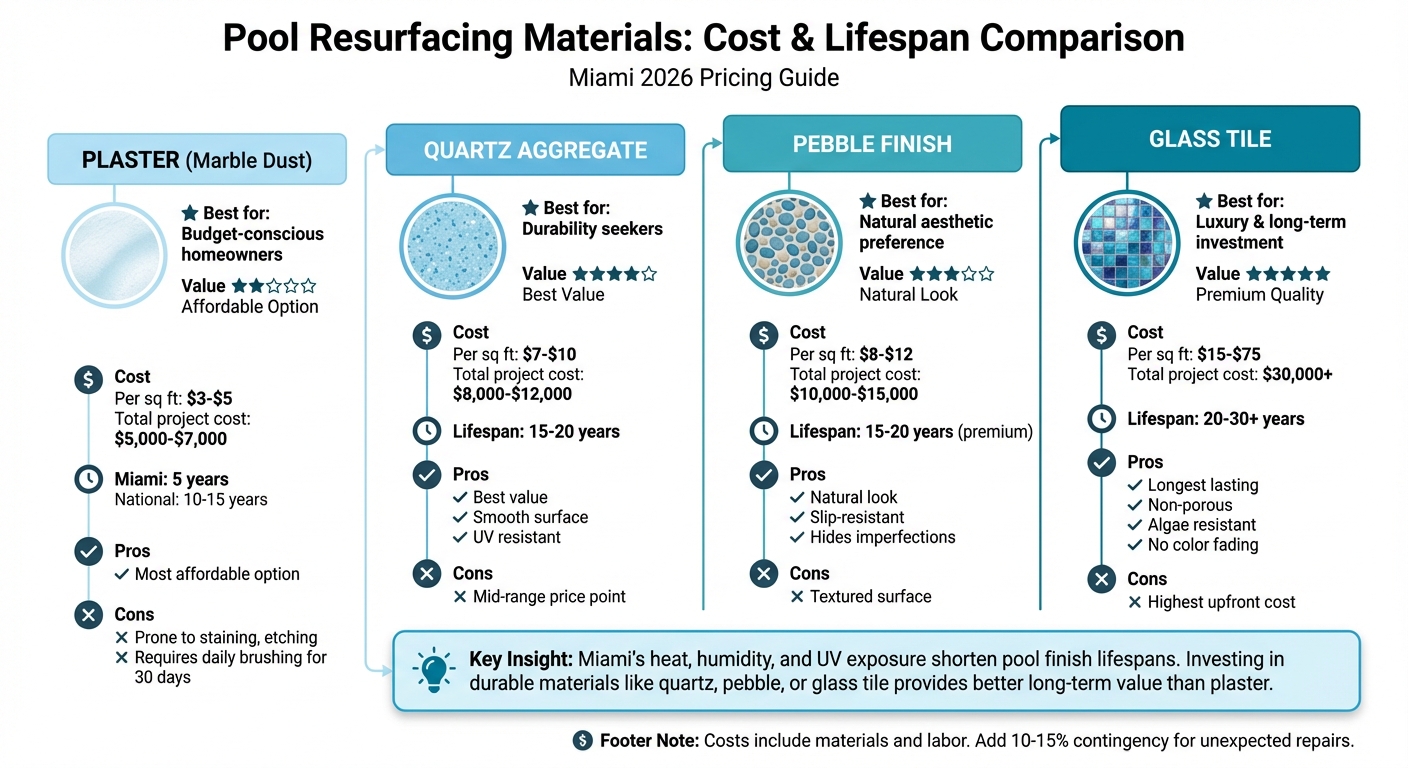
Miami Pool Resurfacing Costs by Material 2026 Comparison Chart
Building on the earlier cost estimates, here’s a detailed look at the different pool resurfacing materials available. This breakdown will help you choose a surface that can handle Miami’s unique climate while balancing cost and durability.
Plaster (Marble Dust)
White plaster remains the most affordable option for pool resurfacing, costing between $4 and $10 per square foot, with total project costs for a standard residential pool ranging from $5,000 to $7,000 [8]. However, Miami’s climate can shorten its lifespan compared to other regions.
"Standard white plaster needs resurfacing every 10-15 years [nationally], but in South Florida, it is more susceptible to staining and etching… typical lifespan is around 5 years." – Alligator Pools [6]
Plaster is porous, making it prone to issues like chemical imbalances, UV staining, and etching caused by warm water. To extend its life, new plaster requires daily brushing for 30 days and careful water chemistry management. Salt-chlorine systems, popular in Florida, can also accelerate wear due to the material’s cement base [7].
For a more durable alternative in Miami’s environment, many homeowners are turning to exposed aggregate finishes.
Pebble and Quartz Finishes
Exposed aggregate finishes, such as quartz and pebble, offer greater durability than plaster. Quartz finishes typically cost $5 to $10 per square foot, with total project costs between $8,000 and $12,000 [8]. Pebble finishes, depending on the brand and quality, range from $5 to $25 per square foot, with complete installations generally falling between $10,000 and $15,000 [8].
These finishes are better suited for Miami’s heat and humidity, lasting 7–10 years with standard care, while premium versions can last up to 15–20 years [6]. They also resist UV damage, chemical imbalances, and salt exposure more effectively than plaster. A popular choice among Miami pool owners is Diamond Brite, known for its wide color selection and durability [8, 11].
"Quartz aggregate offers the best value – lasting 15-20 years at $7-$10 per square foot." – John Chavez, Founder, Sublime Pools & Spa [8]
Pebble finishes provide a textured, natural look that hides minor imperfections and adds slip resistance. Quartz, on the other hand, offers a smoother surface underfoot. Both options require less maintenance than plaster and are better at withstanding Miami’s frequent storms and debris.
Tile Finishes
At the premium end of the spectrum, glass tile offers unmatched longevity and aesthetics. Costs range from $10 to $75 per square foot, with luxury installations sometimes exceeding $30,000 [8]. Properly installed glass tile can last 20 to 30+ years in Miami’s environment [6].
Glass tile is non-porous, making it resistant to algae and color fading. It also requires less upkeep compared to cement-based finishes. Plus, if damage occurs, individual tiles can be replaced without the color-matching issues often seen with plaster repairs.
To balance cost and luxury, many Miami homeowners choose a hybrid approach: resurfacing with plaster or aggregate while incorporating glass tile accents at the waterline [8]. For those focused on long-term value and minimal maintenance, a full glass tile installation eliminates the need for the frequent resurfacing cycles required by cement-based finishes in Miami’s challenging conditions.
Labor Costs and Project Duration
In Miami, where local market conditions and unique challenges influence pricing, understanding both labor costs and project timelines is essential for effective budget planning. Labor often accounts for the largest share of your expenses, and the duration of the project can vary based on several local factors.
Miami Labor Rates
Pool resurfacing contractors in Miami typically charge between $45 and $75 per hour [9]. For an 8-hour workday, this means labor costs can range from $360 to $600 per day [3][5]. These rates reflect the area’s market conditions and can increase due to specific challenges. For instance, neighborhoods like Coral Gables or Pinecrest, where access to properties may be limited, often require additional labor. Similarly, pools with intricate shapes or structural repair needs can demand more time and effort, driving up labor costs. These factors make labor expenses a key consideration when planning your total budget.
Resurfacing Project Timeline
The timeline for a pool resurfacing project is another critical factor for budget planning and minimizing disruptions. For a standard residential pool, the process in Miami usually takes 5 to 7 days [9][12]. Here’s a general breakdown of the timeline:
- 1–2 days: Draining the pool and preparing the surface.
- 1–2 days: Applying the new surface material.
- 1–3 days: Refilling the pool and balancing the water chemistry.
However, larger pools or those requiring extensive repairs can extend the timeline to 2–3 weeks [3]. Miami’s weather is another variable to consider. High humidity can slow drying times, and rain can disrupt the plastering process, potentially damaging the fresh surface before it cures properly [9][11].
Once the pool is refilled, it takes an additional 7–10 days for the surface to fully cure and for the water chemistry to stabilize [13]. During this period, daily brushing is recommended to preserve the new finish. To avoid potential delays caused by Miami’s summer weather and busy season, scheduling your resurfacing project during the winter or off-season months is a smart move [3].
What Affects Pool Resurfacing Costs
Several factors can influence the final cost of resurfacing a pool, and understanding these elements can help you plan your budget more effectively.
Pool Size and Shape
The size and shape of your pool are major cost drivers. Larger pools naturally require more materials and labor, with costs typically calculated based on the pool’s interior square footage. For example, in Miami, resurfacing costs average between $3.13 and $4.00 per square foot, though these rates can vary depending on the area.
The shape of your pool also plays a role. Standard rectangular pools are generally more cost-efficient because contractors can work more quickly and use materials more efficiently. However, if your pool has a custom design – like a lagoon style, geometric shapes, or features such as a zero-entry edge – expect higher labor costs due to the added complexity. For those considering structural changes, such as altering the pool’s depth or adding a beach entry, expenses can soar past $30,000 and even exceed $70,000 [7].
The current condition of your pool is another factor that significantly impacts expenses.
Current Pool Condition
The state of your pool before resurfacing can either keep costs manageable or push them higher. Minor issues like small cracks or surface stains typically cost between $2,500 and $5,000 to address. However, more severe problems – such as structural cracks, leaks, or outdated plumbing – must be repaired before resurfacing, which can increase costs to over $15,000. If you’re planning a full overhaul that includes plumbing or electrical repairs alongside resurfacing, you might spend anywhere from $8,000 to $22,000 [2][3].
Miami’s hot, humid climate and high UV exposure can accelerate wear and tear, often making preparation work more intensive [6]. For example, unexplained water loss could indicate a pool leak requiring immediate attention. To avoid surprises, it’s wise to set aside 10% to 15% of your budget as a contingency fund for unexpected repairs that may be discovered after the pool is drained [7].
Finally, don’t overlook how property access can affect your project’s bottom line.
Property Access
The ease of accessing your pool can influence labor and equipment costs. If your property has narrow entry points, steep slopes, or other obstacles, contractors may need specialized equipment or additional labor, which can increase the overall quote [2].
Urban areas in Miami-Dade often come with higher costs due to increased contractor overhead, permit fees, and operating expenses. Coastal properties may also face unique challenges, as salt air and high humidity require more durable materials and specialized application techniques [14]. To avoid unexpected charges, measure the narrowest entry point to your backyard and share this information with contractors when requesting quotes. This step can help ensure accurate pricing and minimize surprises.
Pool Upgrades to Pair with Resurfacing
If you’re already planning to resurface your pool, it’s a smart move to consider additional upgrades at the same time. By bundling these improvements, you could save 20% to 30% compared to tackling them separately. In Miami, homeowners typically spend between $8,000 and $22,000 on combined pool enhancements[3][8]. These upgrades not only improve the functionality of your pool but also complement its fresh new surface.
Waterline Tile Replacement
Waterline tiles play a crucial role in protecting your pool’s waterline, preventing mineral stains, and reducing algae buildup. For Miami’s sunny and humid climate, glass tiles are an excellent choice. They’re non-porous, making it harder for algae to stick, and they resist UV fading[6]. With proper installation, these tiles can last 20 to 30+ years.
Replacing waterline tiles typically costs between $2,000 and $4,000 for most residential pools[8]. If you’re looking for a more premium option, glass tiles can cost $25 to $35+ per square foot[12]. For a touch of elegance without a full pool makeover, consider using tiles as accents on steps or benches[4].
Pool Deck Resurfacing
Your pool deck takes a beating from Miami’s intense sun and heavy rains. Resurfacing it after your pool is redone not only enhances safety with a refreshed non-slip texture but also upgrades the overall look of your outdoor space[16].
- Concrete overlays start at $3 to $10 per square foot.
- Stamped concrete costs $8 to $15 per square foot.
- Pavers, which are more durable and allow for easy replacement of damaged sections, range from $10 to $40+ per square foot[16].
Complete deck resurfacing projects usually fall between $4,000 and $10,000+[2]. Plus, modern dustless blasting techniques can reduce dust by 90% during preparation, keeping your property cleaner throughout the process[16].
Equipment Upgrades
Resurfacing requires draining your pool, making it the perfect opportunity to upgrade your equipment[10]. Here are a few options to consider:
- LED pool lights: These energy-efficient lights, priced between $500 and $1,200 per light, offer color-changing features for a modern touch[10].
- Single vs. variable-speed pumps: While they involve an upfront cost, these pumps reduce monthly energy bills and eventually pay for themselves[15].
- Pool heaters: Extend your swimming season with a heater installation, which typically costs $1,800 to $4,200[12].
- Water features: Add fountains or waterfalls for visual appeal and improved water circulation. These features average around $7,500[10].
Planning Your Pool Resurfacing Budget
When mapping out your pool resurfacing budget, the size of your pool and the materials you choose will have the biggest impact on costs. For detailed pricing on materials and labor, refer back to the earlier sections of this guide.
Start by factoring in essential costs like draining (roughly $175 to $225) and refilling (about $55 per 5,000 gallons) [1]. It’s also smart to allocate an extra 10% to 15% of your budget as a contingency fund. Why? Once the pool is drained, contractors often find hidden issues like structural cracks or plumbing leaks.
"The resurfacing process not only uncovers these minor leaks and cracks but also allows us to address them promptly. By fixing these issues during resurfacing, we can prevent water loss and help you avoid more expensive repairs down the line." – Alligator Pools [17]
Taking care of these issues during resurfacing not only protects your pool’s structural integrity but also helps maintain its long-term value. While upfront costs can vary, choosing a finish with greater durability can reduce how often you’ll need to resurface and can even boost your pool’s resale value. In fact, a well-maintained, resurfaced pool can recover 40% to 80% of its cost in added home value [1].
To get the best deal, gather at least three detailed quotes from licensed local contractors. For instance, Alligator Pools, with over 40 years of experience in Miami-Dade County, provides a 3-year workmanship guarantee along with a 10-year manufacturer warranty on materials. Scheduling an on-site consultation will give you a precise estimate tailored to your pool’s specific condition and any access challenges.
FAQs
What are the best pool resurfacing materials for Miami’s weather?
For Miami’s tropical weather, pebble finishes and tile stand out as the best choices for pool resurfacing. Pebble finishes are built to last, offering a lifespan of 15–20 years. They hold up well against Miami’s intense sun, high humidity, and heavy pool usage. Tile, on the other hand, can last more than 20 years, making it an excellent long-term option. It’s highly resistant to UV rays, pool chemicals, and the region’s unpredictable weather.
If you’re looking for a budget-friendly alternative, plaster (or marcite) might be an option. However, it typically lasts only 5–7 years and requires more upkeep to handle Miami’s challenging climate. For pool owners prioritizing durability and minimal maintenance, pebble finishes and tile are the smartest investments to keep your pool looking and performing its best.
How does the size of my pool affect resurfacing costs?
The size of your pool has a big impact on resurfacing expenses. Larger pools demand more materials – like plaster, pebble, or quartz – and require additional labor, which can drive up the total cost. In Miami, resurfacing costs in 2026 are expected to range from $5,000 to $29,000, depending on factors like pool size, materials used, and any unique features.
Smaller pools tend to be less expensive to resurface because they require fewer materials and less labor. On the other hand, if you have a larger pool, you’ll need to budget for higher costs. Features such as custom shapes or extra enhancements can also add to the expense. Knowing your pool’s dimensions and specific needs will make it easier to plan and manage your resurfacing project.
What upgrades should I think about when resurfacing my pool?
When you’re resurfacing your pool, it’s the perfect moment to explore upgrades that can improve both its appearance and practicality. Some popular choices include adding waterline tiles, decorative finishes, or LED lighting to give your pool a fresh, modern look. Many homeowners also use this opportunity to replace or upgrade equipment like pumps or filters, which can improve efficiency and enhance water quality.
If safety is a priority, you might want to consider non-slip surfaces or handrails – especially in Miami, where pools see frequent use thanks to the warm climate. While these additions might increase your initial costs, they can make your pool safer, last longer, and create a better overall experience. To make the most of your investment, weigh your budget against your goals and consult a professional to figure out which upgrades are right for you.